The Well of the Worm by Harley Stroh (DCC conversion by yours truly) has now been solicited at the Goodman Games website, and is available for a limited time through the Goodman Games webstore.
Why should you consider this one?
First off, because anything by Harley Stroh rocks. Second off, because all of the DCC products Joseph Goodman has put out rock. Thirdly, because I had a lot of fun working on the conversion, and I can say that this adventure rocks.
It is always fun to see an adventure for a different system through a DCC lens. I have converted Gamma World, 1st Edition AD&D, 3.x Dungeons & Dragons, Labyrinth Lord, and other "compatible" materials for my home game.
It was really cool to get the opportunity to do an official conversion!
Thank you, Harley Stroh, for writing such a cool adventure in the first place.
Thank you, Joseph Goodman, for giving me the chance to do this conversion.
Thank you, all of you, who purchase and play it.
Friday, 31 May 2013
Thursday, 30 May 2013
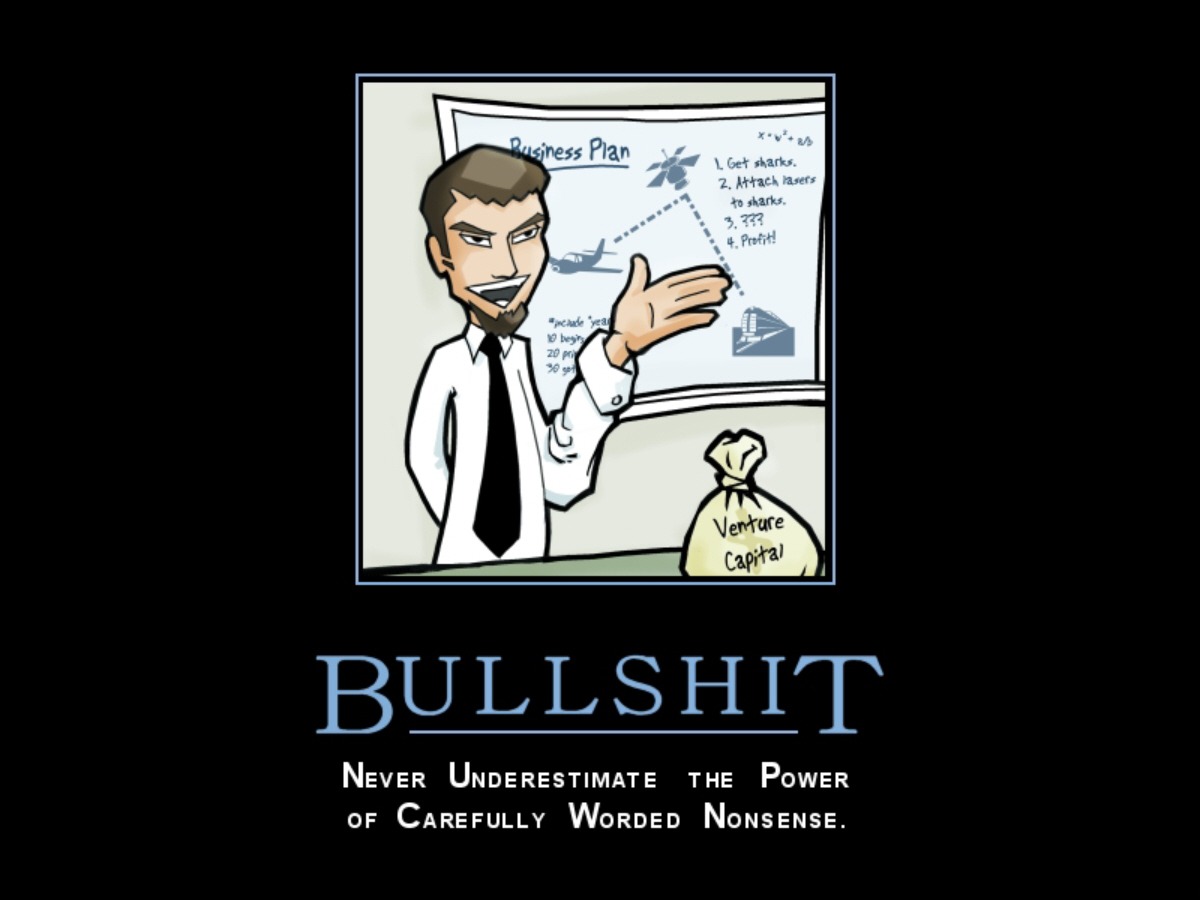
Bullshit Alert
Did you know that immersion doesn't exist? Because people might use the word to mean different things? Because it might have a very personal meaning?
(Which differs not at all from, say, "role-playing game" or "D&D", which apparently are also lies, if one follows that "logic".)
What does that have to do with playing with people who are your friends? Nothing! But, hey, no one can argue with that, so let's toss that in there to confuse the issue.
Let's say that you accept the argument that "the game was in the description! Of course it is!" Then, does it actually follow that when you are dealing with that description, it is somehow "shutting everything down"? Or, would it make sense that, if you accepted that the game was in the description, that "stopping play to force someone to describe the action of the game" cannot be "disruptive to play" because that description of action is, in fact, a major component of the game?
Or, let us imagine that taking the role of your character negotiating with a goblin (portrayed by the GM) is only immersive "if you wanted to be immersed in the player persuading the Dungeon Master, not the character persuading the goblin", 'cause, you know, when you are rolling for it, that's the character, not the player.
"[D]ishonest and worse, counterproductive and not useful from a design standpoint" pretty much covers it. Yet another post suggesting that you are only playing the game when you are rolling the dice, or working the widgets, from someone who just doesn't seem to understand that the widgets are there to support the fictive milieu and action, not the other way around.
There may be "many. . . unintentional misunderstandings of things" certain people say, or it may just be that bullshit has an unmistakable odour. I leave it the reader to decide.
ADDENDUM ('cause I just can't leave well enough alone). If you would be so kind, take a gander at this post.
(Actually, seriously, read the comments too!)
Now, go back and read the first linked post, and follow the links here. And, if you want, you can find my response to that here.
Riddle me this, Batman: How is it that -C in 2011 knows why combat is handled differently than talking, but two years later this has become a mystery?
Perhaps -C's answer in 2011 is the best one: "This, is of course another strawman - a misrepresentation of the actual process of play."
ADDENDUM to the ADDENDUM: Ah, hell. You should read this one too. In it, -C postulates, "Combat/feat build uses aside, there is certainly some room for a 'social conflict' system in D&D, but a simple D20 comparison check is a really really boring way to handle it!" so the seeds were sown by 2011.

Actually, there have been several systems in the D20 System written to handle "social combat", the best of which was probably Dynasties & Demagogues, which, if you ignore or are unsatisfied with "Because at the table, I can't use my personal skill to swing an axe, but I can use my personal skill to convince a crocodile to let me pass.", will allow you to consistently make all kinds of social interactions into a mini-game.
If that's your bag, man, then this is a book that comes highly recommended.
(Which differs not at all from, say, "role-playing game" or "D&D", which apparently are also lies, if one follows that "logic".)
What does that have to do with playing with people who are your friends? Nothing! But, hey, no one can argue with that, so let's toss that in there to confuse the issue.
Let's say that you accept the argument that "the game was in the description! Of course it is!" Then, does it actually follow that when you are dealing with that description, it is somehow "shutting everything down"? Or, would it make sense that, if you accepted that the game was in the description, that "stopping play to force someone to describe the action of the game" cannot be "disruptive to play" because that description of action is, in fact, a major component of the game?
Or, let us imagine that taking the role of your character negotiating with a goblin (portrayed by the GM) is only immersive "if you wanted to be immersed in the player persuading the Dungeon Master, not the character persuading the goblin", 'cause, you know, when you are rolling for it, that's the character, not the player.
"[D]ishonest and worse, counterproductive and not useful from a design standpoint" pretty much covers it. Yet another post suggesting that you are only playing the game when you are rolling the dice, or working the widgets, from someone who just doesn't seem to understand that the widgets are there to support the fictive milieu and action, not the other way around.
There may be "many. . . unintentional misunderstandings of things" certain people say, or it may just be that bullshit has an unmistakable odour. I leave it the reader to decide.
ADDENDUM ('cause I just can't leave well enough alone). If you would be so kind, take a gander at this post.
How come it's ok to use 'skill checks' for combat, and not for something like talking to opponents?
Because at the table, I can't use my personal skill to swing an axe, but I can use my personal skill to convince a crocodile to let me pass.
(Actually, seriously, read the comments too!)
Now, go back and read the first linked post, and follow the links here. And, if you want, you can find my response to that here.
Riddle me this, Batman: How is it that -C in 2011 knows why combat is handled differently than talking, but two years later this has become a mystery?
Perhaps -C's answer in 2011 is the best one: "This, is of course another strawman - a misrepresentation of the actual process of play."
ADDENDUM to the ADDENDUM: Ah, hell. You should read this one too. In it, -C postulates, "Combat/feat build uses aside, there is certainly some room for a 'social conflict' system in D&D, but a simple D20 comparison check is a really really boring way to handle it!" so the seeds were sown by 2011.
Actually, there have been several systems in the D20 System written to handle "social combat", the best of which was probably Dynasties & Demagogues, which, if you ignore or are unsatisfied with "Because at the table, I can't use my personal skill to swing an axe, but I can use my personal skill to convince a crocodile to let me pass.", will allow you to consistently make all kinds of social interactions into a mini-game.
If that's your bag, man, then this is a book that comes highly recommended.
Sunday, 26 May 2013
Mulmo Preview - Spoilers Sweetie
If you intend to play through this module, do not read the following. This is a very minor encounter area, an homage to Robert E. Howard, to give some idea of the flavour of the text.
First Review!
1-12 Storage Chamber: This chamber, roughly 50 feet in diameter, is filled with barrels, crates, and bundles, which have been hacked, with some of their contents strewn around the chamber in a welter of spoiled foodstuffs and broken glass.
These goods were gained through a mixture of trade, tribute, and theft. Most were foodstuffs, although there was cloth, glassware, and ceramics as well. Nothing of value remains whole, and there are clear signs of animals large and small having been here.
A large urn decorated with a serpent motif and sealed with a heavy lead plug remains unopened. It will only be located if the characters spend at least 30 minutes searching through the debris. Runes on the lid declare it the property of the cult of an evil snake god. Although both elves and trow were wise enough to leave it alone, the PCs may not be – within is coiled a demonic serpent which appears as a 10 foot long crimson cobra with almost human facial features.
The demonic serpent’s bite is poisonous; any who is struck must make a Fort save (DC 14) or be paralyzed instantly, dying in 1d4+2 rounds unless the poison is somehow countered. The serpent can spit a line of venom up to 20’. In this case, the victim must make a Reflex save (DC 12) or suffer poisoning. If the Reflex save is a natural “1”, the victim is struck in the eyes, and must make an additional Fort save (DC 16) or be permanently blinded even if the venom is countered.
Demonic serpent: Init +6; Atk bite +6 melee (1d3 plus poison); AC 18; HD 6d12; hp 50; MV 40’; Act 2d20; SP poison, spit poison, demon traits (type II: speech, read minds, infravision, darkness [+8 spell check], immune to non-magical weapons or natural attacks from creatures of 3HD or less, half damage [fire, acid, cold, electricity, and gas], can teleport back to home plane at will, crit threat range 19-20); SV Fort +6, Ref +10, Will +6; AL C.
First Review!
1-12 Storage Chamber: This chamber, roughly 50 feet in diameter, is filled with barrels, crates, and bundles, which have been hacked, with some of their contents strewn around the chamber in a welter of spoiled foodstuffs and broken glass.
These goods were gained through a mixture of trade, tribute, and theft. Most were foodstuffs, although there was cloth, glassware, and ceramics as well. Nothing of value remains whole, and there are clear signs of animals large and small having been here.
A large urn decorated with a serpent motif and sealed with a heavy lead plug remains unopened. It will only be located if the characters spend at least 30 minutes searching through the debris. Runes on the lid declare it the property of the cult of an evil snake god. Although both elves and trow were wise enough to leave it alone, the PCs may not be – within is coiled a demonic serpent which appears as a 10 foot long crimson cobra with almost human facial features.
The demonic serpent’s bite is poisonous; any who is struck must make a Fort save (DC 14) or be paralyzed instantly, dying in 1d4+2 rounds unless the poison is somehow countered. The serpent can spit a line of venom up to 20’. In this case, the victim must make a Reflex save (DC 12) or suffer poisoning. If the Reflex save is a natural “1”, the victim is struck in the eyes, and must make an additional Fort save (DC 16) or be permanently blinded even if the venom is countered.
Demonic serpent: Init +6; Atk bite +6 melee (1d3 plus poison); AC 18; HD 6d12; hp 50; MV 40’; Act 2d20; SP poison, spit poison, demon traits (type II: speech, read minds, infravision, darkness [+8 spell check], immune to non-magical weapons or natural attacks from creatures of 3HD or less, half damage [fire, acid, cold, electricity, and gas], can teleport back to home plane at will, crit threat range 19-20); SV Fort +6, Ref +10, Will +6; AL C.
Friday, 24 May 2013
Playtesters
I am looking to send materials to 2-3 judges who would run Dungeon Crawl Classics playtests for me. If you can run a playtest with about a week's to two week's turnaround on a regular basis, please let me know. Sorry that I won't be able to take everyone who wants in (someone must be left to buy the materials), but if you want playtest credits, here's your chance!
Shoot me an email at ravencrowking at hotmail dot com.
Thursday, 23 May 2013
Wednesday, 22 May 2013
From Mercury to Yuggoth, and All Points Between
There came a point, when I was soaking
myself in the delightful text that is the Dungeon Crawl Classics role-playing
game, that I decided to go back and read the Appendix N fiction. I mean,
I had read quite a few authors and novels on the list, but there were also many
that I did not know, and works of fiction that had passed me by. If you don’t understand what I mean by
soaking myself in the DCC core rulebook, you either have not read it, or your
appreciation for the genre is very different from mine. Because you are reading this blog, I am going
to assume that you know what I mean.
Eventually, there came a point where I was
not just reading the list; I was studying it.
Whenever I worked on a new DCC project, it became integral to my
thinking that no fewer than three homages to Appendix N sources should be intentionally
included. I have tried to do this as
consistently as I can…although I admit that I allow for a greater breadth in
Appendix N sources than some others might.
For instance, I do not stop at the Mars and Venus books of Edgar Rice Burroughs…nor do I even stop
at Tarzan, The Moon Maid, and other
adventure fiction. Works like The
Oakdale Affair and The Efficiency Expert are fair game
in my books.
Within the 1st Edition AD&D Dungeon
Master’s Guide, Gary Gygax
mentions setting adventures on Jack
Vance’s Tschai and Burroughs’ Barsoom. Conversion notes are given for Boot Hill, indicating that perhaps the
westerns of E.R. Burroughs and the weird westerns of Robert E. Howard might also have fit into Gygax’s vision of
Appendix N. What is very clear, though,
is that a lot of stories in Appendix N fiction take place on other worlds.
And why not? Who would not wish to adventure on the Mars
of Edgar Rice Burroughs, Michael
Moorcock, or C.L. Moore? Who would not want to quest across the solar
system as envisioned by Leigh Brackett,
or travelled to far worlds like Skaith
and Tschai? Who would not want to be equal to – or even surpass!
– Eric John Stark, John Carter, or Northwest Smith? The canopy
is vast, and the characters loom enormously over the landscape of their worlds
and of our dreams.
The pulp magazines were full of stories like these. John Carter could not adventure across Barsoom alone - he must also investigate one of its moons, and then travel as far as Jupiter. Seeking out strange new worlds is a driving passion of many of the Appendix N authors. These sort of stories even outnumber "lost world" stories, like those of the Pellucidar series, various survivals in Robert E. Howard stories, and the Caspak series that begins with The Land That Time Forgot. Alien princesses and Low Canal Dwellers outnumber even the dinosaurs.
Likewise, Manly Wade Welman was not content to merely write about Hok the Mighty - he also wrote of aliens coming to take over that primitive world.
One of the first adventures I converted to
the Dungeon Crawl Classics system was from Gamma World, as part of a funnel
adventure. I am actually playing this
same conversion online, at Unseen
Servant. Fun, as far as it goes, but
it does not go nearly as far as it should.
It has been suggested that the structure of
the planes in AD&D was lifted from the works of Michael Moorcock. Reading through Appendix N, I do not believe
that this is completely accurate.
Moorcock’s work was influential, yes, but he was neither the first nor
the best at using multiple planes of existence.
I tend to think that works like The Carnelian Cube and The Fallible
Fiend, the Silver John
stories of Manly Wade Wellman, and
the writing of Philip Jose Farmer, Andre Norton, and Lord Dunsany, at the very least, were equally or more
important.
In the DCC core rulebook, Joseph Goodman suggests using other
worlds as destinations for adventures, exactly in the same way as various
heavens, hells, and elemental planes are used in many fantasy role-playing
games. I find this good advice, and I
think that Dungeon Crawl Classics is admirably suited for such play. Sure, you need stats for laser guns,
blasters, or similar weapons – possibly specific critical and fumble charts as
well – and unique classes for the alien races you might meet. But those things are actually little more
than local colour…the same sort of local colour, perhaps, that any fantasy
world should be given. The system
remains intact.
I am beginning to think that, running
parallel to my regular DCC campaign, I should devise a setting that intersects,
which is pure science fantasy of the type epitomized by certain Appendix N
authors. Not just a single world, such as
Barsoom, Venus, or Ganymede, but an interconnected system of worlds. Something that would make C.L. Moore or Leigh
Brackett feel right at home.
What do you think? Is this an idea anyone else would be
interested in hearing more about?
Tuesday, 21 May 2013
Monday, 20 May 2013
The Revelation of Mulmo
At the time of this writing, The Revelation of Mulmo has just been approved by Joseph Goodman, and should be available soon at the usual locations, such as rpgnow and drivethru.
This pdf is 76 pages long. Even including maps, a one-page advertisement, and covers, that is a lot of pages of adventure, with 60 described areas, a new spell, and three new patrons.
(These are incomplete write-ups - no patron spells! - but I think you will find them useful.)
Important information is reproduced from Angels, Daemons, & Beings Between for judges lacking that reference work.
If you backed Angels, Daemons, & Beings Between, well, this was the last piece in the puzzle. Lead developer Sean Conners will be up late tonight sending emails and moving the project to a close. So good news there.
In addition to using the same terms as Angels, Daemons, & Beings Between and Tomb of Curses, allowing other writers and publishers to use the included patrons in their own approved DCC work, The Revelation of Mulmo adds several monsters to the OGC, allowing them to be used by anyone and any time and with any game system.
Why? Because we love the Open Gaming License, and we think that you will want to use some of these monsters in your own work. Like the fellow to the right.
Art is by David Fisher, and I think it is quite good. I have included a couple of samples in this blog post to whet your appetite.
While every monster is not added to the OGC, the monsters added follow a particular theme, and I truly hope that someone will pick it up and run with it.
Did I mention that the new spell (Scrying) is also added to the OGC?
In terms of price point, the prospective judge should find enough material between the covers to get a lot of reuse out of this adventure...if not by reusing the location itself, then by reusing some of the patrons, characters, creatures, and items within.
From the back cover text:
In The Revelation of Mulmo, brave adventures risk magic, monsters, and the passage of time itself to bring a fallen comrade back from the dead.
This module describes a fallen elf hill, with descriptions of 60 locations, additional patron information, and a new spell. It makes use of patron information from the DCC rulebook and Angels, Daemons, & Beings Between by Dragon's Hoard Press.
If you are wondering how to make patrons more active in your campaign, this is the adventure for you!
If you are tired of elves being treated as goodie-goodies who live in the forest being nice to each other and to everyone else, this is also a module for you. The elves in The Revelation of Mulmo take their essence from all of the depictions of elves in Appendix N fiction, including some which go by different names.
Taken together with this author's Stars in the Darkness (published by Purple Duck Games), you are given strong tools to completely rethink elves - making them less what they are in Lord of the Rings rip-offs, and a hell of a lot more Dungeon Crawl Classics!
Or, at least, that was my intention. Hope you enjoy.
Sunday, 19 May 2013
All I Have to Do is Dream…
Dream sequences are a significant part of
the fiction that inspired the game.
Conan meets with the Epemitreus the Sage in a dream in The Phoenix on the Sword. Frodo sees Gandalf escape in Orthanc in a
dream in The Fellowship of the Ring. The Dreamlands of H.P. Lovecraft beckon, and
John Carter’s adventures on Mars occur while his body sleeps in a near-death
state on Earth. Dreams can reveal
information, supply gear, or even be places to adventure in their own right.
I. Simple Dreams
The purpose of a simple dream is to supply
information to the player/PC involved. This
is what happens when Frodo dreams of Gandalf in The Lord of the Rings. These
dreams may be simply prophetic, or they may be the result of powerful
supernatural beings trying to communicate information to the sleeper. This sort of information is generally coded,
and must be interpreted correctly to be of value.
As an example, in one Dungeons &
Dragons game I ran, a paladin character was presented with some ethical
problems, and was strongly considering acting as the party wished rather than
as conscience dictated. The character
had a dream wherein he was confronted with a man juggling nine coloured balls,
with the admonition that no one could hold them all at one time.
In another (online) game, I had a dream
occur with a parable relating to the current situation.
In ancient times, dream interpretation was
taken very seriously, because it was known that the gods sent messages to
dreamers. Dream interpretation was a
valuable service, if one could do it well.
Even today, there are many books on dream interpretation available at
bookstores – although we tend to believe that dreams are messages from our
subconscious, rather than from gods.
I find that these sorts of dreams are best
represented by writing the dream out, printing it off, and then giving it to
the player to read. Importantly, after
the player is done reading it, I take the sheet back. It is up to the player to note the salient
points and write anything down he or she may wish to remember.
Some of these dreams should be red herrings
– they are just dreams, and not messages from beyond.
Simple dreams can have effects on the
waking characters as well, such as lack of rest or even physical damage, if
they arise from a choice the players have made.
See James Raggi’s Death Frost Doom for an excellent
example of how choices made by the PCs can have consequences when they sleep.
II. Complex Dreams
If the character has something to gain
other than simple information, it may be worthwhile to briefly play the dream
out in-game. This allows the GM to judge
just how much should be gained, if anything at all, in the same way as occurs
in other parts of the game.
For instance, imagine that your PC(s), like
Conan, gain an audience with some supernatural patron while dreaming. In this case, how your players choose to
react, and what they have their characters say, is probably important enough to
the outcome of the sequence to spend game time playing it out. Character sheets are probably not needed…most
dreams of this sort can be resolved simply through description and
role-playing.
The simplest form of complex dream allows
the character to choose between two options.
For example, imagine that a character is being haunted by a dream hound,
which hunts him throughout his sleeping hours.
After a brief description of the hound and the scene, the GM asks the
player what he will do. If the PC
confronts the hound, it is rendered powerless, and the haunting ends. If the PC runs, the hound is empowered, and
some debilitation occurs to the PC in the waking world. Again, the simplest form is that the PC gains
no benefit from rest.
Within a complex dream, there is something
to be gained, something to be lost, or both.
In order for the choice to be meaningful, it has to meaningfully affect
the game in some way. Otherwise, you are
much better off simply treating the sequence as a simple dream, above.
In these sorts of dreams, objects can
manifest from the dream world into the material world, as was the case in The Phoenix on the Sword, but that is
not the only option. A dream might
unlock the key to a wizard’s spell if the player chooses wisely, or it might
grant luck or supernatural patronage.
The level or type of information gained from a dream might be linked to
choices made in the dream itself.
Characters can die in dreams. They may or may not die in real life as a
result. Dream creatures can cause
physical injury, or eat away points of Intelligence, Personality, Wisdom, or
Charisma (depending upon your game of choice).
At this point, though, dice are going to be rolled, and you are probably
looking at a full-on dreamscape.
III. Dreamscapes
A dreamscape is a dream which seems to have
a physical, objective reality of its own, even if the rules do not conform to
those of the waking world. My module, Through
the Cotillion of Hours (Purple Duck Games), is an example of a
dreamscape.
When devising a dreamscape adventure, the
prospective GM must determine (1) why the dreamscape has formed, (2) what the
rules of the dreamscape are, (3) how the characters enter the dreamscape, and
(4) whether or not they are transformed by entering the dreamscape, and if so,
how.
Answering (1) will help in answering the
remaining questions. If there is but a
single player involved, the dreamscape can spring from that character’s
mind. Otherwise, some supernatural or
psychic entity is probably responsible, and that creature can determine to some
degree what the conditions of the dreamscape are. A demon-formed dreamscape is hellish, while
that formed by a goddess reflects her theology, portfolio, and symbolism. If a dreamscape is formed by the mind of a
PC, its texture and details arise from what the GM knows of the PC and her
experiences. There is also the
possibility that the dreamscape is another plane unto itself, and needs no
creature’s thoughts to sustain it. H.P.
Lovecraft’s Dreamlands, and the Barsoom of Edgar Rice Burroughs can be treated in
this manner.
So then, what are the rules of our
dreamscape?
A dreamscape can be temporary, or
recurrent, or enduring. A temporary dreamscape
is intended to exist only for a single adventure. A recurrent dreamscape is used as the
location of a number of adventures, or even the same adventure repeated
multiple times until “solved”. An
enduring dreamscape, like Lovecraft’s Dreamlands, can host entire campaigns.
The prospective GM will have to answer, at
the very least, the following questions.
It should be noted that, in a game in which dreams play a major part,
the answers to these questions can differ with each and every dreamscape
encountered, if the GM so desires. In
fact, giving dreams their own rules is part of what differentiates dreams from
other adventures.
1. Can the characters will the dream to
change? Can they introduce
elements? Can they change the wallpaper? If so, how?
What are their limitations?
2. How does magic work in the dream? If the game system has a cost for magic, does
that cost actually get paid by the character, or is the cost part of the dream
as well?
3. How does combat work in the dream? What happens if the character is
wounded? Do the wounds manifest on her
body, or are they healed upon waking?
What if the character dies?
4. Are there limitations on the character’s
actions? For example, in a nightmare,
the character might attempt to flee, but be unable to move. This could be given game statistics by
reducing movement speed in some or all parts of the dreamscape, requiring a
saving throw to act, or other means.
The GM should remember, when describing a
dreamscape, that the rules of the waking world need not apply. Within a dream, it may be entirely possible
to have conversations with ghouls, for example, without worrying about having
your face eaten. Characters may be able
to fly. There are no limitations due to
time or distance – architecture need not make sense. It is even possible to have the characters
abruptly find themselves in an earlier part of the dream again.
Think about what your own dreams are
like. Use them. Buy some dream interpretation books. Use the symbolism in them. Think up gonzo shit, and have fun with it.
(3), How the characters enter the
dreamscape, is important, because it is entirely possible that the characters
do not know that they are dreaming. The Doctor
Who story, Amy’s Choice, has the Doctor, Amy, and Rory experiencing two
dreams sequentially, with a challenge to discover which is the real world and
which is the dream world before they all die.
Randolph Carter enters the Dreamlands
intentionally. John Carter is paralyzed
in a cave when he feels his soul detach and head towards Mars. Through the Cotillion of Hours
occurs at some point when the characters are already sleeping. If the dreamscape actually exists as a plane
unto itself, there is no reason that the characters cannot enter it bodily and
awake.
Which leads into (4). Characters entering the dreamscape need not
use the same statistics as they do in waking life. Different dreamscapes can also use different
statistics. There is no reason not to
devise a dream in which the PCs are all talking ducks, or panda bears, or
goblins. They could be disembodied,
stronger than normal, weaker than normal, or as normal. They could have to reroll their statistics,
and use the new stats in the dreamworld.
In an extended campaign with an enduring
dreamscape, each character may have two sheets – one representing his waking
self and one representing his dream self.
These need be nothing alike. They
need not even be using the same game system.
They need not even involve the supernatural. It is easy to imagine, for example a Traveller
game wherein there is a machine that allows characters to share dreams. When hooked up to the machine, characters
dream themselves into a Dungeon Crawl Classics game. If their DCC personae die, they wake up. Either they can choose to start over, or they
can pay X credits to “restore” their personae.
Even within the above scenario, there is no
reason that a character cannot have a “dream within a dream” or a separate dream,
that uses different statistics and/or follows different rules. In Star Trek: The Next Generation, the
holodeck functions as extended dream sequences, but this did not prevent Jean
Luc Picard from experiencing a more visceral dream in The Inner Light.
When a character has more than one set of
statistics, and is not aware he or she is dreaming, the GM need not tell the
character to switch sheets until game events make statistics relevant.
Conclusion
Dreams are a part of life – once considered
an important part – and they can easily be used in role-playing games to offer
insight, a sense of connection to the larger supernatural world (in fantasy
games, anyway, and perhaps in others, depending upon your tastes), and variety
in gaming experience.
Use the different levels of dreams to have different
effects in your games. Use them
sparingly or often, use them appropriately, and have fun with them.
Subscribe to:
Posts (Atom)