
Monday, 8 July 2013

Friday, 5 July 2013
Excellent Post Alert

"The GM creates things and situations with potential results, but does not play favorites with those results."
Absolutely spot on.
Read the full post here!
Epic Endgame Redux

Robin Hood: [to Marian] It's so beautiful, this place... the woods just now... full of noises... everything so alive. I kept thinking of all the death I've seen. I've hardly lost a battle, and I don't know what I've won. 'The day is ours, Robin,' you used to say, and then it was tomorrow. But where did the day go?
If you've seen Robin and Marion, you know Robin Hood's line, "I'd never have a day like this again, would I? Well, it's better this way." and you know what an epic endgame is all about. It is not about beginning a character's career, or growing the character, it is about endings. It is a chance to do something with a character that will forever change the campaign world, and make that character remembered for years to come. It is about letting a beloved character go, knowing that the character has achieved a peak, and would never have a day like that again.
It does not mean that the character disappears from the campaign world, or that the character need die, or even that the character need never pick up sword and lance and enter the fray again. It means that the focus of play is shifting to younger characters, characters eager still to make their mark upon the world.
Ultimately, role-playing games are about accomplishing something in a world where daily life holds little chance of real accomplishment. Possible endgames are telegraphed throughout a campaign because, if the impossible is possible for you, when you first meet it, then overcoming it means nothing.
An epic endgame is epic within the scope of the campaign milieu. If travel to alternate worlds is common, then travelling to an alternate world is not epic enough to count. Not only are the stakes high in the epic endgame - even if only because death is around every corner - but the challenge is real. This might mean Gary Gygax's Tomb of Horrors. It might mean Harley Stroh's Colossus Arise!. It might mean wresting an island from the Venetians and then holding it from the Turks. Achievement is measured in relation to the milieu in which it occurs.
Every James Bond villain that ever was? All of them have been thwarted while in the process of attempting to achieve their own epic endgames.
 Think of the real world for a second. If you are daring, you know where the epic endgames lie. Fort Knox. Mount Everest. The Tour de France. Running for high political office. The Pulitzer Prize. The Nobel Prize. Trying to find a cure for AIDs. You know what all of these have in common? You have to take big risks to achieve anything, and the odds are good that you won't succeed. Those who do succeed in their epic endgames - well, we know who they are. Mother Theresa. Muhammad Ali. Alexander the Great. George Washington. Abraham Lincoln.
They achieve their endgame, or fail in the attempt, and then never have a day like this again. Their star shines bright to beckon others onward, but they have had their day, and the focus of history shifts to those who are daring enough to try to rise from the shadows.
Not every character will achieve an epic endgame. But in a well-managed campaign milieu, lures to achieve something beyond the reach of normal men - or even normal adventurers! - are always in the background. Because that is what life is, and that is what best allows the players to have an opportunity for achievement in the game.
The alternative is "I've hardly lost a battle, and I don't know what I've won." If that's your thing, go for it. It's not mine.
Thursday, 4 July 2013
The Falcate Idol
 The Falcate Idol is now available at RPG Now.
The Cult of the Harrower is ancient, and each of the eight eyes of its spider-idol is rumored to be a moonstone gem the size of a pigeon's egg. Moreover, somewhere within the cult's sanctuary, a pool flows from the Egg of Creation. Will your Thief seek to make a legendary score? Will your Wizard pursue the shards of the Egg? Will your Cleric join the cult? Or will your Warrior fight his way through the web-covered passages to rescue them if they fail? Any or all of these scenarios are possible!
The Campaign Elements series is designed to help judges create persistent campaign worlds, as well as deal with patron quests, divine requests, and the sudden need to “Quest For It”. Whether it is because you are short on players one evening, or the wizard needs to locate a new spell, the Campaign Elements series has you covered.
Each of these areas is short enough to be played through by most groups in only a single session. That doesn't mean that the value of the area is limited to a single session – each adventure includes notes on “squeezing it dry”…effectively getting the maximum re-use from your investment.
An adventure for 2-8 level 2 Dungeon Crawl Classics characters. This adventure is also suitable for 1-2 level 3 characters, or a solo level 4 thief who relies primarily upon stealth and caution.
First Review: http://www.tenkarstavern.com/2013/07/mini-review-falcate-idol-dcc-rpg.html
The Black Goat

Not all mountain passes are lonely.
Come meet the Mahmat Troth and the One they adore. Only in the high pass will you discover what the Black Goat truly is.
The Campaign Elements series is designed to help judges create persistent campaign worlds, as well as deal with patron quests, divine requests, and the sudden need to “Quest For It”. Whether it is because you are short on players one evening, or the wizard needs to locate a new spell, the Campaign Elements series has you covered.
Each of these areas is short enough to be played through by most groups in only a single session. That doesn't mean that the value of the area is limited to a single session – each adventure includes notes on “squeezing it dry”…effectively getting the maximum re-use from your investment.
A Dungeon Crawl Classics campaign element for use with characters of all levels.
At $2.50, how can you pass this up?
First Review: http://www.tenkarstavern.com/2013/07/mini-review-black-goat-dcc-rpg-campaign.html
Second Review: http://www.rpgnow.com/product_reviews_info.php?&reviews_id=93563&products_id=116395
Wednesday, 3 July 2013
Toronto Game Date

Game starts at 1:00 pm.
Hope to see you there!
Saturday, 29 June 2013
MegaDungeon Crawl Classics 2: But Can I Play A Megadungeon With It?
 For my money, Dungeon Crawl Classics is the best system out there for Sword & Sorcery type gaming. But I want my game to take place in a persistent world, where player investment in each game session adds to a total lore that allows them to take control of the adventure and make it their own. I want the players, not the judge, to dictate that they shall try to steal gold from ancient Opar, or take the gates to old Barsoom, or travel to Shadrizar the Wicked, or seek a lost spell in the ruins of Melniboné.
Ideally for me, a game should consist of three types of adventures:
1. Persistent Locations: Areas that the PCs can learn about and choose to adventure in as a matter of course. This includes, of course, the exploration of the campaign milieu itself, and all manner of penetration in the the known and the unknown!
2. Opportunities: Things that happen at a particular time and offer a particular chance to adventure which can be taken or left, but which, if ignored, have consequences (even if those consequences are only that a particular opportunity is lost). For example, a ship crashing into a reef has some opportunity for rescue/exploration, but if the PCs do not recover the cargo, other parties will. Most of the published DCC adventures are of this nature.
3. Player-Initiated Quests: The PCs require something, and go out seeking it. This requires the ability to discover where the thing may lie, as well as the chance that it lies somewhere in the world to be discovered. The DCC core rulebook gives strong reason to include this sort of material, from the Quest For It advice to the need for wizards and elves to seek out new spells, and the need for clerics to seek the means to appease their gods.
The thing about Player-Initiated Quests is that they need to be tied into either a persistent location or an opportunity to adventure. For example, a desired new spell may always be in the ruins of the Castle of the Dragon Kings, or it may be placed by the judge to "hook" players into pitting their Blades Against Death, but the thing that the player(s) seek must exist in the milieu, either all of the time, or as the result of special circumstances. There is no point in telling the players they can seek out Stardock without placing Stardock in the campaign milieu, or placing some method to reach Nehwon in order to seek the mountain in its original continuum.
A megadungeon is not an area intended to be explored as the exclusive focus of a campaign milieu (or, at least, not necessarily) but rather a place where it is always possible to return. I.e., it is large enough, and complex enough, that it cannot be "used up" in a single adventure. There are many examples of megadungeons used in this way in Appendix N literature - from Moria in Lord of the Rings, to several complexes in the writings of Burroughs, Howard, Farmer, and Fox (among others), which are dipped into by their heroes for specific purposes, but never fully explored. In some cases, heroes of these stories do later return to some ruined pile in other adventures, giving a clear idea of how such a location can be used. Hell, there are even hints of megadungeons in Lovecraft.

In the end, of course, the DCC-inspired megadungeon will reflect the DCC rules and design aesthetic, so that it might become the location of a number of quick forays over the course of a campaign, with lots of things to do, lots of places to see, and lots of secrets to uncover. Even where a megadungeon is the centre around which the campaign milieu revolves, other areas to explore, other people and monsters to oppose, and other opportunities that arise will send the PCs after pirates for one or more sessions, hunting man-apes for several others, and so on, in addition to their forays into the Great Ruined Pile.
The more Appendix N fiction I read, the more I note that most Appendix N adventurers live in worlds with multiple ruined cities and potential megadungeons, from the vast ruins in the swamp of the Palood to the hidden tunnels of the Worms of the Earth.
And I find that good.
Very good indeed.
Friday, 28 June 2013
Eggplant Productions - Spellbound and Spindles

If you have any interest at all, I encourage you to check out her kickstarter page.
Fairy tales are universal stories. They touch on many positive themes (love, strength, courage, loyalty, cleverness, kindness and charity) as well as many negative themes (abuse, neglect, abandonment, oppression, exploitation and small-mindedness). They are versatile. They can be unraveled and rewoven over and over again without losing their magic.
We want to create a special edition of Spellbound, our children's fantasy e-zine, and a companion adult anthology, titled Spindles, to take full advantage of fairy tales’ plasticity. We want to publish fairy tales retold to include minority, LGBT, and disabled characters. We want to create stories that include the whole spectrum of humanity and make them truly universal.
The special edition of Spellbound will be very similar to the other issues with the theme of fairy tales. It will feature fiction, poetry and artwork. We’ll also be releasing a lesson plan with it, just as we have done with all the other issues.
The companion adult anthology, Spindles, will have similar content, but will be longer. It will also feature fiction, poetry and artwork. The artwork shown in the video is a good representation of the overall feel of each edition.
http://www.kickstarter.com/projects/1367572146/spellbound-and-spindles-fairy-tale-anthologies
Tuesday, 25 June 2013
MegaDungeon Crawl Classics 1: First Salvo
.jpg)
First off, because this work is to support DCC, I want it to
have a strong Appendix N flavour. To that
end, I randomly determined three Appendix N authors to use as “strong
influences” on each main level of the dungeon.
I did this for six dungeon levels and three “upper works” levels. At this point, I had no idea what these
levels would represent.
A Sense of Scale
One thing I noticed pretty quickly is that every dungeon
area would have a real sense of scale.
Creeping around in narrow rooms and tunnels does occur in Appendix N
fiction, of course, but vast expanses – even vast underground expanses – are also
pretty common. So, many regions should
include some impressively large areas.
For instance, it became clear that one area would have thermal vents that
created a hothouse jungle environment, and that it should probably have some
form of “sun” to that it is always lit – even if only from the reflections of
deep earth lights upon the high cavern ceiling.
When viewed in this way, it becomes clear that a dungeon “level”
is going to be a complex three-dimensional area which may contain many smaller
levels or sublevels. Some of these might
exhibit strong influences of other Appendix N authors, so that an area which is
similar to the Africa of Edgar Rice
Burroughs and Robert E. Howard
might also contain a temple not unlike those that Leigh Brackett placed in her planetary romances.
Connectivity
In any OSR megadungeon, connectivity is important, because
it is desirable that players can choose their level of challenge. In a DCC megadungeon, I find that this is
even more true. The gonzo nature of DCC
encourages players to take risks, and the play structure must do the same. Also, as each area will have its distinct
features, the players gain an ability to “choose their own adventure”, whether
facing the ape-men and dinosaurs of the hothouse level, or seeking lost
knowledge among the courts of the shadow elves.
Both obvious and hidden connectivity must exist, and
discovering hidden connectivity must be a reward unto itself….it must confer an
advantage upon the PCs who discover it.
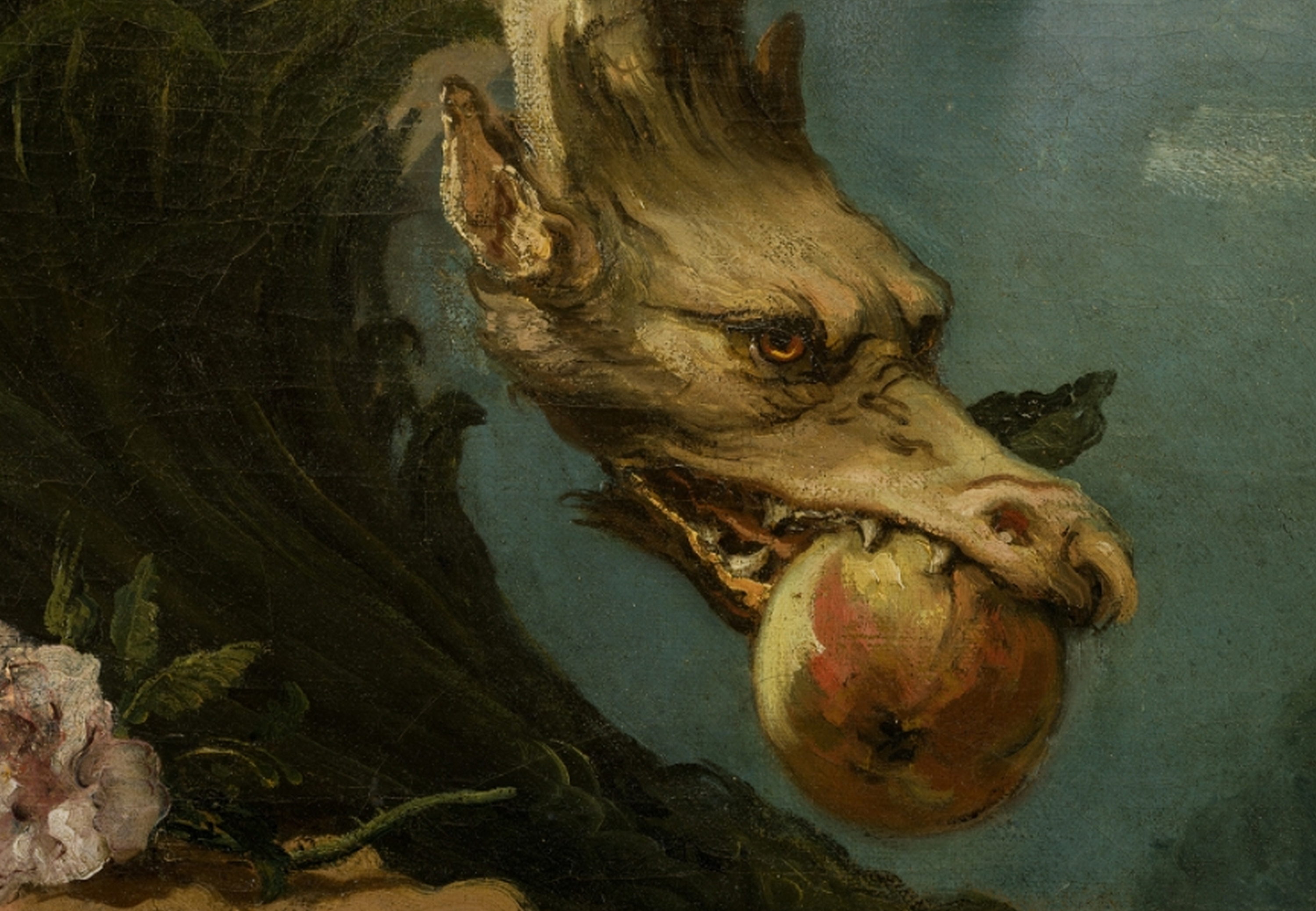
Cool Monsters
Creating some “standard monsters” for each area is desirable,
and is probably necessary to run a large and complex area. However, these monsters should be
non-standard creatures, for the most part, created to match the needs of the
dungeon area. In this way, learning
about the inhabitants is a benefit to the players, and is a bonus for
long-term play.
Nonetheless, each area also need cool and unique monsters
and NPCs that are one-of-a-kind, and these need not always be adversaries. Or, rather, some may be potential allies and
potential adversaries, based upon circumstances. La of Opar, in Edgar Rice Burroughs’ Tarzan novels comes immediately to mind.
NPCs must exist which can become allies, adversaries, love interests, mortal patrons, and rivals.
NPCs must exist which can become allies, adversaries, love interests, mortal patrons, and rivals.
Quest For It
Sometimes, the players will just want to kick in a few
doors, kill a few monsters, and take their stuff. This sort of play must be supported. But Dungeon Crawl Classics is a game
built to allow players to “quest for” extras, and there must be cool things in
the dungeon that can be objects of those quests. Not only are there unique objects to be
found, and unique patrons for wizards and elves, but there are places where
spells may be learned, martial training may occur, stats can be boosted, corruption
can be undone, and so on. Even a
Fountain of Youth might be of value if some of the characters are elderly.
Not every treasure in DCC comes in the form of gold and
gems. In fact, the most valuable
treasures do not.
A Unifying Force
Finally, because of all the gonzo directions in which such a
dungeon can go, there must be a unifying force or conflict that affects most,
if not all, of the dungeon areas. This
conflict or force should exist on a grand scale, so that it cannot be resolved
in a few sessions of play. Best of all
are conflicts that cannot be resolved outside of years of play, and that
resolution should change the nature of the region forever – perhaps even
destroy it. Read Michael Moorcock, A. Merritt,
Poul Anderson, and Fred Saberhagen for ideas regarding
overarching conflicts, and how resolving them can change everything.
Nonetheless, players should be given plenty of opportunities
to have their characters meddle early on, and their meddling should have consequences,
both for them and for the environment. A
unifying force or conflict creates the unity that makes the megadungeon more
than just a random collection of sites.
Being able to take sides, and to influence that conflict, makes the game
meaningful and fun.
More later.
Subscribe to:
Posts (Atom)