Showing posts sorted by relevance for query aboleth. Sort by date Show all posts

Tuesday, 4 February 2014

Aboleth for DCC

Found in warm, dark areas deep underground, aboleth are nightmarish amphibious creatures that superficially resemble monstrous fish weighing over 6,000 lbs.  They have multiple eyes, asymmetrical fins, and two long tentacles coated in thick, corrosive mucous that does an additional 2d4 points of acid damage to any creature struck by a tentacle or which comes in direct contact with their bodies.  Mucous from their skin forms a murky cloud in the water around them, causing 1d4 points of acid damage to any creature within the same water and within 10 feet.  They are generally solitary, and highly territorial.  However, they do come together to mate, and at odd times when their arcane interests coincide.  Seldom do aboleth form lasting alliances, however – most such alliances end in mutual antipathy.

Using an Action Die, an aboleth can attack with a 30-foot cone-shaped blast of psionic energy doing 4d6 damage (Will DC 15 for half).  Once a creature has saved successfully, it cannot be further affected by the same aboleth’s psionic blast for a period of 24 hours.

Aboleth are coated in a slimy mucous which can infect humanoid creatures by contact unless a Fort save (DC 10) succeeds.  The skin of infected humanoids becomes transparent and permeable.  The affected creature can breath water through its skin, but if outside of water for more than 6 rounds takes 1 point of Stamina damage per round until dead.  If the humanoid succeeds in a second save (Fort DC 10) 6 hours later, the infection ends and the victim’s skin returns to normal.  A second failed save makes the victim fall dormant for 6 hours, after which it has undergone a full metamorphosis into a skum under the aboleth’s telepathic control.  At any time before full metamorphosis, the infection can be reversed by a successful Lay on Hands check of 3 HD or better.  Afterwards, no mortal magic can restore the victim.  This slime affects any humanoid struck by an aboleth’s tentacle attack, or any humanoid that touches an aboleth with bare flesh (including unarmed attacks).

Aboleth employ skum both as guardians and as hands to perform their vile experiments.  They have been known to direct their skum in projects to undermine coastal towns and cities.  Aboleth hate land-dwelling humanoids, and have been known to enslave them without any obvious purpose in mind.  Any given aboleth can telepathically control up to 20 skum at a time, and can hold another 20 skum in an inert state as potential replacements.

Aboleth are interested in the arcane arts, and may have spells equal to a wizard with 1d6 levels.  All of an Aboleth's spells can be cast silently; otherwise, they may have mercurial affects similar to those of any other caster.  When rolling an Aboleth's mercurial affects, the judge should modify the roll by -20%.

Tactics

Aboleth prefer to act through their skum whenever possible.  Because of their telepathic link to their skum, they generally have a very good idea as to how capable adventurers are long before they encounter them directly.  An aboleth will typically keep at least 10 skum in reserve, to prevent adventurers from closing with them unless the aboleth so desires – in which case the skum are used to prevent opponents from fleeing.  If possible, aboleth will meet opponents in deep water, where they can use their Swim skill to gain combat advantage.

Dangerous opponents are met with an opening salvo of psionic blasts, while skum are used prevent them from either closing or running out of range.  If an aboleth believes that its opponents are weakened, it will attempt to convert them into skum.  Even if it has more skum than it can keep, it is easier to dispatch a dormant foe than one which is actively fighting back.

Aboleth:  Init +3; Atk tentacle +5 melee (1d7+4 plus acid and infection); AC 18; HD 6d10+60; MV 10’ or swim 50'; Act 2d20; SP psionic blast, acid, acid cloud, infection; SV Fort +12, Ref +4, Will +20; AL C.

Skum:  Init –2; Atk by weapon +0 melee (by weapon); AC 10; HD 1d8; MV 20’ or swim 30'; Act 1d20; SP infravision 60’, immune to psionic blast; SV Fort +4, Ref –2, Will –4; AL C.


Saturday, 24 September 2011

R is also for…Rocketships and Rayguns!


One of the things that I am doing with RCFG is ensuring that the game can be played with modern characters, as a planetary romance (or sword-and-planet saga), and even in a post-apocalyptic  framework.  Many modern players like to sharply divide fantasy from interplanetary stories containing rocketships and rayguns.  But this sharp division is not necessarily the best way to go.

Going back to many of the greats, the authors that made myself (and others) love fantasy, I see a lot of crossover between genres.  Robert E. Howard wrote Amulric, a sword-and-planet novel with a modern protagonist.  He writes of Conan encountering an alien in The Tower of the Elephant – an alien which is reminiscent of the sort that appears in so many H. P. Lovecraft stories.  Before either writer, anyone who thrilled to the adventures of John Carter on Mars or Carson on Venus knows well what a good writer (in this case Edgar Rice Burroughs) can do when he crosses genres.  Burrough’s Caspak novels, Pellucidar novels, and Moon Maid cycle offer further examples.

C.S. Lewis’ Narnia stories revolve around the intersection of our world with a fantastic one, from the dawn of that world’s creation to it’s final battle.  Likewise, in Lewis’ Silent Planet cycle, humans encounter the fantastic first on Mars, then on Venus, and finally at home on Earth.  In order to tell these kind of stories in a game, it is necessary to have the means to travel to other worlds, be they other spheres orbiting the same sun, or fantasy lands like Narnia.

In terms of blending magic and fantasy in far future, post-apocalyptic worlds, who can forget to mention the works of Jack Vance?  For those of my generation, Thundarr the Barbarian is another major influence for this kind of world. 

Nor is this concept new to gaming.  The Advanced Dungeons & Dragons 1st Edition Dungeon Master’s Guide contains guidelines for crossovers with TSR’s Boot Hill and Gamma World games.  Gary Gygax’s module, Expedition to the Barrier Peaks, had adventurers investigate a crashed starship – some of the alien creatures on board have since become standard Dungeons & Dragons monsters!  The 2nd Edition Spelljammer setting was a (mostly) clever take on mixing fantasy and interplanetary fun.  Ed Greenwood’s Forgotten Realms once had much traffic with our own world – hence they are “forgotten” not by their inhabitants, but by ourselves.

Following the adoption of the Open Gaming License with 3rd Edition Dungeons & Dragons, crossover material became even more prolific. 

Even if you never have a group of adventurers travel to the moon, or have an infantry squad discover themselves on a strange parallel earth, having rules on psionics, mutations, and classes that capitalize on the same, can be very useful when advancing the odd aboleth or other Lovecraftian horror.

Blending fantasy and science fiction and adventure tales continues to be popular.  It may have started with Mary Shelly’s Frankenstein, but it has a wide range of later application, from the Jeds and Jeddaks of Edgar Rice Burroughs’ Barsoom to the Jedi of Star Wars.  Every steampunk story containing the fantastic, every urban fantasy tale, every horror story set within the context of the modern or a future world, is part of the same long tradition. 

Even J.R.R. Tolkien suggests, in The Hobbit, that the goblins (or orcs, as they are called in The Lord of the Rings) are part of our world, and may be responsible for some of our worst modern weapons, while Gandalf’s flash-and-bang that kills several goblins in the cave in the Misty Mountains is at least suggestive of gunpowder.  Gandalf is, after all, a master of fireworks, and that is mentioned in the very first chapter!  Why?  Because the fantastic must be grounded in – and in contrast to – our everyday “world” of assumptions in order to ring true.

So, if you are wondering why a fantasy game – any fantasy game! – should bother with rules on creating mutants, aliens, or alien technology, that is my answer.  Likewise for rules on allowing interaction between the fantastic and the mundane worlds.

These things are part of the fantasy genre.  They always have been.  They always will be.

Sunday, 29 January 2023

Let’s Convert the Fiend Folio: Yellow Musk Creeper and Yellow Musk Zombie

The last two entries in the Fiend Folio are the Yellow Musk Creeper and the Yellow Musk Zombie, which means that we are ending these conversions on a high note. These creatures were used to great effect in Dwellers of the Forbidden City, also published in 1981, and credited with first introducing these monsters. Dwellers is a superlative adventure, and it introduced several other creatures which were later included in the Monster Manual II, including the Aboleth. The city map almost demands expansion, and while later lore gave it a name and some lore, the original was wide-open for the aspiring Game Master to shape to their own ends. I really don’t know why I haven’t converted these monsters to Dungeon Crawl Classics before now. In fact, the entire module is worthy of conversion.

Now, I could be completely wrong, but I think that these entries are a combination between Clark Ashton’s Smith’s The Seed from the Sepulchre and The Vaults of Yoh-Vombis. I have paid homage to the first story twice: Once in May Flowers, and once in Dread Orchid (in the expanded DCC conversion of Jungle Tomb of the Mummy Bride).

I am not 100% sure that the Yellow Musk Creeper didn’t deserve a full monster write-up, but if I was including it in an adventure, I would be more likely to choose the hazard route that I do here. These plants are not ambulatory, and they are not really making attack rolls. I tend to think we should minimize tediousness in our designs, and having to chop down an orchid with your sword seems rather tedious to me. Better by far to describe the hazards associated with the thing, and the time it takes to uproot and kill it while facing those hazards.

The Yellow Musk Zombie, on the other hand, is going to engage in combat. The trick here is that the Yellow Musk Zombie you are facing may well be your friend, and you might prefer saving them to slaying them. Yellow Musk Zombies are very much like “templates” in 3rd Edition, in that they modify an existing creature rather than being new creatures themselves. For that reason, I have included both generic Yellow Musk Zombie stats and a method of quickly transforming a PC into one.

I started this project on Saturday, 9 July 2022. Here we are 76 conversion posts, 176 entries, 203 statblocks, 9 entries without statblocks, and 3 invoke patron write-ups later. And this is it. The Fiend Folio is fully converted for your gaming pleasure. To those of you who have joined me along the way, thank you. To those of you who have commented, on the blog or elsewhere, an even bigger THANK YOU. It helps to know that I am not just chucking this stuff into the Void!

I hope you get a chance to use some of these creatures in your own games, and I hope that they can stand as examples for how to do conversion work (at least from Advanced Dungeons & Dragons). Maybe at some point I will tackle some of the unconverted creatures from the Monster Manual, Monster Manual II, and Deities & Demigods, but not immediately!

If there is something that you would like to see converted, please let me know. If you feel like tipping, here is a way to do so.


Yellow Musk Creeper

The yellow musk creeper is a large light green climbing plant with round leaves like ivy, dark green buds, and flowers like those of a bright yellow orchid with splashes of purple. Typically, the plant is found in deep tropical forests or richly soiled areas on the liminal edge of underground areas. The plant grows in areas of up to 20 square feet, and can climb up trees and rock faces with equal facility. It is sometimes planted deliberately in locations where it will guard against intruders.

When a creature approaches the plant within 20 feet, it puffs musky pollen into the victim’s face (Reflex DC 15 avoids). The victim must then succeed in a DC 20 Will save or be entranced and walk into immobile the mass of the plant. Such a victim violently resists any attempt at restraint.

Once an unresisting creature enters the main mass of the plant, aerial roots attach to its skull and begin devouring the victim’s brain. The victim takes 1d4 Intelligence damage each round, and there are too many aerial rootlets involved to prevent this Intelligence damage without also killing the plant. If the victim’s Intelligence is reduced to 0, it becomes a yellow musk zombie (see below). Otherwise, this Intelligence damage heals normally.

A growth of yellow musk creeper has a bulbous root, buried 1d3 feet below the earth. It requires 1 round per foot to reach it with proper tools (shovel, pick, etc.), but 1d3 rounds per foot with makeshift or less suitable tools. Once it is exposed, stabbing the root destroys the plant in 1d5 rounds. Of course, anyone digging up the root is subject to the hazards of the yellow musk creeper each round. This includes dealing with any yellow musk zombies that may be protecting the plant.

Certain herbalists, apothecaries, and other unsavory sorts make a powerful narcotic from the flowers and buds of the yellow musk creeper. Harvesting these is considerably dangerous while the plant is alive – only one bud or flower can be harvested each round, and the harvester must make a successful Handle Poison check (with a -4 penalty when collecting flowers) or they automatically have pollen blown into their face. A yellow musk creeper typically has 2d6 flowers and 1d4 buds. Once its flowers are gone, a creeper cannot blow pollen until it has grown new ones.

Depending upon varying quality, herbalists will pay 1d30 gp per flower and 1d20 gp per bud. Rumors persist of certain cultists, devotees of the King in Yellow, who will pay even greater fees. In addition, various personal belongings of previous victims may be found in or near a yellow musk creeper outgrowth. The creeper sometimes has yellow musk zombies move or bury these items, however.


Yellow Musk Zombie

Yellow Musk Zombie: Init -2; Atk By weapon -2 melee (by weapon); AC 8; HD 2d4; MV 20’; Act 1d20; SP Immune to mind-affecting; SV Fort +4, Ref -2, Will +0; AL N.

Yellow musk zombies are creatures that have been reduced to 0 Intelligence by a yellow musk creeper. Yellow musk zombies defend their controlling plant, seek (or create) carrion to fertilize the plant, and occasionally remove and/or bury items to conceal the nature of the yellow musk creeper’s threat. The example yellow musk zombie is from a normal human, but other creatures can be affected, and they do not need to be humanoid.

Yellow musk zombies serve their parent plant for 1d4 months before wandering off to drop lifeless in some quiet corner, unless they are killed beforehand. In either case, implanted seedling sprouts from the decaying corpse, growing quickly into a new yellow musk creeper. Although it only takes 1d4+2 turns for the new growth to become obvious, it takes a matter of 3d7 days before it grows flowers. If the parent plant is killed while a yellow musk zombie is serving it, the zombie becomes inert, taking no actions and dying in 2d6 hours unless cured first.

Yellow musk zombies are not un-dead, and until they finish serving their parent plant (or are killed while doing so) there is some slight chance that a yellow musk zombie can be cured of its affliction. First, its master plant must be destroyed. Second, either a neutralize poison or disease spell or a successful laying on of hands to neutralize poison must be administered to the creature. Finally, the creature must receive a clerical laying on hands with a spell check of 20+. Even then, although the victim will thus be restored to their former self in time, they will need to recover their lost Intelligence, regaining 1 point for each full day of bed rest. A creature can choose to forgo complete recovery by bed rest, but if they do so any unrestored points of Intelligence are permanently lost.

Transformation to a Yellow Musk Zombie

If you wish to transform a PC or another living creature into a yellow musk zombie, employ the following steps:

  • The creature takes a -2 penalty to Initiative, attack rolls, Armor Class, and Reflex saves.
  • The creature takes a -10’ penalty to its move speed (this may render some yellow musk zombies immobile).
  • The creature gains +1 Hit Die.
  • The creature becomes immune to all mind-affecting spells and effects, and gains a +5 bonus to Fortitude saves.
  • The creature is no longer intelligent enough to use spells or special abilities requiring thought.
  • The creature’s alignment becomes Neutral.

Thursday, 4 January 2018

Free Monsters!

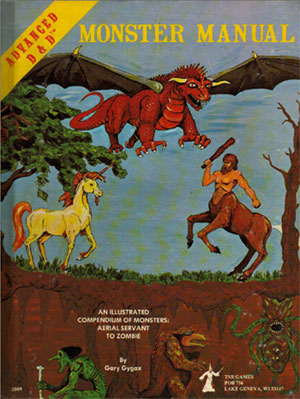
The original Monster Manual boasted "OVER 350 MONSTERS" for your game. While I am only halfway there in terms of free content, my last update just hit 175 distinct entries.

Among them are old favorites like the Aboleth, the Otyugh, the Rhadogessa, and the Sahuagin, but there are also a fair amount of creatures from classic programs and movies, like the Amatons, the Daleks, and the Troopers from Stargate. Robert E. Howard is recognized with statistics for Conan and Breckinridge Elkins, while Edgar Rice Burroughs also sees stats for Tarzan.

If you need stats for a Giant Mutated Turkey, a Cyclopean Deep One Pugilist, or a Potted Plant for your home adventure, I've got you covered.

If you want to use some of these stats commercially, contact me. If you need more free monsters, head over to Appendix M.