Showing posts sorted by date for query brain. Sort by relevance Show all posts

Friday, 12 December 2025

Let’s Convert the Monster Manual: Sahuagin, Salamander, Satyr, Giant Scorpion, and Sea Hag

Here are some monsters that I think most of us have used. Sahuagin raiders on a port town is a classic.

Sahuagin Warrior: Init +2; Atk spear +3 melee (1d8+1) or claw +3 melee (1d3) or bite +1 melee (1d6); AC 12; HD 2d8+2; MV 25’ or swim 50’; Act 1d20; SP control sharks, grapple ships; SV Fort +2, Ref +3, Will +5; AL C.

Sahuagin Mutant: Init +2; Atk spear +3 melee (1d8+1) or claw +3 melee (1d3) or bite +1 melee (1d6); AC 12; HD 2d8+2; MV 25’ or swim 50’; Act 2d20; SP control sharks, grapple ships, four arms; SV Fort +2, Ref +3, Will +5; AL C. (Four arms.)

Sahuagin Mutant: Init +2; Atk spear +4 melee (1d8+2) or claw +4 melee (1d3+1) or bite +2 melee (1d6+1); AC 12; HD 3d8+3; MV 25’ or swim 50’; Act 1d20; SP control sharks (6 HD), grapple ships, psionic attack (120’ range, 1d8 dam, Will DC 13 half); SV Fort +2, Ref +3, Will +5; AL C. (Larger, shark-attuned, psionic.)

Sahuagin Mutant: Init +2; Atk spear +5 melee (1d8+3) or claw +5 melee (1d3+2) or bite +3 melee (1d10); AC 12; HD 4d8+4; MV 25’ or swim 50’; Act 1d20; SP control sharks, grapple ships; SV Fort +2, Ref +3, Will +5; AL C. (Larger twice, feral bite three times.)

Cunning and savage fish-folk, the sahuagin hate everybody. Especially aquatic elves…perhaps by extension all elves. They attack ships. They work well with sharks, which they can command, so perhaps they don’t hate everything. The sahuagin are subject to mutation, sometimes having four arms. They are also, apparently, sometimes far more human-like and at other times far more fish- or shark-like in their skeletal structure.

Elves have always gained their magical powers by making pacts with supernatural entities – powerful demons, nature spirits, fey lords, and eldritch beings from the dawn of time. Thousands of years ago, on the Isles of Sahua, there was a group of elves whose devotion to the shark-god, Kuawangu. They fed slaves to the sharks in His sacred pools, and in return they gained the bounty and protection of the seas.

Sahua is long gone, brought beneath the waves in a fiery volcanic cataclysm. Some say that there was a schism between the followers of jealous patrons, and that the followers of Kuawangu were transformed to carry their lord’s vengeance against all others. Some say that the elves of Sahua turned from the shark-god, and He wreaked the destruction of their islands, elevating the sharks from His sacred pools to rule the watery palaces where proud elven folk once strode. Whatever the truth may be, Sahua is gone, and the Sahuagin swarm where ancient charts once placed the island chain.

Sahuagin are tall, slender humanoids with green scaled skin, shark-like teeth, and sharp claws. They favor tridents as weapons, but, like elves, avoid the use of iron and steel. This may be an indication of their elven ancestry, or it may be because such metal rusts quickly in the salty brine of their ocean home. Their scales are darker toward their spines, fading to a green-white on their bellies. Only a careful examination can determine the gender of a non-pregnant female sahuagin, or an unaroused male.

Sahuagin warriors can control up to 2 Hit Dice of sharks each. They are capable of using strong lines of seaweed fibres and animal sinews to grapple ships from below. The sahuagin holding each line adds drag to the ship, slowing it until it is brought to a stop. The sahuagin then board the ship, slaughtering all aboard before sinking the hapless vessel.

Sahuagin mutants call themselves “Scions of Kuawangu”, and claim that their mutations are the result of the Shark-God’s divine bloodline. When rolling up a small band of sahuagin, the judge may use 1d30 to see which are mutated. Alternately, roll 1d10 and use the numbers in parenthesis for whichever sahuagin you decide are mutated.

Die Roll                 Mutation

1-20                       None

21-24 (1-4)          Additional pair of arms. +1 Action Die, and it is possible to wield a second trident.

25 (5)                     Extended fish tail. +20’ to swim speed, -5’ to land speed.

26 (6)                     Larger. Increase HD by 1d8+1. Increase melee attack rolls and damage by +1.

27 (7)                     Shark-attuned. Can control double the normal HD of sharks.

28 (8)                     Feral bite. Bite damage increases by +1d on the dice chain. Worse, wound continues bleeding for 1 damage each round until staunched (requires 1 minute) or magical healing is applied.

29 (9)                     Psionic. Enlarged head and brain. Can make a psychic attack for 1d8 damage within 120’. Will save (DC 1d20 + sahuagin’s HD) for half. If this is rolled more than once, increase damage by +1d on the dice chain.

30 (10)                  Multiple mutations. Roll 1d3. Ignore future instances of multiple mutations. Or don’t, and make a truly terrifying adversary.

Taken from this post.

Salamander: Init +6; Atk claw +5 melee (1d4) or bite +3 melee (1d8) or by weapon +5 melee (by weapon + 1d3 heat); AC 16; HD 6d8; MV 30’; Act 1d20; SP heat (1d8 each round to all within 20’; Fort DC 12 for half), cold vulnerability (+1d12 damage per die), immunities (fire, non-magical weapons, sleep, and charm), death throes; SV Fort +3, Ref +12, Will +8; AL C.

Salamanders are fire spirits, which are often armed with red-hot metal weapons – usually spears, but this can vary by individual. They are so hot that even getting close to them is damaging, but this also makes them extremely vulnerable to cold.

A slain salamander simply winks out of existence unless bound to the Lands We Know. A bound salamander turns into a warm pool of glistening liquid – its essence, which can be used as a power component for fire-based spells. A bound salamander leaves 2d3 doses of this substance behind, each of which can be used to grant a +1d3 bonus to a fire-based spell when cast.

Modified from this post.

Satyr: Init +2; Atk by weapon +2 melee (by weapon) or kick +1 melee (1d3) or pan pipes; AC 13; HD 3d6; MV 40’; Act 1d20; SP pan pipes; SV Fort +1, Ref +3, Will +2; AL C.

Faun: Init +3; Atk by weapon +0 melee (by weapon); AC 13; HD 1d8; MV 40’; Act 1d20; SP stealth (+6), iron vulnerability; SV Fort +0, Ref +5, Will +1; AL N.

Satyrs are male creatures half-human and half-goat, which embody human passions of gluttony, lust, fear, and rage. Although they may use weapons, a satyr carrying pan pipes (a syrinx) can use this instrument to cast charm person, scare, or sleep with a +8 bonus to the spell check.

Satyrs are not automatically antagonistic, but they are prone to licentiousness, rudeness, and violence as the mood strikes them. 

Fauns are similar to satyrs, but smaller, less volatile, and more civil in both their attitudes and behavior. Fauns are very hard to spot in natural environs, having a +6 bonus to any attempts at stealth. They are vulnerable to iron weapons, taking double damage from any weapon made specifically of iron.

Both of these creatures featured in November 2022’s Faeries of the Twilight World, and both will be included in the upcoming Cyclopedia of Common Faeries.

Giant Scorpion: See the core rulebook, page 425. The Cyclopedia of Common Animals includes scorpions, scorpion swarms, and monstrous scorpions which are closer in size to those in the Monster Manual.

Sea Hag: Init +0; Atk dagger +1 melee (1d4) or death gaze; AC 13; HD 3d6; MV 30’ or swim 40’; SP death gaze (3/day, 1d6 damage plus DC 13 Will save or die), weakness (1d4 temporary Strength damage, DC 13 Will negates); Act 1d20; SV Fort +2, Ref +0, Will +5; AL C.

These fey creatures are so hideous that, on seeing them, creatures must succeed in a DC 13 Will save or suffer 1d4 Strength damage for 1d4 turns. They can be found in dismal and unlovely shallow seas and shores, where they seek to slay mortal creatures and consume them. The weakness they cause aid in drowning victims, and three times each day they can gaze upon a creature within 30’, causing 1d6 damage and requiring a DC 13 Will save to prevent the victim from simply dying.

Friday, 31 October 2025

Let’s Convert the Monster Manual: Finishing off the “M”s: Merman, Mimic, Mind Flayer, Minotaur, Mold, Morkoth, Mule, and Mummy

Happy Halloween!

Like the last post, this one will be somewhat long, but it covers a few important monsters. Mimics and mind flayers may be the most requested critters from the Monster Manual, and they are certainly monsters I have used, despite the complicated psionics rules in the original AD&D. The converse, though, is the morkoth, which I have never used. I will try to make it more to my tastes, anyway, herein.

Merman: Init +3; Atk spear or trident +4 melee (1d8+1); AC 15; HD 3d6; MV 10’ or swim 60’; Act 1d20; SV Fort +5, Ref +5, Will +2; AL N.

Mermaid: Init +5; Atk none; AC 15; HD 3d6; MV 10’ or swim 60’; Act 1d20; SP charming voice (1/day, Will DC 14 resists, lasts 1d4 days), kiss confers water breathing for 1d3 hours; SV Fort +3, Ref +9, Will +3; AL N.

These statistics come from this post. Merfolk generally shy away from land-dwellers, although they sometimes attack ships, and mermaids will sing to charm sailors onto reefs. A mermaid’s charming voice affects all who can hear it, and has a range of 500’.

Small Mimic: Init (always last); Atk pseudopod +2 melee (1 plus sticky); AC 12; HD 1d6; MV 5’; Act 1d20; SP camouflage, half damage from slicing and piercing weapons, sticky (Strength DC 15 to break free); SV Fort +4, Ref -2, Will -6; AL N.

These creatures are made of primordial slime, which has a rudimentary intelligence able to reshape itself into an object that appears to fit within the area it inhabits. Shape, texture, and colors are all reproduced although a suspicious character may see through the disguise with a DC 16 Intelligence check. The mimic otherwise gains surprise automatically.

Creatures that touch the mimic or are hit by a pseudopod are stuck to the creature, and cannot break free without a DC 15 Strength check, granting the mimic a +2 bonus to future attacks. Weapons which strike the mimic also become stuck, taking a -2d shift to damage, unless pulled free or the mimic is slain. A weapon stuck to a mimic stuck to a PC is useless until either the PC or weapon is freed.

Medium Mimic: Init (always last); Atk pseudopod +4 melee (1d4 plus sticky) or bite +2 melee (1d8); AC 10; HD 2d8; MV 5’; Act 1d20; SP camouflage, half damage from slicing and piercing weapons, sticky (Strength DC 19 to break free); SV Fort +6, Ref -4, Will -4; AL N.

These creatures are made of primordial slime, which has a rudimentary intelligence able to reshape itself into an object that appears to fit within the area it inhabits. Shape, texture, and colors are all reproduced although a suspicious character may see through the disguise with a DC 20 Intelligence check. The mimic otherwise gains surprise automatically.

Creatures that touch the mimic or are hit by a pseudopod are stuck to the creature, and cannot break free without a DC 19 Strength check. Stuck creatures have a -2 penalty to attack rolls, spell checks, and skill checks until they pull free. Weapons which strike the mimic also become stuck, and therefore useless, unless pulled free.

Large Mimic: Init (always last); Atk pseudopod +6 melee (1d6 plus sticky) or bite +4 melee (1d10); AC 10; HD 4d8; MV 5’; Act 3d20; SP camouflage, half damage from slicing and piercing weapons, sticky (Strength DC 21 to break free); SV Fort +8, Ref -6, Will -2; AL N.

These creatures are made of primordial slime, which has enough intelligence to be able to reshape itself into an object or group of objects which appears to fit within the area it inhabits. Shape, texture, and colors are all reproduced although a suspicious character may see through the disguise with a DC 20 Intelligence check. The mimic otherwise gains surprise automatically.

Creatures that touch the mimic or are hit by a pseudopod are stuck to the creature, and cannot break free without a DC 21 Strength check. Stuck creatures have a -2 penalty to attack rolls, spell checks, and skill checks until they pull free. Weapons which strike the mimic also become stuck, and therefore useless, unless pulled free.

Huge Mimic: Init -4; Atk pseudopod +10 melee (1d8 plus sticky) or bite +6 melee (1d12); AC 10; HD 8d8; MV 5’; Act 5d20; SP camouflage, half damage from slicing and piercing weapons, sticky (Strength DC 24 to break free); SV Fort +10, Ref -8, Will +0; AL N.

These mimics are intelligent enough to speak, and can reshape themselves into reasonably complex objects or groups of continuous objects. Shape, texture, and colors are reproduced well enough that even a suspicious character may only see through the disguise with a DC 22 Intelligence check. The mimic otherwise gains surprise automatically.

Creatures that touch the mimic or are hit by a pseudopod are stuck to the creature, and cannot break free without a DC 24 Strength check. Stuck creatures have a -2 penalty to attack rolls, spell checks, and skill checks until they pull free. Weapons which strike the mimic also become stuck, and therefore useless, unless pulled free. Unlike lesser mimics, mimics of this size can choose to release creatures or objects, or suppress their natural stickiness to lure creatures into a false sense of security – possibly getting creatures to willingly enter it before the entrances disappear and the creatures attack!

Because these mimics possess a low intelligence, there is a chance of parlaying with them.

These creatures were modified slightly from this post.

Mind Flayer: Init +2; Atk facial tentacles +4 melee (2d4 plus latch) or psionic blast; AC 15; HD 6d8; MV 30’; SP latch, eat brain, psionic blast (3/day, 30’ cone with 30’ base, 3d8 damage, DC 20 Will negates), immune to broken bones, regenerate 1/turn; Act 1d20; SV Fort +2, Ref +3, Will +8; AL L.

These subterranean humanoids arrived in the Lands We Know from some alternate world or plane. They have squid-like faces, and their flexible bodies indicate that their bones are malleable in a way our own are not.

When a mind flayer attacks with its facial tentacles, it latches onto its victim, who can escape with either a DC 16 Strength check or a successful Mighty Deed (4+). On the following round, and each round thereafter until the victim is freed, or either the mind flayer or the victim is dead, this alien creature begins the process of extracting its victim’s brain to consume. The victim takes 1d4 Intelligence and Personality damage each round; when both reach 0 the brain is extracted and the victim irrevocably dead. Even if the victim is rescued before full extraction, they must succeed in a Fort save (DC equals 10 + the total amount of Intelligence and Personality damage taken), or half the Intelligence and Personality damage taken is permanent, rounded up.

These creatures can also create a psionic blast, a cone of psychic force which damages all within it unless they succeed in a DC 20 Will save.

Mind flayers are said to live in communities deep beneath the surface of the world, where they hate and despise us. In addition to weird experiments and entertainments beyond the understanding of ourselves, mind flayers spend their time plotting our downfall, travelling to distant planes or planets, and even scheming ways to put out the light of the sun.

Minotaur: See the core rulebook, page 422.

Yellow Mold: When disturbed, this gives out a cloud of poisonous spores in a 10’ radius. All within spend 1d3 rounds incapacitated from choking, taking 1d3 Stamina damage in the process. Thereafter, they must succeed on a DC 10 Fortitude save or die in 1d5 turns. A new patch of yellow mold grows from the corpse 1d3 days later.

Yellow mold is susceptible to fire, and may be destroyed thereby. A thief seeking to obtain a sample of yellow mold sufficient for one use must succeed in a Handle Poison check with a -1d penalty.

Brown Mold: This fungal growth feeds on heat. Within 100’ of a patch of brown mold, it becomes noticeably colder. Within 30’, living creatures take 1d4 damage per round from the intense cold. Should a living creature actually touch brown mold, it takes 3d4 damage (or 3d4 damage per round of contact) as the mold feeds off the creature’s heat. Un-dead infested with this stuff or pit traps coated in it are therefore extremely dangerous!

An application of extreme cold or magical cold destroys brown mold, but little else (if anything) affects it.  

Morkoth: Init +0; Atk bite +4 melee (1d10) or charm; AC 17; HD 7d6; MV 30’ or swim 40’; Act 1d20; SP hypnosis, charm, spell reflection; SV Fort +3, Ref +3, Will +3; AL C.

This monster is variably referred to as a morkoth, morlock, or “wraith of the deep”. It is a dim, shadowy monster, said to combine aspects of a humanoid and cephalopod, but reports vary and few who come face-to-face with the monster survive.

Morkoths are solitary beings, who make their lairs in dark, deep waters, inhabiting the nexus of a series of 1d5+3 spiraling tunnels. These tunnels draw creatures passing within 30’ to them hypnotically, drawing the victim further and further in, until they draw close to the nexus (DC 15 Will negates). The tunnels are so constructed that creatures larger than a typical humanoid cannot enter.

Once a creature reaches the nexus, the hypnotism fails, but the morkoth can charm its victim, forcing it to hold still, unaware and unacting, while the creature devours it with its squid-like beak. Once charmed, a victim is held by this effect for 1d6 hours, allowing the morkoth to feed at its leisure.

Spells targeting a morkoth instead reflect back to the caster (and possibly affecting others nearby also; the caster is the center of any area effect, which might still include the morkoth).

Mule: See the core rulebook, page 418, or the Cyclopediaof Common Animals for expanded information.

Mummy: See the core rulebook, page 422.


Friday, 22 August 2025

Let’s Convert the Monster Manual: Giant Gar, Gargoyle, Gas Spore, Gelatinous Cube, Ghast, Ghost, Ghoul, Giant, Gnoll, and Gnome

After the last short Monster Manual conversion post, this one is a bit longer. I was somewhat chagrinned to discover that I hadn’t included a giant gar in the Cyclopedia of Common Animals, but that is remedied here. Still, a lot of monsters in the Monster Manual are covered in the core rulebook, so this post will not be as long as the title might suggest.

Of all the monsters I am converting today, the gelatinous cube holds the fondest memories for me. Even in its original incarnation, if you spot it most of the time you can simply walk away from it. But what happens when you hit a dead end? If there is a secret door, can you find it before the cube catches up to you? In some cases, PC fleeing from one encounter have run smack-dab into a cube while running. And, of course, partially-digested remains, bones, or armor seeming to float down a corridor can be both eerie and misleading.

Giant Gar: Init +4; Atk bite +6 melee (1d6); AC 14; HD 3d8; MV swim 50’; Act 1d20; SV Fort +2; Ref +3; Will +0; AL N.


Torpedo-shaped fish which grow to 1d10+20 feet in length, giant gars prefer to attack by ambush, but are willing to openly attack anything smaller than them, including adventurers.

Like smaller gars, giant gar roe is toxic to humans when consumed (Fort DC 18 or 1d3 Stamina damage), and a thief can distill this toxic quality to a more lethal version (Fort DC 22 or 2d4 Stamina damage) with 3 helpings of roe, suitable equipment, and a DC 10 Handle Poison check. Failure that does not result in poisoning indicates that the roe was overheated, and the toxic qualities lost. A gravid female giant gar has 2d6+3 helpings of roe. Masses of roe can also be collected once the fish have spawned, at the judge’s discretion.

Gargoyle: See the core rulebook, page 413.

Gas Spore: I did this post in 2015, which to my mind covers the gas spore better than a direct conversion.

Gazeball: Init –2; Atk Slam +2 melee (1d3) or infect –4 melee (0); AC 8; HD 4d8; fly MV 10’; Act 1d20; SP symbiotic spores, reproductive spores, slime, infestation, explosion, immune to mind-affecting, half damage from bludgeoning; SV Fort –5, Ref –4, Will –2; AL N.

A gazeball is a fungal horror which appears to be a large eye, floating in midair, perhaps due to some form of levitation. Rhizomatic growths at its apex appear almost like a crown of eyes, each at the end of a short tentacle-like growth. In fact, pustulant sacs in the gazeball’s mass create a volatile gas that provides lift, and the “crown of eyes” are designed to incubate, and eject the spores of, a secondary symbiotic fungi. The gazeball can shoot a line of symbiotic spores up to 30’ (Ref save DC 15 or suffer 1d3 temporary Agility damage).

When a target is paralyzed, or can barely move due to the symbiotic spores, the gazeball uses another growth to deposit its own spores on the victim. These spores are laid in a thick coat of slime over the victim’s face. The slime can be broken down by alcohol, or dissolves on its own after a period of 2d10 minutes. While the slime is present, the victim is blinded. During this period, the spores travel into the victim’s skull, where they infest the brain (a DC 20 Fort save prevents this from occurring). If the slime is washed off within the first 10 rounds, the victim gains a +1 to +10 bonus to the save, with the highest bonus indicated it is washed off within a single round.

The gazeball’s spores cause 1d3 Intelligence damage immediately upon infestation, and then cause 1d3-1 points of Intelligence damage each day thereafter. When damage causes a PC to fall to 10 Intelligence or less, the character’s entire head becomes tender. Thereafter, there is visible cranial swelling. If a victim falls to 0 Intelligence, roll 1d3-1. On a result of 1-2, the victim’s skull explodes, revealing new gazeballs equal to the number rolled (1 or 2) with 1 HD each. On a roll of “0”, the victim manages to defeat the infection, and slowly returns to normal. Otherwise, the infection can only be cured by magic or clerical healing (4 HD result or better).

A gazeball’s slam attack is only used in self-defense. The fungal creature is not looking for a meal, but for the chance to reproduce.

Finally, when damaged there is a percentage chance equal to the total damage taken that a gazeball will explode due to the weakening of the gas pustules. This causes 1d3 damage to all targets within 30’, who must also succeed in a DC 5 Fort save to avoid infestation with the gazeball’s spores. If there is an open flame within the radius of the blast, it causes a secondary explosion for 2d6 damage (Reflex save DC 10 for half damage; characters who take 6+ damage are set on fire). Each point of fire damage counts as 5 points when determining the chance of explosion.

Gelatinous Cube: This listing is based off the primeval slime found on pages 423-424 of the core rulebook. A 10’ x 10’ x 10’ cube would consist of eight 5’ cubes. I also included a smaller, 5’ cube which would be easier to defeat.

Gelatinous Cube (10’ cube): Init (always last); Atk pseudopod +4 melee (1d4 plus paralysis) or engulf; AC 10; HD 8d8; MV 5’, climb 5’; Act 8d20; SP near-transparent, paralysis (1d6 hours, DC 14 Fort negates), engulf, immune to mind-affecting and electricity, half damage from slicing and piercing weapons; SV Fort +6, Ref -8, Will -6; AL N.

Gelatinous Cube (5’ cube): Init (always last); Atk pseudopod +4 melee (1d4 plus paralysis) or engulf; AC 10; HD 1d8; MV 5’, climb 5’; Act 1d20; SP near-transparent, paralysis (1d6 hours, DC 14 Fort negates), engulf, immune to mind-affecting and electricity, half damage from slicing and piercing weapons; SV Fort +6, Ref -8, Will -6; AL N.

Gelatinous cubes are nearly transparent, and hard to see in the uncertain light of a dungeon. They are effectively invisible at as far as 10’ away unless one is specifically looking for one (DC 10 Intelligence at 10’; DC increases by +2 per additional 5’ away.

If it does nothing else that round, a gelatinous cube may engulf a paralyzed victim, doing an automatic 2d4 damage each round until the cube is slain and the victim rescued. A 5’ cube can only engulf a single victim, but a 10’ cube can engulf up to 4 human-sized creatures. Slain creatures are likewise engulfed, and engulfed creatures are digested over the next 1d4 hours. It takes an additional 1d4 hours to digest bone. Gelatinous cubes cannot digest metal, and generally expel engulfed metal objects after 2d6 days.

Ghast: Init +2; Atk bite +4 melee (1d4 plus paralyzation) or claw +2 melee (1d3); AC 12; HD 4d6; MV 40’; Act 1d20; SP un-dead traits, paralyzation (1d6 minutes, DC 15 Fort negates), stench (10’ radius, -1d penalty to all rolls, DC 13 Will negates), infravision 100’; SV Fort +2, Ref +0, Will +0; AL C.

Ghasts are similar enough to ghouls that they cannot be told apart at a distance, but their stench is such that anyone coming within 10’ of a ghast must succeed in a DC 13 Will save or take a -1d penalty for as long as they remain within melee range of a ghast.

Ghasts sometimes lead packs of ordinary ghouls.

Ghost: See the core rulebook, pages 413-414.

Ghoul: See the core rulebook, page 414.

Giant: See the core rulebook, page 414-416. Cloud, fire, hill, stone, and storm giants are covered.

Gnoll: See the core rulebook, page 416.

Gnome: The first published gnome class for DCC was by Yves Larochelle, appearing in Crawl! #6. I received kind permission from the author to use his creation with slight tweaks for Gnome Jambalaya.  The Pax Lexque Campaign Guide (Ed Stanek and Xuân Stanek, with contributions by Susan Stanek) includes another gnome class. A third gnome class appears in Brendan LaSalle’s Xcrawl Classics RPG. That niche has been more than adequately covered.

But what if you don’t want a class, but just want some small faerie-types living in your woodlands? Let’s do that instead.

Gnome: Init +4; Atk tiny spear +4 melee (1d3) or tiny bow +6 ranged (30’ range, 1d3); AC 18; HD 1d3; MV 10’; Act 1d16; SP heightened senses, speak with animals, healing, stealth +10; SV Fort -4, Ref +10, Will +2; AL N.

Gnomes are fey creatures of the forest, ranging from six inches to a foot in height. They live in underground communities dug out around the roots of large trees. They can speak with mammals, birds, and similar animals, and get along well with them, save for weaselkind and rats. They hate weasels of all types, save otters, and will trap and slay them if possible.

Gnomes have a great store of healing lore, and can cure 1d6 hp once per week with 1d8 minutes of work. Other conditions, such as blindness, paralysis, and disease, can also be cured, but the process may take days or even weeks (per judge). Likewise, they understand which plants are toxic, and are not above using this knowledge to be rid of problematic intruders.

Gnomes are very good at hiding. They prefer muted and woodland colors for the most part, but have a deep and abiding love for their conical red hats.  When a gnome is spotted, it is almost always due to their cap, although sometimes what is mistaken for a gnome’s cap is actually a mushroom, and not all mushrooms are safe to touch (let alone eat)!


Sunday, 17 August 2025

Let’s Convert the Monster Manual: Giant Eagle, Ear Seekers, Eel, and Efreeti

As we go on with converting the original Monster Manual, we will eventually run into more creatures which have already been converted in the DCC core rulebook or in my blog. In the case of blog conversions, I will include both a link to the original post and statistics here.

Weed eels are another monster that I can’t remember ever using in my 1e days, although I can’t be certain. They may have, for instance appeared in a module I ran. They certainly made little impression…except maybe things that intelligent players would avoid. In my conversion, I tried to give players at least some small reason to interact with them.

I have, of course, used ear seekers. There some things that the Monster Manual format simply doesn’t suit, and this is one of them. I tried to make a version of the critters which would present a “realistic” threat to PCs which gave them some time to respond to it, and which might even resolve itself without PC intervention.

Giant Eagle: See the Cyclopedia of Common Animals.

Ear Seekers: These insects are found in rotting and semi-rotten wood, where their natural instinct leads them to lay their eggs in warm places. Under normal circumstances, ear seeker eggs are laid in areas where damp wood gives off heat due to decomposition. Sometimes, though, they infest wooden doors (and similar objects) underground. When a cautious adventurer presses their ear to the door to hear any sounds from the other side, they get a nasty surprise.

It is difficult to tell when a door (or other object) has been compromised by ear seekers in the flickering light of torch or candle. A DC 25 Intelligence check may determine this (with dwarves gaining their underground skill bonus and thieves gaining their bonus to find traps), but even when a door is infested, a listener must fail a Luck check to be affected.

Failing the Luck check means that one or more ear seekers have crawled into the unfortunate one’s ear. A healer (or similar) may attempt a DC 15 Intelligence check to flush them out before they lay eggs, if a suitable fluid is available. Otherwise, they lay 2d12 eggs in 1d6 rounds. It takes 2d6 days for the eggs to hatch, and until hatching the infestation can be removed with 2 Hit Dice of clerical healing. Otherwise, they begin burrowing inward after hatching, and have a cumulative percent chance of reaching the brain each day after the first equal to the number of eggs. I.e., if 13 eggs were laid, the ear seekers have a 13% chance of reaching the brain the day after they hatch, a 26% chance the next day, and so on.

Ear seekers which reach the brain do 1d3 points of Intelligence and Personality each day, and if they do 3 points of damage to either stat on any given day, 1 point is permanent. Once they have hatched, ear seekers can be destroyed by 3 Hit Dice of clerical healing or as a poison.

2d8 days after hatching, the ear seekers exit through the ear, and seek out decomposing wood of their own to infest. Judges should note that it is possible to survive an ear seeker infestation without taking any damage at all, if few eggs are laid and the insect larvae leave relatively quickly.

Because they sometimes infest other wooden objects, adventurers who sleep in dungeons near rotting furniture and old wooden chests may attract these burrowing insects with their body heat and become infested while asleep and unaware, but this is exceedingly rare.

Eel: See the Cyclopediaof Common Animals for electric and giant eels. If an eel has a maw with a pharyngeal jaw, that’s a moray.

Weed Eel: Init +7; Atk bite +0  melee (1 plus venom); AC 12; HD 1d5; MV swim 50’; Act 1d20; SP venom (1d6 damage plus Fort DC 12 or die), camouflage (+10); SV Fort +1, Ref +2, Will -2; AL N.

These venomous eels are about as long as a human, ribbon-like, and various shades of green which allow them to easily hide among sea grass. Although exceedingly rare, when they are found it is in relatively shallow waters, either fresh or salt. Unusually for fish, they are communal, with 4d6 adult eels cohabitating in a single area, and they appear to care for and protect their young in a similar communal fashion. Although humanoids are not their natural prey, they are aggressive when defending their territories.

There are typically 1d3-1 weed eel young per adult, and they can be sold to the tables of the nobility and rich due to their excellent flavor, which is ruined when the venom glands develop with adulthood. Young weed eels can be sold for 5 sp each when fresh.

A thief can extract 1d3+1 doses of venom from an adult weed eel after its death with a successful Handle Poison check. Because of its potency, this venom is highly prized. It is also versatile, being as potent when consumed as it is through injury, although its flavor is rather rank and fishy.

Efreeti: Init +2; Atk staff +1 melee (3d8) or short bow +3 ranged (1d6); AC 18; HD 10d8+10; MV 20’ or fly 60’; Act 1d20; SP immune to fire, see below; SV Fort +7, Ref +9, Will +12; AL L.

Normal jinn-folk may be found in the Traveling Souk of Malik Aabdar, but there are greater efreet who partake both of the elemental plane of fire and the secret places of their lesser kin. Indeed, many efreet dwell in the fabled City of Brass, ruled by a powerful sultan, in a desert land with seas of flame. Efreet may be captured and forced to serve, but their hatred of such servitude, and their desire for revenge, are well known. Efreet have cruel, evil dispositions, and they will mislead or trick mortals if they are able. Although they can appear as small as (or smaller than) mortal folk if they so desire, in their natural state, greater efreet are 12 feet tall, or even taller.

Greater efreet can do any of the following once per day without requiring a spell check:

  • Grant up to three wishes. Granting a third wish always releases an efreeti from its bonds, and the creature will do its utmost to pervert the intent of any wish it grants.
  • Evoke any of the following spells, with a spell check result of 20: control fire, enlarge, fireball, flaming hands, planar step, and scorching ray.
  • Create an illusion with both visual and audile components, lasting without concentration until dispelled or touched.
  • Become invisible and/or assume gaseous form.
  • Carry up to 700 pounds without tiring, and can carry double that weight for a short time (1d6 turns afoot or 1d3 turns flying before needing to rest for at least an hour).

It is possible to capture and enslave these beings through the use of spells or magic items, although they cannot be enslaved for more than 1,001 days, or until they grant a third wish, and tales of their vengeance thereafter are terrible.

Efreet can speak their own tongue and that of any person or beast with intelligence they meet through a limited form of telepathy which enables them to speak appropriately. They can travel the astral plane, elemental planes, material planes, and to the secret places of the jinn at will.

Tuesday, 5 August 2025

Let’s Convert the Monster Manual: Metallic Dragons

Dungeon Crawl Classics doesn’t use the chromatic and metallic scheme of devising dragons which is prevalent in Dungeons & Dragons as well as in the original Monster Manual. When converting materials from D&D to DCC, I have found that completely reworking dragons into their DCC versions is the best policy. Sometimes, however, you might want to retain the original version more closely to match an environment, the dragon’s allies, or the tone of a module or module series.

Therefore, I am presenting average specimens of the metallic dragons in DCC terms, similar to what I did for the chromatic dragons. Regardless of alignment, all metallic dragons are good.

The dragon generator at Purple Sorcerer Games is highly recommended in this regard.

In my experience good-aligned dragons are used less often than adversarial (evil) ones. The obvious exception to this is the dragon that appears to be some vulnerable NPC, which is there just to teach the PCs a much-needed lesson in humility. To my mind, this is somewhat unfortunate, as trying to depict a monster’s point of view is one of the joys of role-playing.

Interestingly enough, the gold dragon is the only non-unique dragon in the original Monster Manual not to have a Latinate name. I have fixed that here.

Brass Dragon: Init +7; Atk claw +8 melee (1d8) or bite +8 melee (1d12) or breath weapon or spell; AC 17; HD 7d12; MV 50’ or fly 100’; Act 3d20 plus 1d16 (spells); SP breath weapon (3/day, 60’ cone of sleep gas with 20’ base, Fort DC 17 or fall into deep sleep for 2d6 turns), breath weapon (3/day, 20’ diameter cloud of fear gas up to 30’ away, Will DC 17 or flee in terror for 2d6 rounds), spellcasting (1d16+4, spells: enlarge, invoke patron, Nythuul's porcupine coat, and mirror image); SV Fort +7, Ref +7, Will +7; AL C.


The highly intelligent brass dragon (draco impudentus gallus) inhabits cavernous lairs in sandy desert regions. Quite forward by nature, and both selfish and greedy to boot, brass dragons love to converse with other creatures. When suitably flattered, they remember their better nature most of the time.

Bronze Dragon: Init +8; Atk claw +9 melee (1d8) or bite +9 melee (1d12) or tail slap +9 melee (1d20) or breath weapon or spell; AC 18; HD 8d12; MV 50’ or fly 100’; Act 4d20 plus 1d20 (spells); SP breath weapon (3/day, 1d4 forks of electricity 3d6x 10’ long, damage equal to hp, DC 18 Reflex for half), breath weapon (3/day, repulsion gas cloud 30’ diameter up to 60’ away, DC 20 Will or be pushed directly away from dragon 1d6 x 10’ per round for 1d6 rounds), dive bomb attack (from air, +4 to hit and +1d8 damage, claws and bite only), shapechange (animal shape), amphibious, spellcasting (1d20+4, spells: locate object, magic shield, and ropework); SV Fort +8, Ref +8, Will +8; AL L.


The rare bronze dragons (draco gerus bronzo) prefer to dwell in subterranean lairs near substantial bodies of water such as lakes or seas. Despite their love of wealth, bronze dragons are basically of beneficent nature. They often assume the form of some animal in order to observe the affairs of humans.

Copper Dragon: Init +6; Atk claw +7 melee (1d8) or bite +7 melee (1d12) or breath weapon; AC 16; HD 6d12; MV 50’ or fly 100’; Act 3d20; SP breath weapon (3/day, 60’ line of acid, damage equal to h
p, DC 16 Reflex for half), breath weapon (3/day, slowing gas up to 90’away, 1d3 x 10’ radius, DC 16 Fort or move speed and actions are halved for 1d6 minutes), poison (DC 16 Fort or 2d4Stamina damage), clear passage; SV Fort +6, Ref +6, Will +6; AL C.

The highly intelligent copper dragon (draco comes stabuli) is unfortunately rather selfish and greedy, so that their better nature is sometimes forgotten when a chance to gain treasure arises. They prefer to inhabit arid rocky regions in warmer climes, where they lair in caverns or caves if they can.


Gold Dragon: Init +12; Atk claw +13 melee (1d8) or bite +13 melee (1d12) or tail slap +13 melee (1d20) or breath weapon or spell; AC 22; HD 12d12; MV 50’ or fly 100’; Act 4d20 plus 1d24 (spells); SP breath weapon (3/day, 90’ cone of fire with 30’ base, damage equal to hp, DC 22 Reflex for half), breath weapon (3/day, cloud of poison gas up to 100’away, 1d3 x 10’ radius, 1d4 Stamina damage plus DC 22 Fort or additional damage equal to dragon’s hp), bless 1/day, shapechange (human or animal form), spellcasting (1d24+6, spells: chill touch, choking cloud, color spray, comprehend languages, ropework, and ward portal); SV Fort +12, Ref +12, Will +12; AL L.

The noble gold dragon (draco nobilis aurum) is wingless, but able to fly due to a special organ in its brain.

These dragons are geniuses, able to speak 1d5 languages (determined randomly, as wizards) in addition to the common and dragonic tongues. They average 1d8+50 feet long, and rarely sleep. Gold dragons are able to dwell in any climate, but their lairs are always of solid stone – whether a cave or a castle. Although they love precious metals and gems and use jewels and pearls as nourishment, all gold dragons are just and good, and do not allow greed to reduce them to ignoble actions.

Gold dragons are able to assume the form of animals or humanity, and when encountered are typically disguised as such. When they encounter good beings of noble purpose, they are able to bless one creature each day, granting them a +1 bonus to all rolls for 24 hours.


Silver Dragon: Init +10; Atk claw +11 melee (1d8) or bite +11 melee (1d12) or tail slap +11 melee (1d20) or wing buffer +11 melee (2d12) or breath weapon or spell; AC 20; HD 10d12; MV 50’ or fly 100’; Act 6d20 plus 1d20 (spells); SP breath weapon (3/day, 1d6 x 10’ cone of cold with 1d4 x 10’ base, damage equal to hp, DC 20 Fort for half), breath weapon (30’ cloud of paralyzing gas up to 90’ away, DC 20 Fort or paralyzed 1d6 minutes), shapechange (human or animal), immunity to cold, spellcasting (1d20+6, spells: charm person, feather fall, force manipulation, haste, invisibility, and locate object); SV Fort +10, Ref +10, Will +10; AL L.


Silver dragon (draco nobilis argentum) can sometimes be found on mountain peaks, cloud islands, and similar locations, Some sages claim that they can be found dwelling behind the winds and in the home of the King of Good Dragons as well. They can take the shapes of animals or humans, often appearing as kindly old men or fair damsels in the latter form.

Tuesday, 20 May 2025

Let’s Convert the Monster Manual: Boar, Brain Mole, Brownie, Buffalo, Bugbear, Bulette, and Bull

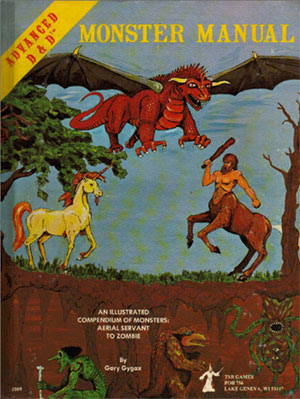
I’ve been asked to convert the original Monster Manual in a manner similar to my conversion of the Fiend Folio. I am going to do this a bit differently, though, and just try to stick to the essence of creatures without referring to the text of the original work. This is, in part, because of my plans to create a monster book in the upcoming year. In this case, we are dealing with IP that is currently held by Wizards of the Coast/Hasbro, so I can’t imagine a published version of everything here coming out!

Of the creatures we are looking at today, a number are covered by the Cyclopedia of Common Animals, and I intentionally waited for Volume U-V-W to be completed before tackling this portion, as the three entries under “Boar” are all part of that volume.

I have never actually used a brain mole in an adventure, and the psionic system in AD&D was complex enough that I seldom used psionic-specific creatures. My version retains the general idea of a psychic attack, but makes leaving the area the best response. Dealing with an infestation of brain moles in the vicinity of a shrine, treasure vault, or other area the PCs want to spend time in could make for an interesting challenge.

Bulettes are another monster that I have seldom used, although I once owned the toy they were based on. These rubber monsters came out of vending machines, and I had several different ones, some of which were inspirational to the authors of the game. Two years ago, one of my players tracked a couple of these down, and gave them to me, which was lovely. I had no idea what bulettes were before acquiring the Monster Manual…I do recall some “silver bulettes won’t slow you down” jokes, and I am sorry that I couldn’t find a fun way to work that into the entry.

The write-up for brownies was very much based on an earlier blog post, which was itself based on work I had done when I was writing my own fantasy hearbreaker. One of the misfortunate things about various versions of D&D, in my opinion, has been making almost every creature into a combat challenge. I was working to bring faerie folk back to their original (often eerie and menacing) aspects. For some, this definitely includes violence, but for others avoiding combat is part of the creature’s character.

Boar: The original listing included wild boars, giant boars, and warthogs. See the Cyclopedia of Common Animals for all of these.

Brain Mole: This creature is similar enough to the thought mole in the Cyclopedia of Common Animals that it doesn't require alternative statistics.


Brownie:
Init +4; Atk miniature tool +4 melee (1d3+4); AC 16; HD 2d5; MV 20’; Act 1d20; SP stealth +12, attach to household, work of 10 people, easily offended, curse, turn boggart; SV Fort +0, Ref +8, Will +5; AL N.

A brownie appears to be a three-foot tall, hairy man, frequently with only nasal slits instead of a nose.  They are shy and retiring, preferring not to be seen by those of mortal races. Despite their size they are fantastically strong. 

Brownies attach themselves to individuals or households, performing work in exchange for a bit of bread and a small bowl of the best cream. Like many fey, brownies are easy to offend, so that gifts (including food) left for a brownie must be placed for the brownie to find – they should not be obviously gifts.  Some few (10%) brownies have been known to accept other gifts without offence, such as a linen shirt once a year, but this practice is perilous because, should the value of the gift diminish or grow, the brownie will certainly take offence.                             

A brownie that is happy with its household can do the work of ten people, and will help with such tasks as harvesting, reaping, threshing, cleaning, keeping animals safe, spinning wool into thread, making shoes, baking bread, brewing, or any of a thousand other tasks that can be done while the household is asleep or is busy elsewhere.  Brownies do not like to be observed at their work, and intentionally watching them can cause them to be offended (50% chance). 

Most brownies stay hidden during the day, and most households with brownies know – and avoid – the spot where their brownie likes to hide.  This may be a dark corner of the house, a cellar or attic, somewhere in the barn, or even in a nearby hollow tree or ruined building.   A brownie who is disturbed in its hiding spot is 75% likely to take offence.

A brownie will also take offence if its work is criticized by a member of the household.  A brownie is intimately familiar with its household, however, and does not take offence against the household due to the actions of outsiders, so long as the response of the household is appropriate.  Such a brownie might well take offence against the outsider, though, and work some mischief to plague him.

A brownie that takes offence will (1d3):  (1) desert the household, (2) desert the household, and curse it at the same time, or (3) become a boggart to plague the household.  Typical brownie curses do not allow a save, causing a –1d6 penalty to all skill checks performed in a household. The curse lasts until the household somehow makes amends, it is magically lifted (remove curse, spell check 24+), or all the members of the household die.  Sometimes abandoning a household will work to avoid a boggart or a brownie’s curse, but there is a 25% chance that the boggart or curse will follow people who move to avoid them, regardless of how far, how fast, or how often they move.

Special types of brownies include:

Billy Blind:  A billy blind is a special type of brownie that usually dwells in or near the fireplace or chimney.  It is blind, but has the ability to prophesy.  Questions may be whispered up the chimney, and if the billy blind knows the answer, it will whisper it back down. 

A billy blind has a chance of knowing the answer to any question as follows:  100% if it pertains to the household (“Where did I lose my keys?”), 75% if it pertains to the area within 15 miles of the household (“Have any of my neighbours found my keys?”), 25% if it pertains to a more distant area within 100 miles (“Would my keys fit the locks in the Duke’s treasury?”), and 5% if the question pertains to an area more distant, or is truly esoteric (“Can you teach me the ritual to make a love potion?”). 

If the question concerns the future, the chance of the billy blink knowing the answer is reduced by –10% if it pertains to the immediate future (“Will I find my keys today?”), –25% if it pertains to the future within one year (“Will the weather be good this harvest time?”), and –50% if it pertains to an even more distant future than that (“Who will my youngest daughter marry when she has grown?”).

Boggart:  An offended brownie becomes a boggart.  It can be difficult to tell one from the other initially – stories tell of brownies who only reveal themselves to be boggarts when it becomes obvious that all the good luck of their household is at the expense of the (infuriated) neighbors.  In general, while brownies have only slits for nostrils, boggarts have sharply pointed noses.

Boggarts can be (1-3) mischievous, (4-5) malicious, or (6) even deadly.

A mischievous boggart performs pranks meant to annoy rather than to cause real damage.  It might hide important pieces of equipment, spook the livestock, clog the chimney, or rearrange the furniture while the household is asleep or out.  In many ways, the behaviour of such a boggart resembles that of a gentle poltergeist.  Any reasonable attempt to make amends with the boggart has a 50% chance of being successful.

A malicious boggart uses its abilities to harm the household, but isn’t seeking anyone’s death.  Such a boggart will ruin crops, lame animals, steal equipment outright (and it will seldom, if ever, be found again).  It will ruin materials, cut straps, put holes in pots, and otherwise prevent the household from prospering.  All skill checks made in the household suffer a –4 penalty due to the boggart’s sabotage.  Any reasonable attempt to make amends with the boggart has a 25% chance of downgrading it to a mischievous boggart.

A deadly boggart means to see its household dead.  It saws partly through saddle straps, balances blades over doorways, carefully places items near the top of stairways to cause falls, and so on.  In such a household, all skill checks suffer a –4 penalty due to the boggart’s sabotage, and each member of the household over the age of nine must make a Luck check each day or suffer 1d6 points of damage due to a boggart-inspired accident.  If the Luck check fails by 10 or more, the individual takes 2d6 points of damage instead.  Any reasonable attempt to make amends with the boggart has a 5% chance of downgrading it to a malicious boggart.

Brown Man:  A brown man, sometimes called a Buckawn or Bucca, is a type of brownie that protects natural regions.  Unlike most brownies, the brown men often travel in groups of 2d6 individuals and are not shy of being seen.  Often a single brown man will appear to mortals travelling in an area they protect, warning them not to harm beast or fowl in their lands, and to do no damage.  Those who attack the brown man, or violate his prohibitions, find themselves losing Luck, and possibly feathered with stone-tipped arrows sped by unseen hands.

Fenodyree:  The fenodyree is a large brownie, taller and bulkier than a man, and hideously ugly.  Like most brownies, it is shy around mortals.  The fenodyree aids in reaping, mowing, threshing, and herding during the hours between dusk and dawn. 

Killmoulis:  A killmoulis is a tiny brownie with an enormous nose, but no mouth.  It lives in mills, where it aids the miller by grinding grain during the night and keeping the mill free of mice and rats.  It attacks using a poisoned needle.  The needle does a single point of damage, plus poison (1d6 Stamina damage, Fort save DC 15 for half damage, rodents have a – 4 penalty to the save and take double damage).  Killmoulis apparently eat by stuffing grain up their noses, and can communicate by telepathy with a whispery-sounding voice at a range of 30 feet.

For another take on the killmoulis, see this post.

Victorian Brownie:  Compared to the traditional brownie, the brownie of the Victorian Era was smaller (as with the killmoulis), and formed more similarly to a human or elf.  They have normal noses, pointed ears, and are not exceptionally hairy.  A Victorian brownie never becomes a boggart or curses its household.  If offended, it simply leaves.

Buffalo: See the Cyclopedia of Common Animals.

Bugbear: See the core rulebook, page 397.


Bulette:
Init +0; Atk bite +6 melee (4d12) or claw +8 melee (3d6); AC 20; HD 9d8+18; MV 40’ or burrow 10’; Act 2d20; SP leap attack; SV Fort +6; Ref +3; Will +0; AL N.

These large animals, also known  as “landsharks” can reach 9 feet at the shoulder and are 1d5+10 feet long. They typically burrow underground, hunting prey by vibrations, although their armored crest has a 50% chance of breaking through the earth and warning their victims 1d3 rounds before an attack. Once surfaced, a bulette that foregoes any other action or movement that round can make a leaping attack, leaping high into the air and coming down on a single opponent within 10 feet. The bulette makes four claw attacks (+4 melee, 3d6 damage per hit), and, if any hit the opponent must succeed in a DC 10 Reflex save or take an additional 3d6 crushing damage as the monster comes down upon them.

Because bulettes are primarily predatory animals, they prefer to attack the largest game animals they can reasonably hope to take down. This means that livestock or horses are at greater risk than humanoids.


Bull: See the Cyclopedia of Common Animals.