Sunday, 3 August 2025

Let’s Convert the Monster Manual: Chromatic Dragons

Dungeon Crawl Classics doesn’t use the chromatic and metallic scheme of devising dragons which is prevalent in Dungeons & Dragons as well as in the original Monster Manual. When converting materials from D&D to DCC, I have found that completely reworking dragons into their DCC versions is the best policy. Sometimes, however, you might want to retain the original version more closely to match an environment, the dragon’s allies, or the tone of a module or module series.

Therefore, I am presenting average specimens of the chromatic dragons in DCC terms, to be followed by the metallic and named dragons in later posts. Of course, I am intentionally modifying these creatures to be more in line with their source, while trying to make the resultant dragon work within its revised form. Regardless of alignment, all chromatic dragons are thoroughly evil.

The dragon generator at Purple Sorcerer Games is highly recommended in this regard.

Black Dragon: Init +9; Atk claw +10 melee (1d8) or bite +10 melee (1d12) or breath weapon; AC 19; HD 9d12; MV 50’ or fly 100’; Act 3d20; SP breath weapon (3/day, 60’ line of acid, damage equal to hp, DC 19 Reflex for half), charm reptiles (DC 19 Will negates), amphibious; SV Fort +9, Ref +9, Will +9; AL C.

The average black dragon (draco causticus sputern) is 30 feet long, dwelling in miasmal swamps or marshes, where they spend half their time sleeping. Roughly 30% of these dragons are capable of speech, and of those 10% know 1d4 random 1st level wizard spells, and can cast them with an extra d16 action die for this purpose, gaining a +3 bonus on the spell check.

Although they sometimes inhabit deep, dark caves, black dragons prefer locations where their reptilian allies and ability to breathe water as well as air lend them a tactical advantage. Fortunately, they are no smarter than the average human.


Blue Dragon: Init +10; Atk claw +11 melee (1d8) or bite +11 melee (1d12) or tail slap +11 melee (1d20) or dust cloud or breath weapon or spell; AC 20; HD 10d12; MV 50’ or fly 100’; Act 4d20 plus 1d20 (spells); SP breath weapon (3/day, 1d4 forks of electricity 3d6x 10’ long, damage equal to hp, DC 20 Reflex for half), dust cloud (1/turn), immunity to electrical and force damage, spellcasting (1d20+4, spells: magic shield, sleep, and ward portal); SV Fort +10, Ref +10, Will +10; AL L.

Blue dragons (draco electricus) prefer deserts and arid lands, lairing in vast cave or underground cavern complex. Blue dragons are awake 70% of the time. They are very intelligent, and their lawful nature allows them to control other creatures through fear and intimidation, so that even when a blue dragon is asleep its lair is almost constantly guarded.

When flying where sand or grit makes it possible, a blue dragon is capable of using two action dice to stir up a cloud of dust and sand 50’ wide at base and up to 10’ tall. Targets within suffocate (DC 20 Fort save or 1d4 Stamina loss per round), lasting 1d4+1 rounds.


Green Dragon: Init +6; Atk claw +7 melee (1d8) or bite +7 melee (1d12) or poisoned barbed tail +7 melee (1d20 plus poison) or breath weapon; AC 16; HD 6d12; MV 50’ or fly 100’; Act 4d20; SP breath weapon (3/day, poison cloud up to 90’away, 1d3 x 10’ radius, 1d3 Stamina damage plus DC 16 Fort or additional 1d6 Stamina damage), poison (DC 16 Fort or 2d4Stamina damage), clear passage; SV Fort +6, Ref +6, Will +6; AL L.

The green dragon (draco chlorinous nauseous respiratorus) is thankfully rare. They sleep 40% of the time, and are capable of speech 45% of the time. Most are no more intelligent than the average human, but 20% also have 1d3 levels in the wizard class (with all that entails).

Green dragons prefer underground lairs in or near wild, bleak forests of the bleaker wilder sort if possible. They are very nasty tempered, thoroughly evil, and resentful of any intrusion into their privacy. They can pass through vegetation without leaving any trace at will.


Red Dragon: Init +12; Atk claw +13 melee (1d8 plus snatch) or bite +13 melee (1d12) or tail slap +13 melee (1d20) or wing buffer +13 melee (2d12) or breath weapon or spell; AC 22; HD 12d12; MV 50’ or fly 100’; Act 6d20 plus 1d20 (spells); SP breath weapon (3/day, 90’ cone of fire with 30’ base, damage equal to hp, DC 22 Reflex for half), snatch, hypnotic stare (DC 22 Will negates), immunity to fire, spellcasting (1d20+6, spells: charm person, detect magic, detect invisible, and shatter); SV Fort +12, Ref +12, Will +12; AL C.

Red dragons (draco conflagratio horriblis) are exceptionally intelligent, and large for their size category at an average of 48’ long. They are usually found dwelling in great hills or mountainous regions, in caves or subterranean ruins whenever possible. They are very greedy, and seldom caught sleeping (20%).

On a successful claw attack, a red dragon snatches its target and automatically delivers 1d6 crushing damage each round. If flying, the dragon can drop the grabbed target from any height, causing 1d6 damage per 10’ fallen. Snatched creatures can attempt to escape with a DC 22 Strength check. While a creature is snatched, the dragon cannot use that claw or its associated action die.

Red dragons can also hypnotize targets with their gaze. A red dragon can gaze into the eyes of one target per round by using one action die to do so. A creature that meets the dragon’s gaze must make a DC 22 Will save or stand stupefied as long as the dragon holds its gaze.


White Dragon: Init +5; Atk claw +6 melee (1d8) or bite +6 melee (1d12) or breath weapon; AC 15; HD 5d12; MV 50’ or fly 100’; Act 3d20; SP breath weapon (3/day, 1d6 x 10’ cone of cold with 1d4 x 10’ bade, damage equal to hp, DC 15 Fort for half), ice-walking, immunity to cold; SV Fort +5, Ref +5, Will +5; AL C.


Relatively small and stupid, white dragons (draco rigidus frigidus) spend much of their time sleeping (60%) and only 20% are even capable of speech. They favor chilly regions, lairing in icy caves or deep subterranean places. Although not as intelligent as most other dragons, they are as evil and greedy as any. White dragons can move along icy floors and surfaces without fear of slipping.

Friday, 1 August 2025

Let’s Convert the Monster Manual: Dinosaurs!

When Gary Gygax compiled the original Monster Manual, he included 28 distinct entries in his “Dinosaurs” section. I have included 42 similar statblocks in the Cyclopedia of Common Animals, but there are still some entries that need conversion!

I remember there being a lot of interest in dinosaurs (and prehistory in general) during the 70s. This was driven in part, no doubt, by new discoveries, but also by older films and novels. Stop-motion dinosaurs appeared on the big screen earlier, but these films were being re-discovered on television broadcasts. Classic authors, like Edgar Rice Burroughs and Sir Arthur Conan Doyle, were appearing in new editions due to the popularity of The Lord of the Rings. When I first started playing Holmes Basic (Christmas 1979), I kept a notebook of my own monster stats. Among these were a plethora of dinosaurs.

When I got my hands on The Isle of Dread, I was happy indeed. Not only was the island filled with prehistoric adventure, but it was a fairly large sandbox setting that could hold a multitude of stories. One of my patrons for the first Angels, Daemons, and Beings Between volume includes a patron spell which can bring saurians to “modern” settings, and includes the first version of my dinosaur statblocks for DCC. Discerning readers will note that I took care to keep these in line with what appears in the Cyclopedia. Similarly, The Mysterious Valley (DAMN #1) was written as a tribute to the late Ray Harryhausen, and I tried to keep stats consistent.

I was a little concerned that I would have to revamp the Cyclopedia of Common Animals based on the work done for this post. Going through this list actually makes me feel pretty satisfied with what I included!

Anatosaurus (Trachodon): See the Cyclopedia of Common Animals (Hadrosaur).

Ankylosaurus: See the Cyclopedia of Common Animals.

Antrodemus (AIlosaurus): See the Cyclopedia of Common Animals (Allosaur).

Apatosaurus (Brontosaurus): See the Cyclopedia of Common Animals (Large Sauropod).

Archelon lschyras: See the Cyclopedia of Common Animals.

Brachiosaurus: See the Cyclopedia of Common Animals (Large Sauropod).

Camarasaurus: See the Cyclopedia of Common Animals (Small Sauropod).

Ceratosaurus: See the Cyclopedia of Common Animals (Theropod).

Cetiosaurus: See the Cyclopedia of Common Animals (Large Sauropod).

Dinichtys: See the Cyclopedia of Common Animals.

Diplodocus: See the Cyclopedia of Common Animals (Large Sauropod).

Elasmosaurus: See the Cyclopedia of Common Animals.

Gorgosaurus: See the Cyclopedia of Common Animals (Theropod).

Iguanadon: See the Cyclopedia of Common Animals (Iguanodon).

Lambeosaurus: See the Cyclopedia of Common Animals (Hadrosaur).

Megalosaurus: See the Cyclopedia of Common Animals (Theropod).

Monoclonius: See the Cyclopedia of Common Animals.

Mosasaurus: See the Cyclopedia of Common Animals (Mosasaur).

Paleoscincus: Init -4; Atk spiked tail club +5 melee (2d12); AC 25; HD 7d8; MV 20’; Act 1d20; SP defensive armor (3d4, Ref DC 15 negates); SV Fort +12, Ref -4, Will -4; AL N.

These dinosaurs are related to the ankylosaurus, being 1d7+14 feet long and weighing 1d3+2 tons. Because of the armored spines radiating from their sides, large predators attempting to bite them must make a DC 15 Reflex save or take 3d4 damage, whether the attack succeeds or not. These creatures are sometimes aggressive if intruded upon.

Modern understanding of these saurians is not quite what was imagined when the Monster Manual was written, and this write-up of the “walking dreadnoughts” follows the AD&D 1e write-up. Largely known through fossil teeth, paleoscincus remains somewhat mysterious!


Pentaceratops: Init +2; Atk gore +3 melee (3d8), trample +1 melee (2d6), or bite +0 melee (1d4); AC 17; HD 4d8; MV 40’; Act 1d20; SP Charge (gore at +4 to hit and +3d4 damage, plus trample as a free attack if successful); SV Fort +5, Ref +0, Will -4; AL N.

At 1d3+17 feet long, and weighing 2-3 tons, the pentaceratops is an aggressive herbivore.

Plateosaurus: Init +0; Atk trample +0 melee (2d6) or tail sweep +2 melee (1d6); AC 15; HD 6d8; MV 20’ or 30’; Act 1d20; SP Tail sweep knocks prone unless DC 12 Strength check succeeds; SV Fort +5, Ref -2, Will -4; AL N.

At 1d8+25 feet long and weighing 1d3+7 tons, these dinosaurs can walk upright, reaching heights of 1d4+9 feet. They can move more quickly when on all fours, and are easily panicked.

Plesiosaurus: See the Cyclopedia of Common Animals (Plesiosaur).

Pteranodon: See the Cyclopedia of Common Animals (Pterosaurs) and the core rulebook (Pterodactyl, page 424).

Stegosaurus: See the Cyclopedia of Common Animals.

Styracosaurus: See the Cyclopedia of Common Animals.

Teratosaurus: Init +4; Atk bite +5 melee (3d6) or claw +7 melee (1d3); AC 15; HD 6d8; MV 40’; Act 1d20; SV Fort +6, Ref +4, Will +0; AL N.

Not a true dinosaur, the teratosaurs was a 20-foot-long quadrupedal reptile which hunts on plains or in forests, pursuing any creature which appears to be eatable.

Triceratops: See the Cyclopedia of Common Animals.

Tyrannosaurus Rex: See the Cyclopedia of Common Animals (Tyrannosaur).

The Cyclopedia of Common Animals is available here.

Wednesday, 30 July 2025

Signal Boost

Some time back, I wrote an adventure for David Baity, and he's been sitting on it like a miser hoarding gold. Well, the lost Owl Creek Mine is on the menu now!

Also, a Reference Guide which, let's be honest, is something y'all can use!

Check it out here!

If it isn't clear, the Refence Guide is the real thing here, and the adventure is an add-on. I hope it is an add-on people like, but the Guide is kinda essential!

Saturday, 26 July 2025

Now Available!

This book contains over 500 statblocks for a diverse range of animals.

Does your wizard know Animal Summoning? Now you can summon a vast range of animals.

Are you a judge looking to build out your natural world? Herein, you will receive plenty of help to do that.

Revised Faerie Animal class? Yes.

Animals by climate, terrain, frequency, and continent? Of course.

Dinosaurs? Naturally.

But can I use it to make my own published DCC adventures? Generously so.

From aardvarks to zebu, every effort has been made to make this an indispensable work for the harried DCC judge!

If you want DCC stats for rabies, malaria, or dengue fever, you need look no further. If you want advice for using animals in your game, you're in luck. If you want to know how many doses of venom your thief can extract from that dead gila monster, well, I included that too. 

While only the pdf is available at this moment, print should follow in a few weeks, depending upon printer acceptance of contents and acceptance of proof copies.

https://www.drivethrurpg.com/en/product/524916/cycopedia-of-common-animals

Wednesday, 23 July 2025

Now In Print!

Do you need stats for your goat, chicken, or cow? Rules for homing pigeons? Expanded horses and donkeys? Falcons? A dozen types of dogs? Trying to take your cow down those dungeon stairs?

With over 40 statblocks, this covers not only your 0-level funnel needs, but offers PCs plenty of help with their adventures later on. Whether you want to summon the hounds or bring a songbird with you to test for fresh air, this work is for you!

C'mon! We all know you've been thinking about adding yaks to your game....!


Friday, 18 July 2025

Let’s Convert the Monster Manual: Finishing Off the Devils

I’ve been asked to convert the original Monster Manual in a manner similar to my conversion of the Fiend Folio, and this series of posts is the fruition of that dream. In this post, I am going to finish off the original Monster Manual devils because, to be honest, I am getting a bit bored with them and would like to get to some of the critters which take a bit more creativity to convert.

Interestingly enough, DCC lists lemurs among unaligned demons (Type I) as well as Bone (Type II), Barbed (Type III) and Pit Fiends (Type V). This conversion follows the AD&D 1e convention of making them Lawful and devils, but if you want to make them Chaotic demons just change the alignment and the name. Devil traits and demon traits are interchangeable in these conversions. I have tried to keep the threat range so
mewhat consistent with the original write-ups despite using the DCC convention for Type. You will have to decide for yourself whether I succeeded or not.

Upcoming entries for Dinosaurs and Dragons might be done in a similar way. Dragons, apart from the Big Two (who will be treated as patrons ala Asmodeus and Orcus) offer another problem: should I just treat them as examples of DCC-style dragons? I lean rather heavily toward this method. Doing so, though, begs the question of size and age categories. I lean toward just picking one for each type, and trusting that the judge can adjust them up or down as needed.

What do you think?

Barbed Devil (Type III Devil): Init +3; Atk barbed claws +9 melee (2d4) or barbed tail +7 melee (3d4) or spell; AC 17; HD 8d12; MV 30’; Act 3d20; SP demon traits, never surprised, spellcasting (+12 spell check): Control fire, darkness, paralysis, and scare; SV Fort +11, Ref +7, Will +9; AL L.

            Devil traits: Telepathy, immunities (weapons of less than +2 enchantment or natural attacks from creatures of 5 HD or less), half damage (fire, cold, electricity, gas, and acid), projection (teleport at will to any location, as long as not bound or otherwise summoned), crit range 18-20.


Barbed devils are seven-foot-tall creatures which populate the third and fourth planes of Hell, where they are unfortunately not rare at all. Never surprised, the make excellent guards, throwing unauthorized creatures into one of the many cells in the regions of Hell they frequent, there to be questioned and tormented at leisure.

Bone Devil (Type II Devil): Init +4; Atk bone hook +7 melee (1d8 plus snare) or tail +5 melee (2d4 plus Strength drain) or spell; AC 18; HD 7d12; MV 40’; Act 2d20; SP demon traits, snare (Reflex DC 18 negates), Strength drain (1d4 points, Fort DC 18 negates), create illusions (Will DC 18 negates), immune to cold, spellcasting (+8 spell check): Control ice, darkness, detect invisible, invisibility, and scare; SV Fort +5, Ref +8, Will +5; AL L.

            Devil traits: ESP (read thoughts, but not communicate), immunities (non-magical weapons or natural attacks from creatures of 3 HD or less), half damage (fire, electricity, gas, and acid), projection (teleport at will to any location, as long as not bound or otherwise summoned), crit range 19-20.

Bone devils are nine feet tall, looking like emaciated, skeletal creatures with scorpion-like tails. They bear enormous bone hooks, which can snare foes (automatic damage next round, and allows tail attack with +2 bonus). Those struck by a bone devil’s tail must succeed in a DC 18 Fort save or be drained of 1d4 points of Strength (restored with a full turn of rest).

These malicious devils delight in making less powerful creatures suffer. They are found in the lower planes of Hell, and are particularly numerous on the 5th plane.

Erinyes (Type II Devil): For reasons beyond the scope of this post, Erinyes are unable to appear here today.

Horned Devil (Type II Devil): Init +3; Atk two-tined fork +7 melee (2d6) or barbed whip +7 melee (1d4 plus stun) or tail +7 melee (1d3 plus bleeding) or claw +6 melee (1d6) or bite +5 melee (1d8) or spell; AC 14; HD 5d12; MV 30’ or fly 50’; Act 2d20; SP demon traits, stun (1d4 rounds, Fort DC 16 negates), bleeding, spellcasting (+8 spell check): Control fire, darkness, detect magic, and scare; SV Fort +7, Ref +4, Will +6; AL L.

           Devil traits: ESP (read thoughts, but not communicate), immunities (non-magical weapons or natural attacks from creatures of 3 HD or less), half damage (fire, cold, electricity, gas, and acid), projection (teleport at will to any location, as long as not bound or otherwise summoned), crit range 19-20.

Relatively common and weak devils, the horned devils are also known as “malebranche” or “evil horns”. Their individual names reinforce their lower status, and are such as “Dogretch,” “Evil Tail,” and “Bent Wing.” They hate and fear anything stronger than themselves, but gleefully torture anything weaker.

To determine what weapon a horned devil wields, roll 1d4: (1-3) two-tined fork or (4) barbed whip. Wounds from their tails bleed unless bound up or magically healed (1 hit point per round).

Ice Devil (Type III Devil): Init +4; Atk great spear +11 melee (2d6 plus numbing cold) or tail +11 melee (3d4) or claws +9 melee (2d4) or mandibles +9 melee (2d4) or spell; AC 17; HD 11d12; MV 20’; Act 2d20; SP demon traits, numbing cold (half move and actions for 1d6 rounds, Fort DC 18 negates), radiate fear (10’ radius, Will DC 18 negates), great strength (+4), regenerate 1/round, spellcasting (+12 spell check): Control ice, darkness, detect invisible, detect magic, and fly; SV Fort +9, Ref +9, Will +8; AL L.

            Devil traits: Telepathy, immunities (weapons of less than +2 enchantment or natural attacks from creatures of 5 HD or less), half damage (fire, cold, electricity, gas, and acid), projection (teleport at will to any location, as long as not bound or otherwise summoned), crit range 18-20.

The frigid eighth plane of Hell is populated in the main with ice devils. These ten-foot-tall creatures are greater devils in every sense of the word. As with other greater devils, they all have personal names, which they conceal from mortal and diabolical creatures alike.

Ice devils radiate fear in a 10’ radius, and opponents must make a successful Will save to approach within this distance. They have great strength, gaining a +4 bonus in opposed checks. Although they prefer to attack and torment victims with their natural weapons, 1 in 4 carry great spears which inflict 2-12 hit points damage and numb with cold.

Lemure (Type I Devil): Due to reasons beyond their control, the lemures were unable to appear in this post.

Pit Fiend (Type V Devil): Init +7; Atk giant ankus +12 melee (1d8+6) or jagged-toothed club +12 melee (2d8) or tail +10 melee (1d8 plus constriction); AC 23; HD 13d12; MV 20’ or fly 50’; Act 3d20; SP demon traits, constriction (1d8 per round, Strength DC 23 to escape), radiate fear (20’ radius, Will DC 23 negates), great strength (+6), regenerate 3/round, spellcasting (+20 spell check): Control fire, darkness, demon summoning, detect invisible, and detect magic; SV Fort +13, Ref +10, Will +15; AL L.

            Devil traits: Telepathy, immunities (weapons of less than +4 enchantment,  natural attacks from creatures of 9 HD or less, fire, cold, electricity, gas, and acid), projection (teleport at will to any location, as long as not bound or otherwise summoned, can project astrally and ethereally), crit range 16-20.


The lowest plane of Hell is the home of the dreaded pit fiend, a twelve-foot-tall devil of great power. They possess a terrible strength and the most evil nature. All pit fiends have personal names and are the personal servants of Asmodeus. They radiate fear in a 20’ radius, so that creatures must make a successful Will save to come within this sphere, and those forced within it suffer a -1d penalty to all rolls until the save succeeds.

Thursday, 17 July 2025

Purple Worm for DCC

This was a requested conversion.

Purple Worm: Init +0; Atk bite +4 melee (2d12 plus swallow whole) or tail sting +2 melee (2d4 plus venom); AC 14; HD 15d8+30; MV 20’ or burrow 20’; Act 1d24; SP sense vibrations 120’, swallow whole (2d12 per round, DC 7 Reflex negates), venomous sting (1d3 Stamina damage plus DC 12 Fort or 3d6 damage), crit 20-24; SV Fort +22, Ref -8, Will +0; AL N.

Hatchling Purple Worm: Init +2; Atk bite +0 melee (1d3); AC 16; HD 1d3+3; MV 10’ or burrow 10’; Act 1d16; SP sense vibrations 120’; SV Fort +2, Ref +0, Will +0; AL N.

Juvenile Purple Worm: Init +1; Atk bite +4 melee (2d6) or tail sting +2 melee (2d3 plus venom); AC 13; HD 6d8+12; MV 20’ or burrow 20’; Act 1d20; SP sense vibrations 120’, venomous sting (1d3 Stamina damage plus DC 12 Fort or 3d6 damage); SV Fort +12, Ref -4, Will +0; AL N.

These enormous predators resemble gigantic violet earthworms, but they are 1d3+3 x 10 feet long, with a cavernous maw at one end filled with sharp downward-pointing teeth and a poisonous sting at the other. They dwell deep underground, tunneling through the earth creating tunnels 1d4+5 feet in diameter. How purple worms normally sustain themselves is unknown, but they take any opportunity to add fresh meat to their diets.

These beings are blind, but can sense vibrations within 120 feet. A purple worm normally attacks with a bite, swallowing whole any opponent who fails a DC 7 Reflex save on a successful hit. Swallowed creatures are unable to act, taking 2d12 damage each round and being completely digested 1d12+6 turns after being swallowed (thus making recovering the body impossible).

A purple worm’s tail is equipped with a venomous sting, and it may make a free attack each round if approached from this direction. A thief may recover 1d6 doses of this venom with a successful Handle Poison check from a dead purple worm, and may make 1d3+2 checks before further attempts are useless.

Purple worms hatch from leathery eggs, at an average length of 1d3+3 feet long. A juvenile worm, 1d12+15 feet long, is too small to swallow living opponents whole, but its sting is developed enough to inject full-strength venom. Because slain juveniles allow 1d4 doses of venom each to be recovered with 1d3 Handle Poison checks, they are sometimes sought by adventurers and would-be assassins.

Wednesday, 16 July 2025

Blooderflies

Yesterday, I learned that one of the fan-created monsters in Dungeon Denizens II is the "Blooderfly". 

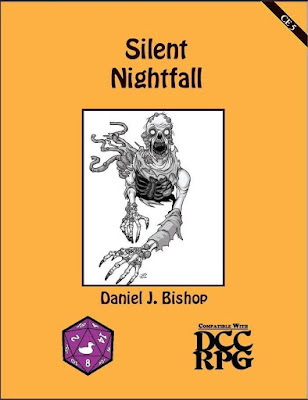
I wonder if this will be similar to the "blooderfly cloud" from Silent Nightfall (Purple Duck Games 2013)?

Here is the text for reference (pp. 19-20):

Even the tiniest and most inoffensive creatures are affected by the demonic radiation, as the blooderfly clouds show.  These are clouds of pure white to pinkish butterflies which can surround a creature in order to feed upon its blood, flushing their wings to a bright red.  These creatures attack victims in swarms, occupying a 20’ x 20’ area, and each creature within the space must make a DC 15 Fort or Ref save to avoid taking 1 point of Stamina damage due to blood loss.  When the swarm has taken 10 points of Stamina, it disperses to digest.  Swarms take half damage from any attack that is not an area effect.

Blooderfly cloud:  Init +3; Atk special; AC 10; HD 4d6; MV fly 30’; Act 1d20; SP blood drain, swarm; SV Fort –4 , Ref +6, Will +0; AL N.


Sunday, 13 July 2025

Let’s Convert the Monster Manual: Geryon

I’ve decided to drop the boilerplate explanation for these posts. If you’ve seen any of the others, you’ve already read it. I am still hoping for some suggestions as to 2nd, 3rd, 4th, and/or 5th Edition monsters that I can do after I finish of the Monster Manual, Deities & Demigods cyclopedia, Monster Manual II. I am thinking I should also do any monsters from the Basic, Expert, etc., sets, which didn’t make it into later editions. It would be good to have those things for reference, and I think it would help in adventure conversions.

Geryon is the final archdevil in the Monster Manual, clearly inspired by his appearance in Dante’s Inferno, but without the “infernal taxi service” aspect. The resulting devil is flavorful, ripe for expansion, and probably the most demon-like of his kin. Dante, of course, was not writing with role-playing games in mind, and certainly not with either AD&D’s or DCC’s alignment systems. For Dante, there was little or no difference between demons and devils, and the “Great Beast” of his poem was Lawful only in the senses that it followed the hierarchy of Hell and obeyed Virgil’s (divinely granted) command. This, at least, does give us something to work with, even if we omit Geryon’s stint as an infernal ferry service.

Geryon (Archdevil): Init +8; Atk claw +14 melee (3d6) or tail sting +12 melee (2d4 plus venom) or stare or spell; AC 23; HD 16d12 (133 hp); MV 20’ or fly 50’; Act 3d20; SP devil traits, venom (1d5 Strength Damage and Fort DC 25 or die), rend, stare, spells, horn; SV Fort +14, Ref +9, Will +14; AL L.


Spells (+20 to spell check): Charm person, comprehend languages, control ice, darkness, demon summoning, detect invisible, detect magic, dispel magic, and invisibility.

                Rend: If Geryon hits the same opponent with both claws, he rends the unfortunate victim for an additional 3d6 damage.

Stare: Geryon’s stare causes fear (-2d on dice chain for all rolls, lasting 1d4 rounds, Will DC 25 negates) in a single opponent.

                Horn:  Geryon’s Horn is a great bull’s horn which, when blown, summons forth 5d4 prime minotaurs which will obey the winder to the death. The horn can only be blown once a week, and a mortal who dares wind this terrible horn permanently loses 1 point of Stamina for each minotaur it summons.

                Devil traits: Telepathy, immunities (weapons of less than +5 enchantment or natural attacks from creatures of 12 HD or less, fire, cold, electricity, gas, acid), projection (teleport at will to any location, as long as not bound or otherwise summoned; can project astrally and ethereally), crit range 15-20.

Geryon, “the Wild Beast” has a ten-foot tall humanoid torso that ends in a snake-like tail some thirty feet long and tipped with a venomous stinger. Bat-like wings sprout from his shoulders. Although his face is handsome, it is cruel, and his hairy arms end in paw-like hands.

Geryon rules the fifth plane of Hell from a huge castle in the very middle of the plane, and seldom ventures forth from it. He is given to passionate bloodlust, and often loses his exceptional genius when the opportunity to revel in carnage arises. It may be imagined that Geryon is, to his hellish overlord Asmodeus, like a domesticate animal, bestial in nature but obedient to his master.

Those who would take this archdevil for their patron must likewise be willing to obey him, while otherwise surrendering part of their civilized nature. In order to ensure this, Geryon demands the sacrifice of someone important to the caster as part of the bonding ritual. This not only offers proof of fealty, but makes it difficult for the client caster to return to who they were before. As a result, Geryon is the only archdevil who foregoes formal contracts to obtain his patronage.


Invoke Patron check results:

12-13     Secluded within his castle in hell, Geryon hears the caster not. However, the caster’s own bestial nature answers the call, granting them a +2 bonus to melee attack rolls and damage for the next 1d5 + Caster Level rounds.

14-17     Bloodlust fills the caster’s mind, and they gain a +4 bonus to all melee attack rolls and damage for the next 1d6 + Caster Level rounds. Moreover, during this period they gain critical hits as a monster (Table M) whose Hit Dice are equal to their Caster Level.

18-19     As above, but the condition lasts 1d7 + Caster Level minutes, and during this time the caster ignores the first 2 points of damage from any source.

20-23     As above, but the caster ignores the first 5 points of damage, their critical range is extended to 19-20, and the condition lasts 1d4 + Caster Level turns. Unfortunately, the caster’s bloodlust is so great that, once they make a successful melee attack, they must succeed in a DC 5 Will save to stop attacking so long as even a single target – friend or foe – remains within 30 feet.

24-27     As above, but the caster also gains an additional 1d20 action die which can be used for melee attacks only. Their teeth and nails grow sharper and stronger, with a base damage of 1d6 for unarmed attacks while this condition lasts. The Will save for the caster to stop attacking increases to DC 10.

28-29     As above, but if the caster hits the same target with two claw attacks, they can rend for an additional 1d6 + Caster Level damage, and the Will save to stop attacking increases to DC 15.

30-31     The wild horn of Geyron echoes around the caster. All foes within 500 feet must succeed in a DC 20 Will save or flee for 2d6 + Caster Level rounds. If they cannot flee, they collapse into a cowering, sniveling mess upon a failed save.

1d3 rounds later, a group of 2d4 + Caster Level minotaurs appear, and immediately begin to aid the caster in whatever way the caster directs. At the end of each turn, one of the minotaurs disappears until none are left.

32+         The wild horn of Geyron echoes around the caster. All foes within 500 feet must succeed in a DC 25 Will save or flee for 2d6 + Caster Level minutes. If they cannot flee, they collapse into a cowering, sniveling mess upon a failed save. A group of 2d4 + Caster Level prime minotaurs appear, and immediately begin to aid the caster in whatever way the caster directs. At the end of each turn, one of the prime minotaurs disappears until none are left.

                When the last prime minotaur is left, the caster has the option of permanently sacrificing 1 point of Stamina to make the creature serve until it, or the caster, is slain or banished back to its place of origin. If the sacrificed Stamina is ever undone (such as through a restore vitality spell), the prime minotaur instantly disappears. Depending upon circumstances, Geryon may also be displeased and exact some penalty.