Sunday, 7 May 2023

Conversion Crawl Classes 9: AD&D: White Plume Mountain (3): Whelm, Wave, and Blackrazor

We’ve talked about the wilderness map, and we’ve talked about the adventure, but what people really remember about this module (apart from Dragotha) are the three magical weapons, Whelm, Wave, and especially Blackrazor. In Dungeon Crawl Classics, we are advised that every magic weapon is unique, so these three will fit right in. Or they will as soon as we convert them!

I think it might be a little advantageous to talk about why I am doing this series of posts. I own a lot of gaming material. I imagine many of you do as well, One of the questions I see come up consistently is "How do I convert X to Dungeon Crawl Classics?" It makes sense. DCC is a great game, but there have also be a lot of great adventures over the decades, both for various forms of Dungeons & Dragons and for other systems.

These posts are not intended to be me converting this material for you. Rather, they are intended to provide some reference points which allow you to convert anything you wish  as quickly and painlessly as possible.

There is also the possibility that you might be a publisher or writer looking at converting your own material. If this helps, at all, in creating a better conversion, then I will be rewarded by the result. Similarly, if a publisher does a substandard conversion, this material may help you, the reader, adjust that conversion to make the most out of the material presented.

Whelm

Whelm is described in White Plume Mountain thusly:

Whelm, a lawful neutral hammer +3 (+5 for dwarves), intelligence 15, ego 18. Purpose: kill all trolls, giants and goblin-types (including bugbears and hobgoblins). It can be thrown and will return from up to 150' thrice per day (dwarves only). It also acts as a hammer of stunning: once per day, when struck upon the ground, it will send forth a shock wave stunning up to 45 hit points of enemies up to a distance of 60' for 1-4 rounds if they fail to save vs. spells. Whelm also detects gold, gems, and the presence of goblins. A drawback is that the bearer of this weapon will come under the influence of a severe case of agoraphobia (fear of wide, open places), and will fight at -2 when not inside a building, at night, or (best of all) underground. Whelm is obviously a dwarven weapon.

As we discussed in the previous post, Lawful Neutral translates to Lawful, Neutral translates to Neutral, and Chaotic Neutral translates to Chaotic. We can safely conclude that Whelm will be Lawful, and we conveniently have one weapon tied to each of the DCC alignments. That dwarves favor Law, and Whelm is a dwarven weapon, fits very nicely.

Overall, Whelm is not too powerful, but some of the hammer’s powers need to be reworked to mesh with DCC.

Whelm, +3 Lawful warhammer

Intelligence: 15

Communication: The original write-up doesn’t supply us with much information here, but Table 8-4 on page 367 of the core rulebook would suggest speech, telepathy, or both. In this case, I will go with  speech and telepathy to make Whelm consistent with Wave and Blackrazor.

Special Purpose: Kill trolls, giants, and goblinoids

Power 1: When wielded by a dwarf, Whelm gains an additional +2 to attack rolls and damage, and can be thrown up to 150’, returning to the dwarf’s hand immediately thereafter.

Power 2: Once per day, the wielder can strike the ground, sending out a shock wave that stuns all enemies within 60’, rendering them unable to for 1d4 rounds. Fort DC 15 negates.

Power 3: The wielder can smell gold and gems as a dwarf. The wielder also gains the ability to sense goblinoid creatures within 100’.

Curse: Wielder suffers severe agoraphobia, and has a -1d penalty to all attack rolls, spell checks, and skill checks when outside during daylight hours. This curse is not in effect when inside a building, at night, or (best of all) underground.

Wave

Wave, a neutral trident +3 which does 1-10 hit points of damage. 14 intelligence, 20 ego. Purpose: death or disfigurement to all who won't convert to the worship of Poseidon (or any similar sea-god you choose). Powers:

Functions as a trident of fish commanding (as the miscellaneous magic item in DUNGEON MASTERS GUIDE)

Functions as a trident of warning (as the miscellaneous magic item in Dungeon Masters Guide)

Finds water

Confers water-breathing and underwater action abilities upon bearer

Confers cube of force ability (as the miscellaneous magic item in Dungeon Masters Guide)

Possesses speech and telepathy (in the common tongue as well as the languages of all sea creatures).

Dehydrates: On a natural roll of 20, in addition to its normal damage, Wave dehydrates its opponent, draining one-half of his or her remaining hit points (compute normal damage first).

This one is a bit stranger in that its cube of force power seems a bit off-theme. Nonetheless, it is easily enough converted to DCC terms. In this case, we also need to keep in mind the DCC magic system, and we will allow a spell check for force manipulation. Pelagia is the core neutral sea goddess, so we will replace Poseidon with her. Wave might look like this in DCC terms:

Wave, +3 Lawful trident (as polearm)

Intelligence: 14

Communication: Speech and telepathy (Common and languages of all sea creatures).

Special Purpose: Kill or disfigure all those refusing to convert to the worship of Pelagia.

Power 1: Wielder can breathe water indefinitely, and being in water causes no penalty to movement, attacks, spell checks, etc.

Power 2: Wielder can sense large amounts of water (at least 10 gallons) within 500’.

Power 3: Wielder cannot be surprised while holding the trident.

Power 4: Wielder can telepathically control up to 2d6 + level HD of fish or other marine creatures for 1d3 turns 3 times each day.

Power 5: Wielder can cast force manipulation through the trident using 1d20+4 for the spell check.

Power 6: When scoring a critical hit, in addition to all other effects (and after normal damage plus critical effects are resolved), Wave dehydrates its target to half its remaining hit points, rounded down.

Importantly, I did not crack open the Dungeon Master’s Guide to determine how to convert these powers. Instead, I used the existing text from White Plume Mountain to extrapolate a conversion that both captured a sense of the original, and was DCC-ified. This is going to be more important as we look at more esoteric conversions – you do not need the core rules for Traveller, MERP, or Twilight 2000 to convert an adventure. You need to understand the gist of what you are reading, and you need to understand DCC. Or even what you want to do in DCC.

Blackrazor

Blackrazor, a chaotic neutral sword +3, intelligence 17, ego 16. Purpose: to suck souls. It is a black sword that shines like a piece of night sky filled with stars, and it is sheathed in a black scabbard decorated with pieces of cut obsidian. On a killing stroke, Blackrazor temporarily adds the number of levels of the dead foe to its bearer's levels (in terms of fighting ability). The bearer also temporarily gains the full hit points of the victim. All subsequent damage to the sword's wielder is removed from the added hit points first. The extra levels and hit points last a number of turns equal to the number of levels received. The souls of all entities killed by Blackrazor are sucked out and devoured; those killed by the black sword cannot be raised.

For every three days the sword remains “unfed”, its ego increases by one point, until it can compel its bearer to kill a human or humanoid being. Upon feeding, its ego returns to 16. The DM will note that Blackrazor is a negative-energy entity that exists by absorbing positive life energy levels from those it kills. However, if it even strikes a negative-energy being like an undead (except for ghouls and ghosts), it will work in reverse, transferring one level and corresponding hit points from the wielder to the creature attacked. lt will do this each time that it strikes. Under these conditions, the wielder can actually die and have his soul sucked out by his own sword. If the wielder survives, he will need a restoration spell or twice the usual number of levels received from positive “kills” to replace the lost levels. Those killed for replacement must be of the same race as the sword-wielder. Blackrazor (and you, the DM) may very well keep this little drawback a secret until the first time the sword bites into a wight or a vampire. The DM must remember that Blackrazor exists solely to feel power and souls coursing through itself, and sometimes it may not be too picky about where the energy is coming from.

In addition to the above, the sword has the following powers:

Speech and telepathy (common and whatever tongues its wielder knows, which it learns telepathically)

Detects living creatures (souls), 60' r.

Haste spell (bearer only, 10 rounds}, once per day

100% magic resistance to charm and fear (exact percentage chance of resistance will depend on the level of the opponent casting such a spell)

Blackrazor, +3 Chaotic longsword

Intelligence: 17

Communication: Speech and telepathy.

Special Purpose: Consume souls.

Power 1: Suck Souls: When a living opponent is slain by Blackrazor, the sword consumes that beings soul, adding the victim’s hit points to its wielder equal for 1d3 turns. During this time, any damage to the wielder is removed from the temporary hit points first. The souls of all entities killed by Blackrazor are devoured and forever gone; those killed by the black sword cannot be returned to life by any means. A creature reduced to 0 hp by this ability cannot be magically healed, and cannot be saved by recovering the body.

Power 2: The sword senses all living beings, including those which are hidden or invisible, within 60’, and can communicate their presence to its wielder.

Power 3: The wielder gains a +6 bonus to all mind-affecting spells and effects, except those caused by Blackrazor itself (see below).

Curse 1: If Blackrazor is not fed for three days, it will force its wielder to make a Will save or be dominated. If the save is failed, Blackrazor takes over the dominated wielder completely for 2d6 rounds, and it attempts to consume as many souls as possible during this time. The initial DC is 20, but this raises by +1 for each day that the sword has not consumed a soul, and the sword can attempt to dominate its wielder once every 1d3 days after the initial three-day period.

Curse 2: Whenever Blackrazor strikes an un-dead foe, it consumes part of its wielder’s soul and transfers it as energy to the target. The wielder suffers 1 HD damage (1d12 for a warrior, 1d6 for a thief, and so on), and the target gains the same number of hit points. If the wielder is reduced to 0 hp in this manner, their soul is devoured and they are forever dead with no chance of recovery.

The reader will note that I have toned down Blackrazor a bit, but not much. Adding a level of fighting ability in DCC is not only overkill, but it is a logistical nightmare…especially as DCC tops out at 10 levels. Even adding a +1 bonus per X HD killed would be a bit much, and what would this mean for a warrior or a dwarf? Does their Deed Die increase? I frankly decided that trying to answer these questions wasn’t worth the gain. Or, for that matter, the increased complexity that I would be handing the prospective judge using this material.


Next: AD&D 2nd Edition: Swamplight

Saturday, 22 April 2023

Conversion Crawl Classes 8: AD&D: White Plume Mountain (2): The Adventure

If great adventures start with great stories, as we have discussed before, the base story of White Plume Mountain might prove difficult for modern audiences. Essentially, the wizard Keraptis steals three magical weapons (Whelm, Wave, and Blackrazor) and then taunts adventurers into entering his funhouse dungeon in order to recover them. A good setup for a tournament, maybe, and certainly a good setup for someone just trying to show Gary Gygax what he could do, but the “mad wizard” trope is a little thin these days, and we might want to make adjustments.

Now, the module itself is clearly a wizard testing the PCs, and the adventure would have to be substantially rewritten in order to change this. This seems, to me, to be a lot more effort than it is worth, and would remove the charm of the adventure as it is written. A better way would be to introduce some greater purpose to the challenge.


The one encounter in the module that I find truly wrong is the final (possible) encounter:

If a party should succeed in obtaining two or even three of the magical weapons and is finally leaving for good, they may be stopped at 2 by the return of the force wall. A voice will speak to them out of the air: “Not thinking of leaving, are you? You've been so very entertaining, I just couldn't think of letting you go, especially with those little collector's items of mine. And since you've eliminated all of their guardians, why, you'll simply have to stay . . . to take their places. I'll have to ask you to leave all of your ridiculous weapons behind and let Nix and Nox escort you to the Indoctrination Center. I'll be most disappointed if you cause me any trouble and Nix and Nox have to eliminate you. Don't worry - you'll like it here.”

The thing I really dislike about this is:

Of course, this whole episode can be omitted if the party has already taken too much damage. Conversely, if your players have had too easy a time of it, this can be made tougher by the addition of one or two more efreet (Box and Cox).

Effectively, this penalized players who do well, and lets those who do poorly off the hook. Let’s alter this to make the whole thing gel better with modern aesthetics and the DCC vibe. First off, we replace the wizard Keraptis with Yonaxis from The Tower of Faces (or vice versa, if you think Keraptis is the more flavorful name, as I do – you could also keep both wizards, with Yonaxis pretending to be Keraptis for this challenge…and perhaps a lich Keraptis who takes offense to this later). We can then change the final dialogue to:

“Not thinking of leaving, are you? You've been so very entertaining, I just couldn't think of letting you go, especially with those little collector's items of mine. And since you've eliminated all of their guardians, you have passed my little job interview. I'll have to ask you to let Nix and Nox escort you to my tower. I'll be most disappointed if you cause me any trouble and Nix and Nox have to eliminate you. Don't worry – you are in no danger, and might even be able to keep those ridiculous weapons if you perform as well assisting me as you did against these challenges.”

Initial Considerations

As with any of these conversions, the first thing to do is reduce all treasure to about 10% of its total value, and then remove any unnecessary magical items (either removing them entirely or turning them into exceptionally well-crafted but non-magical goods). Those items we do retain we want to align with the DCC aesthetic, making them more mysterious and flavorful.

For example, there is a ring of flying with 4 charges in Area 4 – a particularly useful item given some of the challenges in this module. To make it work in DCC, let’s give it a description (“this iron ring is shaped to resemble a bat, roosting on the finger of its wearer with outspread wings. Its face is toward the fingernail, with two sharp fangs that cause some mild discomfort when the ring is put on or removed.”) and a bit more color than “4 charges” – The ring grants a fly speed of 30’, but when used the bat fangs pierce the wearer’s flesh and draw blood to power the flight. On the first round, this causes 1d4 Stamina damage. On the second round it causes 2d4, on the third round 3d4, and so on until either the wearer stops flying or reaches 0 Stamina and crashes to the earth. Now we don’t need to worry about charges; there is a high cost to using the ring itself.

Reworking Encounters

We also should look at the challenges presented in the module and see how they can be expressed in DCC terms. For instance, consider Area 7:

The door opens onto a stone platform in a large natural cave. The ceiling averages 50 feet above the level of the platform, while the floor of the cave, 50 feet below, is a deep pool of boiling mud. Points A and B mark the locations of geysers. Geyser A spouts once every five minutes. Geyser B spoutsonce every three minutes. Opposite the entrance platform is another stone platform, approximately 90 feet away. Between them a series of wooden disks is suspended from the ceiling by massive steel chains. The disks are about four feet in diameter, and three feet apart. Each disk is attached to its chain by a giant staple fixed in its center. The disks swing freely and will tilt when weight is placed upon them. The disks and chains, as well as the walls of the cavern, are covered with a wet, slippery algal scum that lives on the water and nutrients spewed up from the geysers. This coating gives off a feeble phosphorescent glow.

When the geysers erupt, they reach nearly to the roof of the cavern, and creatures holding onto the disks or chains may be washed off to fall into the mud below (an almost instant death). Characters with 18 strength, or better, have a 65% chance of holding onto the disk that is adjacent to an erupting geyser. For each strength point less than 18 there is a 10% lesser chance of hanging onto the disks (i.e., 16 strength equals 45% chance.) However, for each disk the character is located farther from the geyser, there is a cumulative chance 5% greater of holding on, i.e., one farther away (from the adjacent disk) equals +5%, two away equals +10%, etc. Damage varies as the distance from the geyser. Adjacent disk: 5-50 points; one away: 4-40, and so on: 3-30, 2-20, 1-10, 1-6, and 1-4 for anyone in the cavern. Characters who make their saving throw as vs. breath weapon will take only one half damage.

The elements we have to deal with here are (a) how often the geyser erupt, (b) moving from disc to disc, (c) chance of being swept off a disc or chain by the geysers, (d) damage, and (e) other means of crossing this room. Looking at them separately, we can determine that:

(a) In AD&D 1e, a round was 1 minute. Therefore, for our DCC challenge, the geysers erupt once every 5 rounds (geyser A) and once every 3 rounds (geyser B). We could randomize this element, in true DCC fashion, but part of the point of the challenge (as I read it) is to time your movements to minimize the effects of each geyser.

(b) Leaping from disc to disc is challenging because they swing. I would make this a DC 10 Strength check (armor check penalty applies) with a DC 15 Reflex save to catch oneself on a failure, and a DC 10 Strength check (again, armor check penalty applies) to pull oneself onto the disc if the Reflex save succeeds.

(c) Okay. An 18 Strength in DCC gives a +3 bonus, so a character with 18 Strength will succeed in a DC 10 Strength check 65% of the time. This gives us a great baseline, with a +1 bonus to the check for each disc away from the geyser. It is probably worthwhile to mark which disc(s) on the map count as adjacent for this purpose. It is extremely nice that this works well with the 5/10/15/20 DC system of DCC. I would not make armor check penalty apply.

(d) Crom on His Mountain, that’s a lot of damage! The save for half damage is vs. Breath Weapon, so we might say it is a Reflex save…DC 15 sounds fair. While I see no reason to change the damage here, we should probably determine the depth of the mud and the actual damage for falling in. After all, PCs might be able to use magic to survive! So, the discs are 50’ above the floor, but the floor is soft mud, so I might reduce damage to 3d6 for falling. Getting caught in the blast of a geyser is 10d10 damage, so we can up submersion in the mud to 12d12 and say that it has varying depth of (1d6+2) x 10’.

(e) The first time I encountered White Plume Mountain was as a player, and the DM at the time refused to consider my creative solutions to this encounter because they weren’t part of the text. Could I climb around the wall? Probably not the wisest or best course, but at least be ready to consider the possibility. This might also be a good place to use that ring of flying, if you found it.

Converting Monsters to DCC

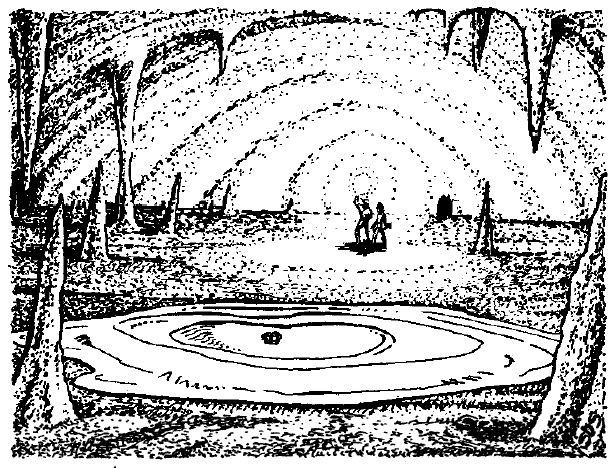
I have already converted the entirety of the Fiend Folio on this blog, so you are swimming in examples of conversions from 1st edition AD&D. Here I will look at the conversion of a single monster step-by-step. I am choosing the giant crab in Area 17, in part from nostalgia, and in part because it shows a difference with the giant crab we converted from Zenopus’ Tower. Nostalgia because this was the most memorable encounter when I played the module. My magic-user had a cube of force, so we intentionally ruptured the “waterskin” walls, boiled the crab alive, and stayed safely in the cube. A ring of feather falling prevented our deaths when we, in the cube, rocketed out of the top of the volcano. It’s been over 40 years, and it still makes me chuckle.

In 1980, when White Plume Mountain was published, statblocks had made their appearance, but sometimes creatures were still being described in a more conversational tone. In this case, we are starting from:

After thirty feet the corridor widens out into a low. Dome-shaped area. Here lives the guardian of the treasure, just about the biggest giant crab (AC: 0, HD: 15, HP: 60; #AT: 2; D: 3-18) anyone's ever seen. On one of its "forearms" it wears a rune-covered copper band that protects it from all psionic-related spells (such as charm, fear, confusion, paralysis, magic jar, etc.) It also protects against all psionics. Unfortunately, it is worthless as a treasure. as the magic is keyed specifically to this particular monster.

Init: Nothing describes this giant crab as being particularly fast, and I am reminded of the stop-motion crabs created by the late great Ray Harryhausen for The Mysterious Island. The crab therein is relatively slow, so I would say -4 for initiative. This is also appropriate for the encounter, because while the crab won’t puncture the bubble membrane around it, the PCs may.

Atk: The crab attacks with two gargantuan claws doing 3d6 damage each. At 15 Hit Dice, it would have struck often using the AD&D attack matrixes, so we will just give it a +8 to its attack rolls. This might be low, but I think that it is fair.

AC: AD&D uses descending AC, whereas DCC uses ascending. The easiest conversion is 20 subtract the given AC, which grants an AC of 20. Done.

HD: Our giant crab has 15 Hit Dice, and in AD&D terms these would be eight-sided dice unless specifically listed otherwise. 15d8 is fine.

Hp: We can keep the 60 hp of the original creature. This will not always be the case for conversions; some systems (including WotC-era D&D) suffer serious hit point creep.

MV: In the encounter as written, the monster is largely stationary, and the author doesn’t appear to have considered a movement speed. Let’s say it can move 40’, and swim 30’. We are adding the swim speed because our gargantuan crab deserves to be encountered in other locations as well as in White Plume Mountain.

Act: The giant crab gets two attacks in AD&D, so in DCC it has 2d20 for Action Dice. Note that, if you wanted to make this monster even more horrendous, you could give it 2d24 and an extended crit range of 20-24, but that is probably overkill.

SP: We will note that the creature is immune to mind-affecting spells and abilities because of its rune-covered copper band. We will also note that the band is AC 22, requires 20 hp in a single attack to destroy, or may be destroyed with a successful attack on the crab and a Deed Die result of 5+.

SV: The shell is likely to help with Fort saves, but our crab is none too agile. In this case, Fort +10, and Ref -4. The crab attacks intelligently, so I am inclined to give it Will +4.

AL: Normally, a crab would be N, but this one has some level of intelligence. We don’t get to know what alignment the author would have given it, but we can examine the AD&D alignment system, at least briefly. AD&D uses a nine-point alignment system with a Good-Evil axis as well as a Lawful-Chaotic axis. Good vs. Evil seems to be the most important axis, with the Lawful-Chaotic axis describing their approach to good, evil, or neutral morality. You can assume that a Lawful Good or Lawful Neutral creature should be converted to Lawful in DCC, and that a Chaotic Neutral or Chaotic Evil creature translates to Chaotic. True Neutral converts to Neutral. Thereafter, things get murky.

When in doubt, go with your gut. A Chaotic Good character like Robin Hood might be considered Lawful in DCC, and a Lawful Evil devil might be Chaotic because it opposes an ordered universe. The terms “Law” and “Chaos” do not necessarily mean the same thing in DCC that they do in AD&D. In fact, I am going to make our crab Lawful because it is described as having some intelligence (at least in the way it attacks), and it sits in its bubble all day playing guard duty for Keraptis.

Crit: Following the table on page 385 of the core rulebook, we get a result of M/1d20.

Put altogether, our DCC gigantic crab statblock looks like this:

Gigantic Crab: Init -4; Atk gargantuan claw +8 melee (3d6); AC 20; HD 15d8; hp 60; MV 40’ or swim 30’; Act 2d20; SP Immune to mind-affecting spells and abilities while rune-covered copper band remains intact (Mighty Deed 5+ to destroy, or AC 22, 20 hp in a single attack); SV Fort +10, Ref -4, Will +4; AL L; Crit M/1d20.

Those Awesome Weapons

Wave, Whelm, and Blackrazor are iconic, and deserve a conversion post of their own. So let’s see what we can do. 

And now a word from our sponsor. I have mentioned my Patreon from time to time. A “tipping” membership is only $1. As of this writing, the last White Plume Mountain post has had 172 views, with the other posts in the Conversion Crawl Classes series having received as few as 212 or as many as 1,170 views. The blog as a whole has topped 1 million views.  Clearly, this stuff is of some use to somebody. If you are that somebody, please consider tipping. It would mean a lot to me. At the same time, these are hard times, so if you are going through hard times, ignore this.

Regardless, the three iconic weapons will be given a closer look in the next post. I was going to append them to this post, but they are complex enough that they deserve better!


Next: White Plume Mountain (3): Wave, Whelm, and Blackrazor!


Tuesday, 18 April 2023

Conversion Crawl Classes 7: AD&D: White Plume Mountain (1): Wilderness Map

This isn’t the first time I’ve written about using White Plume Mountain in an ongoing campaign. This examination was requested by a member of my Patreon, who wanted to look at the “wilderness map” portion of this module in particular. Therefore, in this first post, I am focusing solely on said map, with a second post to examine converting AD&D to DCC more specifically.

If you are unfamiliar with White Plume Mountain, it is a 5-10th level AD&D tournament-style adventure module focused on recovering three magic weapons: Whelm, Wave, and Blackrazor. It includes, on page 3, a map by Erol Otus showing the region around the titular mountain. Although these areas are not explored in the text of the module, they are so flavorful that they have inspired many a home campaign since, and in some cases have also inspired published material. In effect, though, this post is talking about converting ideas, not specific statistics or other text.

In his forward to Dungeons of Dread, White Plume Mountain author Lawrence Schick gives us some insight into the adventure’s genesis:

Module S2, my own White Plume Mountain, wasn’t written to be published. I wrote it as a submission to persuade Gary that he ought to hire me as an RPG designer. Mission accomplished: Gary offered me a job, and also, to my surprise, offered to publish White Plume Mountain exactly as written. Gratifying, of course, but also a little embarrassing, since the adventure was really just a sampler of clever ideas that were never fully fleshed out. Its central conceit, a “funhouse” dungeon full of tricky obstacles designed to challenge adventurers for the amusement of a mad wizard, was already a cliché even at that date. And I was all too aware that the artifact/weapon Blackrazor, included to show I could adapt ideas from other media to AD&D, was a descendant of Elric’s Stormbringer. But unlike Tomb of Horrors, the challenges in White Plume Mountain were designed to make players think, work together as a party, and ultimately win through and feel successful. Players liked that.

While there may be potential problems with the “mad wizard” trope, we will address them further next post, when we look at the text of the module itself. I would, however, argue out of the gate that the author’s homage to Stormbringer is a direct ancestor of Harley Stroh’s The Curse of the Kingspire and my own The Imperishable Sorceress. Without Lawrence Schick’s example, these adventures might have looked very different (or even not exist!).

The items on the map have been explored by later writers, both in Return to White Plume Mountain and in Never Say Die, an adventure in Dungeon magazine #212. Possibly they have been revisited elsewhere, and Dagotha is certainly the seed of all dracoliches, but I am not going to reference them here. The goal is to teach some techniques to convert materials to Dungeon Crawl Classics, not to perform exhaustive research. Moreover, it is far more DCC to just make something your own than it is to make certain that you have followed the lore of some past product.

This is something you should definitely take to heart – there is no “one true way” to convert materials. There are conversions that are closer to, or farther from, the source material, but how closely you wish to cleave to the source – and what you wish to cleave away – is entirely up to you!

Dragotha, the Undead Dragon

Beyond to the lair of Dragotha, the Undead Dragon, where fabulous riches and hideous death await.

This one is fairly easy to convert. There is already a Bone Dragon in Through the Dragonwall, itself inspired by the Caldwell cover painting, which almost certainly has a lineage of inspiration reaching back to Dragotha. We could simply repurpose the Bone Dragon, or we could create Dragotha anew. The second approach is more appealing to me, in large part because it offers a better opportunity to teach the method behind my madness.

First we make use of the Purple Sorcerer Dragon Generator to create a large dragon at random. Here is the one I came up with:

Large shadow dragon

Init +11; Atk claw (x2) +12 melee (1d8); bite +12 melee (1d12); AC 21; HD 11d12 (66 hp); MV 60; Act attacks d20, spells ; SP see below; SV Fort +11, Ref +11, Will +11; Al N.

Breath Weapon: Type (Acid); Save (Fort 21); Damage (As dragon’s hit points or half with save); Shape ( Cone, width 1d6x10’, length 1d4 x 10')

Level 1 Spells: Charm Person

Martial Power 1: Weapon-resistant hide. The dragon’s armor is so thick that it takes half damage from mundane weapons. Magical weapons do normal damage.

Martial Power 2: Infravision 100’

Unique Power 1: Plant growth (1/hour). All plants within 100’ grow to twice their current size in 1d4 rounds; targets within growth are entangled (half speed, -2 to attacks).

Unique Power 2: Detection (at will). The dragon can detect object of one type within 100’ at will. Level of precision depends on age and ranges from very specific (i.e., exact size and quantity of object) to vague (directional only). Object of detection: living creatures.

Unique Power 3: Earth to stone (1/day). The dragon can transform an area of earth into solid stone. The area transformed, up to 100’ x 20’ x 5’, is permanently changed into stone.

Right there we are mostly good. Acid breath works well with Erol Otus’ illustration, I think, and we need to change “Large shadow dragon” to “Large un-dead shadow dragon”. However, there are a few other things we need to change, and this demonstrates why using a random generator when you have a specific outcome in mind will only get you so far.

A neutral alignment doesn’t really fit in with what we are creating. We can certainly make Dragotha chaotic!

“Martial Power 1: Weapon-resistant hide. The dragon’s armor is so thick that it takes half damage from mundane weapons” we re-skin to being a result of its bony construction. The mechanics do not need to change.

“Unique Power 1: Plant growth” doesn’t seem to match with being un-dead, though. We don’t need to replace this. We simply remove it. I am of two minds about “Unique Power 3: Earth to stone”, but let’s keep it anyway. The map seems to imply that Dragotha dwells in a fairly stony land, which matches, and we could always make their lair (Dragotha’s gender isn’t defined) contain loam traps (and the remains of former loam traps), where Dragotha has turned soil to stone in order to entrap the legs and feet of those foolhardy individuals who might brave the un-dead dragon’s lair.

Dragotha is also an un-dead creature, and the DCC core rulebook has tables to help make the un-dead unique on page 381. We already know what Dragotha looks like, thanks to Erol Otus, but what special power do they have? Rolling a “1” on Table 9-6, we get “Energy-draining touch (ability score damage; Will save resists)”. Putting this together we have a fairly good monster to place on the map.

However, before we do so we still must decide if Dragotha can fly, and which critical chart to use. Bony wings shouldn’t allow flight (unless magical), so I am not going to give Dragotha a fly speed. Both dragons and un-dead have fun, brutal critical hit charts, and this is a legendary monster, so I am going to do something unusual – it rolls on both critical tables at a -2d penalty!

You will also note that the Dragon Generator didn’t tell us what die the dragon rolls for its spells, or what bonus it might have, but looking at Table IV on page 407 of the core rulebook shows us that a single 1st level spell is linked to rolling 1d20 with a +2 spell check modifier.

Dragotha, Large Un-dead Shadow Dragon: Init +11; Atk claw +12 melee (1d8 plus Stamina draon) or bite +12 melee (1d12 plus Stamina drain) or breath weapon or transform earth to stone; AC 21; HD 11d12; hp 66; MV 60’; Act 3d20 and 1d20 (spells); SP Un-dead, infravision 100’, Stamina drain (1d4 Stamina damage, Fort DC 21 negates), breath weapon (Acid cloud 20’ wide x 40’ long, damage as Dragotha’s hp, Fort DC 21 for half), spellcasting (charm person, +2 bonus to spell check), transform earth to stone (1/day, up to 100’ x 20’ x 5’), two critical effects on natural 20, detect living creatures within 100’, half damage from non-magical weapons; SV Fort +11, Ref +11, Will +11; AL C; Crit DR/1d20 and U/1d12.

Thingizzard

The hut of Thingizzard, beware her potions.

First off, I read this name as Thin-gizzard rather than Thing-izzard. Secondly, I cannot help but consider the Clark Ashton Smith story, The Mother of Toads, as a potential inspiration, particularly in light of “beware her potions”. Finally, there are base witch statistics on page 434 of the core rules. Information on creating hags can be found in Curse of Mistwood (published by Shinobi 27 Games; I am a co-author and wrote the section on hags). I would consider giving Thingizzard the stats of a greater bog hag from Curse, which should be potent enough for 3rd to 5th level DCC characters. In general, an adventure for D&D characters converts well for DCC characters of about half the listed level.

What I would like to focus on here is “beware her potions”. I see Thingizzard selling potions on the cheap, but all of the potions she sells have side effects which further her own goals. For instance, Thingizzard might be able to provide healing potions at a very cheap price (initially), but the potions are addictive, and those using them soon find that they require more just to heal at the normal rate. Now the price is higher, and it is in services rather than gold.

Another potion could provide bonuses to combat – say +1 to Deed Die (or a 1d3 Deed Die if you don’t already have one) and half damage from mundane weapons, for 1d6 turns. However, these potions slowly turn you into creatures subservient to Thingizzard. You could create an effect similar to Patron Taint, a chart the imbiber must roll on each time one of these potions is used.

Ruins of Castle Mukos

The cursed ruins of Castle Mukos; who knows what lies within.

This is just another adventure site, without enough information to really give the judge direction. Who knows what lies within? The question if enough to make players want to find out. There is nothing here to convert. Any castle-based adventure might be slotted in here, although you will want either a reasonably cursed location or want to create an interesting curse which affects those who adventure here.

Dead Gnoll’s Eye Socket

Here be Dead Gnoll’s Eye Socket.

We have a particularly flavorful name but no details for conversion apart from it being a small natural cave which affords a possibility of rest. If you have access to Dungeon #212 from March of 2013, the adventure Never Say Die describes the “Dead Gnoll's Eye Sockets”, and we might take a look at this as a potential Conversion Crawl Classes for 4th edition D&D.

The Twisted Thickets

The Twisted Thickets; Skittering Slithers abound.

I have no idea what was in Erol Otus’ mind when he drew the illustration accompanying the Twisted Thickets, but I am willing to assume that it is a skittering slither. Moreover, I will make the assumption from the name that the Twisted Thickets are themselves difficult to move in. Let us say that, should a PC leave one of the unwholesome paths among the thorny growths, they cannot move at more than half speed. Let us also say that, while in combat (or when movement is time-sensitive) a DC 10 Reflex save is required to move at all. Worse, on a natural “1” something untoward happens (thorns, falls, falling branches, half-hidden pits) that causes 1d3 damage to the character.

Skittering Slither: Init +3; Atk claw +4 melee (1d3) or bite +2 melee (1d6); AC 14; HD 3d6; MV 30’ or climb 30’ or burrow 20’; Act 3d20; SP +8 stealth, free movement in thickets, use Action Die to retreat, cover bonus when disengaged; SV Fort +2, Ref +3, Will +5; AL C; Crit M/1d8.

These reptilian creatures are native to the Twisted Thickets, where they are capable of full movement without penalty. So adept are they at moving through the canopy, ground, and undergrowth of the thickets, that they are able to use an Action Die to break off from combat without provoking a free attack. For this reason, skittering slithers rarely use both claws and a bite, trading one potential attack for a free retreat. They attack using hit-and-run tactics, gaining a +4 bonus to AC due to cover once they have disengaged.

A skittering slither appears to be a three-foot long snake-like reptile with a froggish head whose mouth is filled with sharp, protruding teeth. They abound in the Twisted Thickets, often attacking in groups of 2d6 (or more). They are at home on the ground, in the trees, and even among the gnarled roots below ground.


Next: White Plume Mountain (2): The Adventure!

Monday, 10 April 2023

Conversion Crawl Classes 6: Basic D&D: Palace of the Silver Princess (2): Monster Conversions

The general idea of “Conversion Crawl Classes” is to provide some guidance towards converting various systems and adventures to Dungeon Crawl Classics. The idea is to provide some pointers and examples for each system, and then leave the actual conversion work to the reader. If doing so inspired a publisher to ask me to convert some of their material, well, I need to eat too. If doing so inspired a publisher to convert their own material, well, they need to eat as well as I do!

This installment is unusual in that I am converting a number of monsters, as well as a magic sword. Please do not take this to mean that I will be doing so in the future! This work is being done because a member of my Patreon requested that I look at Palace of the Silver Princess in this series of posts. I received a lot of interesting requests related to this series, including many systems very much removed from D&D-based or D20-based rulesets. I am, in fact, starting with various versions of D&D because that is the lowest hanging fruit – the easiest conversions to do, to teach, and to learn. But we will eventually get pretty far out there!

What follows are mostly straight conversions, using the original module text. I have done some editing where I deemed it necessary or appropriate. And, of course, I have done some editing to convert game information from the Basic D&D ruleset to Dungeon Crawl Classics. As you go through this material, keep in mind the thematic components of the adventure described in Part 1.

Monster Conversions

Archer Bush: Init +0; Atk barrage of needles +3 ranged (1d4 and irritant thorns); AC 11; HD 1d8; MV 0’; Act 1d20; SP plant, barrage attack, irritant thorns, immune to mind-affecting; SV Fort +3, Ref -8, Will +0; AL N; Crit M/1d6.

Archer bushes are wild plants which kill most other things growing near them (Jupiter blood suckers are an exception; see below). They defend themselves by shooting small thorns at whatever disturbs them by coming within 30’; their barrage attack targets all creatures within this area.

Archer bushes grow thousands of thorns along their branches. When struck by a barrage of thorns, each point of damage taken indicates approximately 10 thorns hit the target. Victims must succeed in a Fort save (DC 10 + damage taken) or the small thorns work their way into the skin, causing swelling and infections 1d24 hours later (-2 penalty to all attack rolls, skill checks, and spell checks until neutralized as a poison or 2d5 days pass).

Some peasants or men of the woods occasionally hide treasures in the midst of many archer bushes. They simply shield themselves from the thorns by hiding behind a large makeshift shield, piece of wood or a clump or rocks, casting a handful of rocks at the bushes, entering the growth, hiding their valuables and then leaving the bushes before they have time to grow new thorns (2d10 minutes). Sometimes these bushes are used to hide openings in caves or other types of entranceways.


Baric: Init +2; Atk claw +1 melee (1d3) or bite +1 melee (1d6); AC 13; HD 3d6; MV 30’; Act 3d20; SV Fort +4, Ref +3, Will +2; AL N; Crit M/1d8.

This rat-like creature has 6 legs, black fur, and eyes that glow white just before it attacks. Instead of a normal rat-like face, the baric has a duck-like bill filled with many rows of small, needle sharp teeth. Although primarily scavengers, barics are excellent hunters. Although they do not form family units, barics do form packs (similar to those of wolves) in wild woods not frequented by humans or human-kind. They are sometimes used for hunting or for pursuing escaped prisoners or slaves, but due to their unpredictable nature, training these creatures is very dangerous. Many barics have turned on their trainers and killed them before they could be saved.

An average baric is approximately 3 feet long and weighs about 40 to 50 pounds. Some males have been known to reach a length of 7 feet and weigh nearly 150 pounds. Females usually give birth to 1d4+1 pups two or three times a year. Twenty percent of these do not live to adulthood as the males tend to eat them when the females are not around to protect the young.


Bubbles: Init +0; Atk touch +5 melee (1d4 plus paralysis and engulf); AC 11; HD 1d4; MV 20’ or swim 20’; Act 1d16; SP paralysis (Fort DC 14; 1d8 minutes), engulf, suffocate, reform; SV Fort +0, Ref +1, Will +2; AL C; Crit n/a.

Created through the intermingling of potions and alchemical ingredients discarded into relatively still waters, these strange beings consist of air pockets large enough to contain a human, surrounded by a thin film of soap-like magical substance which shimmers like oil.

The touch of a bubble is both caustic and paralyzing. Any victim failing their DC 14 Fort save is paralyzed for 1d8 minutes. If near water, a paralyzed victim must succeed in a Luck check or fall in. A paralyzed victim which is already in, or falls into, the water containing the bubble is quickly engulfed and dragged down to the bottom of the pool, lake, or fen, where they suffocate in 1d4+1 rounds unless rescued by reducing the bubble to 0 hp.

(Bubbles don’t consume their victims, instead expelling any suffocated corpse, which rises to the surface if not weighted down with armor or similar. Bubbles have both life and an evil intelligence, seemingly slaying their victims for the sheer joy of doing so.)

Once reduced to 0 hp, a bubble seemingly bursts and is destroyed. Instead, the filmy material reforms into two new bubbles after 1d24 turns. Bubbles can only be permanently destroyed if the water they inhabit is completely drained and dried up.


Decapus: Init +2; Atk tentacle +3 melee (1d6); AC 15; HD 3d12; MV 5’ or climb 10’; Act 9d20; SP infravision 60’, keen hearing, ventriloquism and illusions, -2d penalty to attack rolls on floor; SV Fort +5, Ref +3, Will +7; AL C; Crit M/1d8.

This clever monster has the innate ability to use both ventriloquism and illusions to appear as a helpless, beautiful woman, usually hanging from the ceiling and being taunted by nine ugly men. In its true form it has ten long tentacles extending from various parts of its body. These tentacles have many 3 inch diameter suction cups which it uses to grab its victims as well as to climb walls and ceilings.

It only uses 9 of its tentacles to fight with and can use no more than three on a single opponent. The tenth tentacle is used to suspend itself from the ceiling. On the floor the decapus is practically helpless, only being able to move short distances in a slow and uncoordinated fashion.

The decapus has superior hearing and other senses, so that it can detect any party within 120, and have a 1-2 chance on 1d3 of hearing even the stealthiest of thieves. This allows it to use illusions to disguise itself, automatically gaining a surprise round unless the illusions are disbelieved (Will DC 15 if an intent to disbelieve is stated, or the illusions interacted with). The decapus can disguise itself as other creatures, or as part of a wall, but its favorite illusion is that of the helpless woman.

The most common color of a decapus is green, although some purple or yellow ones may be found. A decapus has patches of hair growing about its body (usually brown, but sometimes black). They have no iris in their eyes, only dark pupils. The mouth of a decapus is a horrible thing to behold – very wide with long yellow teeth and a terribly foul breath. The decapus is incapable of human speech, but is an expert at mimicking a high pitched scream. It can also make guttural noises which are understood by others of its kind, but which are extremely unpleasant for humans to hear. The only sound that can be understood (without magic) in a decapus’ language is the hideous laughter it emits when it has killed a victim.

Decapuses usually live alone, preferring to hunt by themselves, only gathering during their mating season, when many of them can be seen hanging from ceilings, making strange ugly sounds. A female decapus will give birth to only one offspring, and if she is hungry or confused she may eat it. Uneaten offspring do not need the care of their mothers, and are quick to claim their own territory before they can be consumed by their elders.

The Decapuses’ favorite food is human beings, but they enjoy elves and halflings too. They will not eat dwarves unless starving, although they will eat other humanoids and consider mule to be a delicacy. A decapods has been known to follow the scent of a mule for weeks until they catch it, or grow weary of the chase. Fortunately for mules, these creatures are exceedingly slow.


Diger: Init +1; Atk touch +0 melee (paralysis); AC 11; HD 2d8; MV 5’ or fly 20’ or swim 30’; Act 1d20; SP paralysis (Fort DC 10 negates, 2d12 minutes), slow digestion; SV Fort +2, Ref +3, Will +5; AL C; Crit M/1d8.

This unique creature can only be found in remote abandoned ruins where it seeks stone areas in order to disguise itself as a marble pool. It secretes a paralyzing liquid (Fort DC 10 or paralyzed for 2d12 minutes) which affects those hit by its attacks or who otherwise come into contact with it. Once a paralyzed person has fallen into the diger’s liquid, they take 1d12 damage per minute of immersion, and all belongings (including metal objects) are digested in 2d12 turns.

The diger is capable of flying short distances by expanding its rubbery body with natural helium. It expels the helium in short puffs from one of four openings on its body. When swimming, the diger simply expels the helium as with flying, but glides farther with each exhalation. Moving in this way, digers need to rest for 1 turn after every 8 turns flying or 20 turns swimming. Their favorite mode of travel is to enter a large river or stream, glide out to a strong current and float along the surface. When moving in this fashion, the diger need not rest except to sleep.                 


Ghost: See core rulebook, pages 413-414.


Giant Marble Snake: Init +3; Atk bite +1 melee (1d6); AC 12; HD 3d8; MV 40’ or climb 40’ or burrow 20’; Act 1d20; SP charming whistle (500’ range, Will DC 13); SV Fort +4, Ref +5, Will +4; AL N; Crit M/1d8.

These creatures are lazy, and use a charming whistling sound to draw potential victims to them rather than hunting for themselves. This whistling is effective to a range of 500’, and those hearing it are charmed and drawn towards the serpent unless they succeed in a DC 13 Will save). This charming effect is broken for each victim once the snake successfully strikes them.

These giant milk-white snakes have gold facial hair around theirs heads much like a lion’s mane. Their eyes are multi-faceted, and in bright light colors seem to swirl in tiny pools of each facet. Their skin is transparent in some places, allowing thin blood veins to show through, granting them the name marble snake.

These reptiles prefer high, sunny places, and may search for weeks for a suitable place to nest. Often they elect to live in a ruined fortress or similar structure, the females burrowing through loose stones and dirt, laying 1d10 eggs in the resultant tunnel. When not in her nest, female snakes seek higher ground or ledges where they can observe without themselves being seen; this is the common haunt of male snakes as well..

If two or more snakes are found together, they are probably a temporary family unit, until the female snake lays her eggs in solitude. Giant marble snakes often leave the eggs after they hatch, though (rarely) when some females find a suitable place to make their lair and they may decide to stay.


Giant Marmoset: Init +3; Atk claw +3 melee (1d4) or bite +1 melee (1d6) or tail spike +2 melee (1d4) or thrown stone +3 ranged (1d3); AC 15; HD 3d6; MV 40’ or climb 40’; Act 3d20; SV Fort +2, Ref +4, Will +0; AL N; Crit M/1d8.

These ferocious monkeys roam the jungles freely and unopposed, for they are fierce and cunning fighters. Though their natural weapons cause a great deal of damage, they often prefer to throw large stones from the side of a cliff down onto their prey. If fighting on the ground, they use their claws and furry tail spike, but if in the trees, they will hang from their tails and use their bite and claws instead.

Giant marmosets travel in large family groups; the males outnumber the females and every female will have at least 1 young with her. If a young marmoset monkey can be caught and trained, it will make an excellent guard. Some monkeys grow large enough for a halfling to comfortably ride, and some halflings living in jungles have been seen riding them into battle.


Jupiter Blood Sucker: Init +0; Atk leaves +1 melee (hold plus smother plus blood drain); AC 15; HD 3d10; MV 5’; Act 1d20; SP plant, hold (Reflex DC 15 avoids, Strength DC 20 or Mighty Deed 4+ to escape), smother (Reflex DC 10 or 1d4 temporary Stamina), blood drain (1d3 Stamina), stealth +6, immune to mind-affecting, hard to kill, fire vulnerability; SV Fort +4, Ref -4, Will +0; AL N; Crit M/1d8.

The Jupiter blood sucker, or vampire plant, is a horrible weed with large leaves have small small hollow thorns on their underside. Its leaves can sense blood, and the plant is capable of silent, stealthy motion to attack from surprise.

A successful attack has three effects:

(1)  The Jupiter blood sucker wraps its giant leaves around its victim, holding its victim in place and allowing the plant to make further attacks with a +4 bonus to hit. A DC 15 Reflex save negates this effect, which can also be ended by a DC 20 Strength check or a Mighty Deed result of 4+ used to free the victim.

(2) The plant uses one or more leaves to smother its victim, doing 1d4 points of temporary Stamina damage, which heals with 10 minutes of rest. The victim may avoid this damage with a DC 10 Reflex save.

(3) Finally, the plant drains blood through the hollow spines on its leaves, doing 1d3 points of Stamina damage.

The Jupiter blood sucker fears fire, and will move away from it if possible. Attacks using fire (magical or otherwise) do +2 damage per die to the plant. Even if reduced to 0 hp, Jupiter blood suckers will usually grow again from their roots. The only way to permanently destroy this horrid plant is to bum it completely to the ground and then pull or dig up the roots and burn them also.

The leaves of this plant are dark green with red veins, the stems are transparent, and the blood drained from its feeding can be seen flowing down the stem.


Poltergeist: See this blog post.


Protector: Init +4; Atk by weapon +4 melee (by weapon); AC 18; HD 7d6; MV fly 50’; Act 1d20; SP detect alignment 120’, telepathy 120’; SV Fort +4, Ref +7, Will +12; AL L; Crit IV/1d12.

These translucent green beings prefer to live as a gentle folk, protecting all lawful creatures that may enter the places they are guarding. They wear long flowing robes that appear to move in the breeze even though there may be no air movements at all. Most Protectors are bald men, though some may appear as women with long flowing hair. Their bodies are slender, giving them the appearance of being much taller than they are, and they float 6 to 10 inches above the ground.

Protectors never speak aloud, communicating instead through telepathy, and they instantly know the alignment of any being within 120’. Chaotic creatures and objects are immediately attacked in an attempt to drive them off or destroy them. Natural animals and peaceful neutral creatures may be tolerated, based on their actions, but protectors never attack a lawful creature, even if it is attacking them. The Protectors know that lawful beings would not attack them if they understood the Protectors’ purpose.

As superior beings, they overlook the mistakes of other lawful creatures and help them gain a better understanding of how to live properly. To them this means protecting lawful things and eliminating chaotic things to make a better world.


Purple Moss: This moss emits a heavy sweet smell that causes those within 30’ of it to succeed in a DC 20 Will save or fall into a deep, but natural, sleep. The moss quickly grows over sleeping victims, covering the body and suffocating sleepers for 1d3 temporary Stamina per round. Once a victim is dead, the moss consumes all soft material on the body (organs, skin, clothes, etc.) in 1d6 turns.

Those who resist the moss’s narcotic slumber may attempt to awaken sleeping victims (granting them a new save), but a new save is required every round that a creature remains within 30’ of the purple moss. This substance can be destroyed at the rate of one 5’ x 5’ patch per 8 hp of fire damage done (smaller patches may be destroyed with less fire damage), but the moss is immune or resistant to most other attempts to destroy it (judge’s discretion).


Ubue: Init +3; Atk by weapon +1 melee (by weapon); AC 13; HD 3d6; MV 20’; Act 2d20 + 1d16; SP bickering among heads, weaker arm; SV Fort +3, Ref +3, Will +3; AL C; Crit III/1d8.

Ubues have pale flesh, and in all features vaguely resemble humans, but have three heads, three arms and three legs. The middle head always has the opposite gender of the other two, with the outer heads determining the normative gender of the creature. Due to this division of heads, the creatures are often conflicted. There is a great deal of argument between the heads from time to time. Sometimes these arguments are untimely, and there is a 1 in 12 chance that an ubue will fail to act on its turn in combat because of this. They can wield weapons with all three hands, but one is always weaker and used 1d16 for its action die. They wear animal skins, and use bones as hair decorations and jewelry.

The social system of the ubues is simple. The strongest male ubue is the tribal chief. A male ubue can at any time challenge the chief for the right to be the new ruler. If the challenger loses, he is forced to leave the tribe for a period of 4 seasons. His family, if he has one, is often exiled with him. If the chief loses, he simply becomes one of the village elders and will always have voice in the council.

Female ubues generally give birth to only one child at a time. If more than one babe is born, the tribe’s shaman will kill one of the babies. If one of the babes is female and the other male, it will be the female that dies, otherwise the shaman cast sticks onto the floor searching for signs from the gods as to which child to slay.

The tribal chief may have up to 5 Hit Dice, and the tribal shaman can cast spells as a (roll 1d3) (1-2) 1st or (3) 2nd level cleric.

Magic Items

The Sword of Spartusia, +1 Lawful long sword

Intelligence: 6

Communication: Simple urges

Special Purpose 1: Seek out and be wielded by a female descendent of Spartusia

Special Purpose 2: Be wielded by a female warrior

Power 1: When wielded by a female descendent of Spartusia, this sword acts as a +2 weapon and the critical range of its wielder is increased by 1 (for example, 18-20 for a level 1 warrior).

Power 2: Curse. When used by a male, this sword increases the wielder’s fumble range to 1-3.

Power 3: Curse. When wielded by anyone other than a female descendent of Spartusia, the wielder suffers a -3 penalty to Luck. Worse, strange coincidences may occur to increase the likelihood of the wielder dying in some embarrassing manner.

Power 4: Curse. This sword cannot be sold cannot be sold — it must be given away (or thrown away). If a character attempts to sell the weapon (no matter how carefully or in how roundabout a manner), the sword will find its way back to the character, and the selling price will be lost. There will also probably be an irate would-be buyer seeking vengeance!

This wondrous, ruby-bladed magic sword once belonged to the legendary female warrior Spartusia Ericsdottir. The blade of this sword was crafted from a single flawless ruby. Tales speak of a race of ancient dragon worshippers creating this sword for Spartusia because she saved their queen dragon from vengeful knights of other lands. The sword was given a trim appearance, with beauty to match the beauty of Spartusia and a bite that was deep to match her courage and strength.

What little history is known about the sword tells of Spartusia being swallowed up by the earth. The sword resurfaced many years later while a group of nomads were burying their old chief; the new chief claimed that it was a gift from their gods to him. However, three years later his wife murdered him and his mistress with the sword and then threw the sword and herself off a cliff into the raging sea. The sword turned up about 100 years later in a fishing village. The whole village was burned to the ground by a horde of barbarians not long afterwards.

The sword has had many owners, most of whom died horrible or embarrassing deaths. Recently there have been stories of the sword reemerging from unknown depths, and it is now in the hands of the female werebear, Aleigha, who is a true descendant of Spartusia.


Next: AD&D: White Plume Mountain!

Saturday, 8 April 2023

Conversion Crawl Classes 5: Basic D&D: Palace of the Silver Princess (1)

We are looking at a second Basic D&D module because this one was specifically requested on my Patreon. If you find this content helpful, and would like to tip – or if you want some input into what conversions I am looking at (or other material I produce), you should consider joining.

I do not have a history with Palace of the Silver Princess, and I wasn’t even aware of it until decades later when the Interwebs gave me some insight into this somewhat controversial adventure.  By 1981 I was already entering the world of AD&D, and foolishly thought that “Basic” adventures would be less interesting than their “Advanced” cousins. The controversy centered around an illustration on page 10, “The Illusion of the Decapus”. Or, possibly, there was some complaint about Erol Otus caricatures of TSR staffers. In any event, the original, orange cover, version was largely destroyed. A green cover version, rewritten by Tom Moldvay, was then published.

This is a pity for two reasons. The first is that Jean Wells, the woman who wrote the original version, was the first woman hired to do this sort of work for TSR, and this was her first and only foray into the field. Having her adventure pulled on the basis of the art – over which she had no control – must have been heartbreaking. The second reason is that I am looking at the original version of this adventure for this post, and that is a bit harder to come by than the later version. However, even if you do not have the adventure, you should be able to follow along easily enough.

I intend on spending two posts with Palace of the Silver Princess. This first post will outline general conversion notes. The second post will convert at least some of the monsters unique to this version of the adventure.

Starting Observations

Palace of the Silver Princess includes a wilderness area and a dungeon area, similar to The Keep on the Borderlands. It also includes several areas where information is left for the judge to fill in, similar to In Search of the Unknown. The wilderness map is, unfortunately, not on a hex grid…or even a square grid. The adventure has a strong fairy-tale vibe. It also has a strong theme of gender conflict, which I think is worth keeping. It is certainly unique.

Consider that Jean Wells was the first female game designer TSR hired, and TSR was the 500-lb gorilla in the rpg industry at that time. Jean Wells took a number of characters who would have been described as male by her colleagues, up to and including making the Silver Princess a legendary figure. On top of that, we have the “fierce young female fighter called Aliegha”, the “evil of Baroness of Gulluvia, Lady D’hmis” and the Sword of Spartusia which “once belonged to the legendary female warrior Spartusia Ericsdottir” and bears a curse that causes it “to constantly search for a true female descent of Spartusia.”

The most unique new monsters in the adventure are the humanoid ubues, which literally embody gender conflict. Each ubue has three heads – two of one gender and one of the other. If the majority of the heads are male, the ubue is male. If the majority are female, the ubue is female. They literally always embody what was then known as the “battle of the sexes”. According to the text, “One of the three heads will always be of a different sex from the other two and it will always be in the middle…Due to this division of heads, there is a great deal of argument between the heads from time to time. Sometimes these arguments are untimely, as in the middle of a battle (15% chance).”

To further demonstrate the gender divide, “The strongest male ubue is the tribal chief” although a male ubue can challenge the chief at an time. In contrast, “If more than one babe is born, the tribe’s shaman will kill one of the babies. If one of the babes is female and the other male, it will be the female that dies, otherwise the shaman cast sticks onto the floor searching for signs from the gods as to which child to slay.”

Nor does the author always depict her own gender as preferable. Consider the description of Gulluvia:

This is a ruthless place filled with terror. The ruler of this chaotic nightmare is Lady D’hmis. She rules this barony with a firm and unforgiving hand. To gain supreme rulership of the tiny barony, she killed her husband. A prime example of the type of laws her ladyship favors is one forbidding males, except those in her service, from being on the streets after the sunset unless accompanied by a female who is age 15 or older. This law meets little resistance as everyone fears her baronial guards. Though D’hmis’ warriors are primarily male, her commanders are all females; tough, chaotic women who instill fear by a mere gaze and who fear little save D’hmis and the elite male fighters who serve as her personal bodyguards and paramours.

This sort of gender-based difference is pretty common in the formulative fiction of the game, and certainly casts a long shadow in Appendix N. While common in the source literature, Jean Wells turned it on its head, and certainly took a playful stance towards the issue. Take, for instance, the decapus encounter whose illustration so dismayed TSR:

A beautiful young woman hangs from the ceiling. Nine ugly men can be seen poking their swords lightly into her flesh, all the while taunting her in an unknown language and pulling at what few clothes she has on. Part of her ankle length hair has been wrapped around her legs, securely binding them together, while the rest of her hair has been used to tie her hands to a ceiling beam.

Apart from the obvious sexual imagery (poking their swords lightly into her flesh), there is a reference her to the story of Rapunzel, and with it the symbolism of uncut hair indicating virginity and/or purity. (The Biblical Samson partakes of the same symbolism, losing his power when he allows his hair to be cut.) And the scene is illusory; the stereotypical gender roles being seen here are in fact the lure of a cunning predatory monster which uses “both ventriloquism and illusions to appear as a helpless, beautiful woman, usually hanging from the ceiling and being taunted by nine ugly men. In its true form it has ten long tentacles extending from various parts of its body.” Again, Jean Wells is poking fun at standard fantasy adventure fare, and it is unfortunate that she wasn’t better supported by TSR. Certainly the issues raised herein are still relevant today.

Another thing I wanted to point out was the Misty Swamp, which “changes magic-user spells in strange and unpredictable ways”. In some ways, this foreshadows “Magic Here and Magic There” on page 358 of the DCC core rulebook, just as Jean Wells’ creation and use of unique monsters foreshadows “Make Monsters Mysterious”. With different illustrations, completed encounter areas, and a somewhat grittier tone, this would be a very DCC adventure indeed.

Basic Considerations

Our basic considerations for this adventure are very much like those for The Keep on the Borderlands – we need to reduce treasure by approximately 1/10th the listed value and reduce placement of inconsequential (dull) magic items. In this particular case, we also need to determine what to place in those areas left unkeyed by the author. When doing so, we should remember the value of “empty” rooms – not everything need be an encounter!

Other than this, the methods used to convert The Keep on the Borderlands (Parts 1, 2, and 3) work exactly the same here.

For examples of “Magic Here and Magic There” in action, see “The Mysterious Valley” in DAMN #1, The Falcate Idol, Through the Cotillion of Hours, or Curse of Mistwood. These are not the only examples to look at, but they can give you some idea of how to adjust magic in the Misty Swamp. Given the overarching theme of the adventure, it would be worthwhile to include some gender-based effects to magic, which David Fisher and I did in Curse of Mistwood.

Ending Observations

In my next post, I will include conversions of some of the unique monsters in this adventure. You can use them as examples of the conversion process, but I am not going to break it down in this case – it is really no different than in this post.

If anyone knows why the Martian Manhunter appears in the back cover illustration, though, I would be interested to hear it.


Next Post: Palace of the Silver Princess (2): Monster Conversions