Thursday, 11 August 2022

Let’s Convert the Fiend Folio: Eye Killer and Eye of Fear and Flame

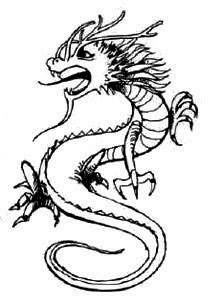
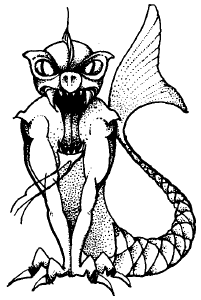
Finishing up the “E”s, we have the Eye Killer and the Eye of Fear and Flame.

A long, long time ago, I set up a really large dungeon which included a nest of Eye Killers. The PCs never found it, which was probably for the best. Eye Killers are a truly nasty creation, and are one of the best reasons to hire linkboys to carry your torch for you deep underground.

The Eye of Fear and Flame is probably one of the classics from the Fiend Folio, but I can’t remember ever using one. It could certainly serve to prove that there are foul creatures underground. In its original form, it was casting a 12-dice fireball every three rounds, which is something few Advanced Dungeons & Dragons parties could long sustain. Not only is that automatic damage each time it happens, but in AD&D it also meant that your items had to save. Scrolls and spellbooks? Gone. Weapons? Well, weapons like slings, bows, crossbows, halberds, and clubs were also probably gone. Swords and armor were potentially gone as well. My version is toned down a bit, but should still be a fun encounter.


Eye Killer

Eye Killer: Init +3; Atk Coils +3 melee (1d6 plus crush) or death stare +4 ranged (3d6 plus Fort DC 10 or die, 50’ range, ignores armor); AC 15; HD 3d6; MV 20’; Act 1d20; SP Infravision 120’, crush, death stare, light sensitivity; SV Fort +2; Ref +3; Will +0; AL C.

This creature has a bat-like torso atop a large serpentine body. Although it has stunted wings, and uses these to help it lift its bat-like upper portion, it cannot fly. Its eyes are large and lidless. At birth, eye killers are limbless and almost spherical; adventurers may encounter helpless young in various stages of development before they encounter adults.

Eye killers dwell in dark places underground, for they dislike daylight and hate the brightness of torches and lanterns. They attack using their snakelike coils, and on a successful attack begin to crush their target, until either the target escapes with a DC 15 Strength check, or the attacker is slain or driven off. A victim being crushed automatically takes 1d6 damage per round.

Once per day, an eye killer can gather illumination from lanterns, torches, or whatever light source is being used, amplify it, and project the light with its eyes into a narrow ray of intense radiance. Within 50’, any being hit by this ray takes 3d6 damage and must succeed in a DC 10 Fort save or die. This attack is usually used against the light bearer, in an attempt to extinguish the light source. This attack ignores all armor, although Agility bonuses and magic may still help.

Eye killers are sensitive to light, and if a lit torch or lantern comes within 10’ of the creature, it must make a morale check (Will save vs. DC 10) or flee.


Eye of Fear and Flame

Eye of Fear and Flame: Init +2; Atk Eye of fear (fear) or eye of flame +5 ranged (special); AC 18; HD 8d12; MV 30’; Act 1d20; SP Un-dead, infravision 60’, detect law 120’, eye of fear, eye of flame, ethereal escape; SV Fort +6; Ref +2; Will +10 ; AL C.

A hooded form stalking the underworld, the eye of fear and flame seeks out Lawful beings (which it can detect within a range of 120’). When first encountered, the eye keeps its face invisible, as though there were an opaque black screen hiding it, and it speaks to Lawful creatures only, in their alignment tongue initially and then, if that fails, in the common speech. It commands individual to perform diverse evil deeds – almost always immediate deeds, so that the creature can determine whether or not it is obeyed.

If the eye is attacked, or it s commands are not obeyed, it casts back the hood to reveal a bare skull with a black jewel in one eye socket and a crimson jewel in the other. These gems are the eyes of fear and flame for which the creature is named.

Each round, the eye may use the black jewel to create a powerful aura of dread. Those within 60’ of the creature must succeed in a DC 12 Will save to be unaffected, and the effects are based on how many saves a character fails. These effects do not stack, but whatever effect a character experiences lasts until the eye of fear and flame is no longer in sight.

Saves Failed

Effect

0

No effect

1

-2 penalty to all attack rolls and saving throws.

2

-1d shift on the dice chain to all rolls.

3

Character must succeed on a DC 5 Will save each round or flee in a random direction for 1d6 rounds.

4

Character must succeed on a DC 10 Will save each round or flee in a random direction for 2d6 rounds.

5

Character must succeed on a DC 15 Will save each round or die of fright.

 Once every three rounds, the eye of fear and flame may forego using the black gem to use the crimson gem to unleash a line of flame which does damage equal to the eye’s current hit points if it hits a target (Reflex DC 10 for half).

A Mighty Deed with a 5+ result can remove a single gem. A result of 7+ can remove both. The eyes have no magical powers once removed (or if the eye of fear and flame is slain), but are worth 1d20 x 50 gp each. Used as special components for mind-affecting spells (the black gem) or fire-based magics (the red gem), they can grant a bonus equal to +1 per 50 gp value, but using a gem in this way destroys it utterly.

The eye of fear and flame also has the power to escape into the ethereal plane should combat go against it. This uses the creature’s Action Die. The judge rolls 1d3 for each round it tries to escape in this way; when the total of all attempts is 3 or greater, the creature fades into the ether and is gone.

Those philosophers and sages who have heard rumors of these creatures are divided as to their provenance. Some believe that the eyes of fear and flame were created by the Courts of Chaos for the destruction of lawful folk, while others deem them a creation of Lawful gods for the testing of mortals. Whatever the truth, few of these creatures are said to exist.

Tuesday, 9 August 2022

Let’s Convert the Fiend Folio: Elf (Drow), Enveloper, and Ettercap

Do we need a unique Drow Elf in Dungeon Crawl Classics? Well, you have my answer below. I think that Dungeon Crawl Classics captures the flavor of the Drow well enough, with only a few modifications. Tentacle rods do not come up in the Fiend Folio, and so are not converted below.

The Ettercap is a classic monster, which has been converted from one edition of Dungeons & Dragons to the next. While very simple, it evokes a strong sense of simply belonging in the game. I have used plenty of Drow, and plenty of Ettercaps, in my day.

The Enveloper, though, is the real star of today’s show. The base creature offers the bare bones of a monster that literally has any abilities, Hit Dice, and hit points that the judge desires. When you encounter this thing, you don’t know what it will do. You don’t even know what it can do. Imagine going through caves where you encounter envelopers again and again. At first, they are base creatures, but the deeper you go, the more powerful and intelligent they become. Finally, you encounter the Eldest of the colony – but it is Lawful, reasonably friendly, and more than reasonably powerful. The encounter need not lead to combat…and if it does, the Eldest might gain some new abilities before the PCs are wise enough to flee.


Elf (Drow)


Ages past, when the elvenfolk first came to the Lands We Know, they were torn with discord between those factions which served the King and Queen of Elfland, and those who said that new lands required new patrons. In particular, there were those who were lured into selfishness and cruelty by demonic patrons, the chief among these being the Spider-Goddess Lolth.

Some say these malicious elves simply withdrew from the lands under the skies, seeking safety in the lightless caverns and endless warrens of twisted passages of the underworld. Others say they no longer desired to walk upon the green lands under the sun and stars, being drawn instead to the gloomy fairyland beneath the earth where communion with their infernal patrons was clearer.

Whatever the truth, these elves – now calling themselves the drow – neither forgave nor forgot their surface kin. Even now, above all else, they bear enmity for all beings connected with Elfland, however tangentially. Though they are seldom seen by mortals, the drow still persist, occasionally entering lower dungeon levels and consorting with other creatures in order to work out their schemes and inflict revenge upon those who inhabit the world above.

Drow are treated like normal elves in the core rulebook, with the following exceptions:    

  • Drow infravision extends to 120’.
  • Drow experience light vulnerability, taking a -1d shift on the dice chains to all rolls when within sunlight (or its equivalent).
  • Female drow may learn to cast cleric spells as a normal elf casts wizard spells. When using a cleric spell, on a natural “1”, roll 1d8 modified by Luck: (1-2) Loss, failure, and patron taint, (3-4) Loss, failure, and greater corruption, (5-6) Loss, failure, and major corruption, (7) Loss, failure and minor corruption, or (8) Loss, failure, and generic miscast. Female drow can also cast wizard spells, and automatically gain patron bond, as do normal elves.
  • At 1st level, drow learn a complex language of hand signals which can be used to communicate silently within line of sight.

Special Note Regarding Drow Treasure

Cloaks, armor, and weapons made by the drow have special properties, although they do not radiate magic. The items are made in the strange homeland of the drow: vast underground cities of carven stone and minerals, places of weird and fantastic beauty inundated with unknown radiations which impart the special properties to their items. When these are exposed to direct sunlight, irreversible decay starts and the items will become totally useless in 2d6 days. If protected from sunlight, they will retain their special properties for 1d20+30 days before becoming normal items; and if exposed to the radiations of the drow homeland for a period of 1 week out of every 4 weeks, the items could remain potent indefinitely.

Weapons: Drow weapons have a non-magical bonus to attack rolls and damage of +1d on the dice chain. More powerful drow may have weapons with a +2d shift or even (for the most powerful drow) a +3d shift on the dice chain.

Armor: Drow wear a fine black mesh armor of exquisite workmanship, similar to chainmail made of an alloy of mithral and adamantite. This armor grants an additional bonus to AC, even though non-magical. It lowers check penalties by 1 per +1 value of the armor, and lowers the Fumble Die by -1d on the dice chain per +1 value of the armor. Even the lowliest fighters have in effect +1 chainmail, with higher level drow having +2, +3, +4 or even +5 chainmail.

Sleep Poison: Drow may coat darts or crossbow bolts with a poison which renders the victim unconscious for 3d6 turns (Fort save DC 15 negates). Drow sleep poison decays instantly in sunlight, and loses effectiveness after 60 days in any event after being exposed toair, although unopened packets of the poison will remain potent for up to one year.

Black Cloaks and Boots: Each offer a +3 bonus to stealth-based checks, and these bonuses stack. The material does not cut easily, and any alteration to the cloak has a 75% chance of unraveling the material and making it useless.

Hand Crossbows

Drow manufacture single-handed crossbows that fire darts for 1d4 damage with a range of 10/30/60.


Enveloper

Enveloper: Init +0; Atk Buffet +2 melee (1d6+1); AC 16; HD 3d6; MV 30’; Act 2d20; SP Envelop and devour, steal abilities, grow; SV Fort +4; Ref +1; Will +2; AL Varies.

These strange beings are masses of malleable flesh, which, at rest, form rough cylinders 8 feet tall and 1 foot in diameter. They can form up to five appendages at will by reshaping flesh in the appropriate areas, and when in view of humanoids they adopt approximate human form (the appendages being head, arms and legs).

Although envelopers are no more intelligent than animals in their natural state, and are considered to be neutral in alignment, if an enveloper kills a victim, it can fall upon it, enveloping and totally consuming the body in 1d3 rounds, and being unable to take any other actions during this period. Envelopment leaves equipment behind, but makes recovering the body impossible.

1d3 rounds after a victim is devoured, the enveloper can use any of its victim’s abilities – spellcasting, Mighty Deeds, Luck Dice (using the victim’s final Luck score), etc. An enveloper uses the same modifiers and caster level as the absorbed victim when casting spells. The enveloper also gains the knowledge and intelligence of its absorbed victims, can speak with their voice, and gains something of their outlook, shifting Alignment by one step towards the most recent victim. An enveloper can attack normally while waiting for new abilities to become available.

For each Hit Die or level of an enveloped victim, the enveloper gains 1d4 hit points. These hit points, and abilities gained, are permanent except as follows: An enveloper only gains a higher Deed Die or Luck Die if it obtains these from a victim; in this case, the lower dice are lost. If an enveloper attempts to cast a spell, but fails in the attempt, the ability to cast that spell (including divine intervention, clerical laying on of hands, or turning the unholy) is lost until regained from a new victim.

The enveloper gains Hit Dice as it ages, and there is no theoretical limit to the number of Hit Dice, hit points, or abilities that an old enveloper may possess.

Note: The original text said envelopers have a 3-foot circumference, which would make these monsters just under 1 foot in diameter. The illustration suggests that a 3-foot diameter might have been what was intended. I went with the text, but feel free to adjust as desired!


Ettercap

Ettercap: Init +2; Atk Claw +3 melee (1d4) or bite +0 melee (1d4 plus poison) or by weapon (by weapon); AC 14; HD 5d6; MV 30’; Act 2d20; SP Poison (2d6 damage, DC 10 Fort save for half), snares; SV Fort +3; Ref +5; Will +0 ; AL C.

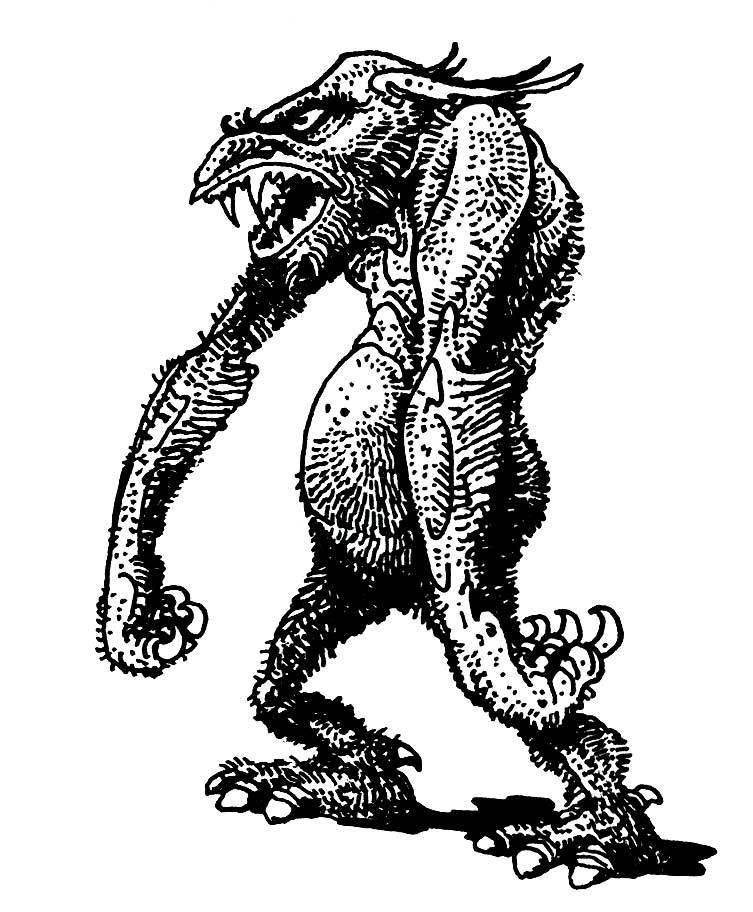
These humanoids have very long arms, protruding potbellies, short legs and hairy skin. They are cruel, cunning and treacherous. An ettercap has silk glands like those of a spider, which secrete a thin, very tough, silvery cord which the creature uses to make assorted weapons and devices – lariats, nets garottes, tripwires, and so forth. Ettercaps have their own unique style and preferences for weapons and traps, but all prefer to trap and/or ambush prey.

Ettercaps get along with, and speak the language, of spiders.


Sunday, 7 August 2022

Let’s Convert the Fiend Folio: Elemental Princes of Evil

There are a few monsters in the Fiend Folio which are intrusions on the pure United Kingdom flavor, as they were written by TSR in the United States and had to be included. We have already had a conversion of Lolth from Queen of the Demonweb Pits. Now we are looking at the Princes of Elemental Evil from The Temple of Elemental Evil. Goodman Games did an expansion and conversion of this adventure for 5th Edition Dungeons & Dragons. For those of us who would like to use this material with Dungeon Crawl Classics, hopefully this conversion will help.

It should be noted that this conversion is based on the Fiend Folio only; I did not consult the original adventure or any material that was created to expand or convert it. As a result, there might be some absolutely stellar ideas that I missed.

Readers are also encouraged to look at Ithha, Prince of Elemental Wind, on page 356 of the core rulebook. The invoke patron tables in Playing the Game, published by Purple Duck Games, may also provide some inspiration.


The Elemental Princes of Evil

These powerful beings are principally active upon the Elemental Planes, but have followers in the Lands We Know as well. They are powerful enough to be treated as minor gods, providing spell to those clerics, acolytes, and other priests who worship them.

These five individuals represent the evil (for mortals) aspects of air, cold, earth, fire and water. They may work together, but are often at odds through the actions of their followers or due to their disparate natures. Each of the following statistics represents an avatar of the Elemental Prince which manifests upon the material plane. In their native haunts, the elemental princes are far more powerful.

All Elemental Princes can communicate with telepathy within a 240’ range.

Elves and wizards may choose to bond with an Elemental Prince of Evil via the patron bond spell. The ceremony to do so must take place adjacent to an appropriate elemental node, or where there is a large (and potentially dangerous) exposure to the appropriate element. At the end of each day casting, all involved must succeed in a Fort save (DC 10 + 2 per day after the first) or take damage. This starts at 1d3, but increases by +1d up the dice chain for each failed save. This does not affect the spell casting; any loss of concentration is made up for by the potential patron’s delight in the pain and damage caused. It is, however, beyond the scope of this post to provide patron details for these creatures.


Cryonax (Prince of Evil Cold)

Cryonax (Avatar): Init -4; Atk Suckered arm +10 melee (3d8 plus paralysis) or spell; AC 26; HD 12d12+36; MV 20’; Act 2d20; SP Cold aura, paralysis, half damage from non-magical weapons, shatter weapons, 75% magic resistance, spellcasting, healed by cold, fire vulnerability; SV Fort +14; Ref +6; Will +24; AL C.

            Spells (+15 to spell check): Chill touch, control ice, dispel magic, monster summoning, planar step, and shatter.

Cryonax’s avatar appears as a 15-foot tall yeti with tentacles rather than arms. He radiates cold, causing 1d6 damage to any creature within 60’, and 2d6 damage to creatures within 30’. If the avatar hits with a tentacle, the target must succeed in a DC 15 Fort save or be frozen in place, paralyzed for 3d4 rounds. In addition to taking half damage from non-magical weapons, Cryonax is so cold that there is a chance (equal to damage dealt) that a mundane weapon will shatter, negating the damage and destroying the weapon. In addition, there is a 75% chance that Cryonax simply ignores all effects of any spell cast (although secondary effects can still affect the avatar; for instance, if a spell causes a cliff to collapse on the avatar, Cryonax’s magic resistance does not protect the avatar from this).

Cryonax casts spells as a wizard, but suffers no ill effects from rolling a “1” (except losing the spell). When Cryonax summons monsters, they are always cold-based. For example, bumbles, ice piercers, Kovacsian wizard snowmen, laser snowmen, raven wolves, giant walruses, and yeti may all be appropriate.

He is healed by spells causing cold rather than harmed, but takes double damage from fire- or heat-based spells and effects which get past his magic resistance.

It is said by some sages that Cryonax lives in a huge castle of ice, quartz and glass, possibly situated at the juncture of the Planes of Air and Water and drawing power from the Negative Material Plane. Other sages scoff at this planar cosmology, placing Cryonax’s castle in the coldest of the Hells. Still others pace the Elemental Prince’s abode in other planes, or even distant places in the Lands We Know. Who is to say which is true?


Imix (Prince of Evil Fire)

Imix (Avatar): Init +5; Atk flaming strike +10 melee (5d8) or spell; AC 24; HD 12d12+36; MV 50’; Act 1d20; SP Flaming aura, half damage from non-magical weapons, shatter weapons, 85% magic resistance, spellcasting, healed by fire, cold and water vulnerability; SV Fort +8; Ref +14; Will +24; AL C.

            Spells (+15 to spell check): Control fire, dispel magic, fireball, flaming hands, monster summoning, planar step, and scorching ray.


The avatar of Imix appear to be an 18’ tall pillar of fire. So hot is the Elemental Prince that those within 60’ take 1d10 damage each round, and those within 10’ take 1d20 damage. Non-magical weapons cause only half damage to the avatar, and the avatar has an 85% chance to simply ignore any spell cast against him (as with Cryonax).

Imix uses spells s a wizard, but has no further effect with a natural “1” than losing the spell. When Imix summons monsters, they are always fire-themed, such as flaming heads and salamanders. While fire attacks heal Imix, water and cold attacks do double damage, to a minimum of 2d6. Even 25% immersion in water is sufficient to destroy Imix’s avatar.

Lmix is said to live in the depths of a monstrous active volcano on the Elemental Plane of Fire. There is great enmity between lmix and Olhydra.


Ogrémoch (Prince of Evil Earth)

Ogrémoch (Avatar): Init +0; Atk Bludgeon +10 melee (1d20+20) or spell; AC 27; HD 22d12+88; MV 20’; Act 2d20; SP Half damage from non-magical weapons and magical weapons of less than +2 value, 85% magic resistance, spellcasting, immune to fire, half damage (cold and electricity); SV Fort +24; Ref +0; Will +24; AL C.

            Spells (+10 to spell check): Cause earthquake, dispel magic, monster summoning, planar step, transmute earth, and turn to stone.


Ogrémoch’s avatar appears to be a rough, apparently unfinished, bipedal form, 70 feet tall. He is said to live in a great flat-topped mountain on the Elemental Plane of Earth.

Ogrémoch’s magic resistance works as does that for the other Elemental Princes. Ogrémoch casts spells as do the other Elemental Princes. When he summons monsters, they are stone- or earth-based, such as xorn and ropers.


Olhydra (Princess of Evil Water)

Olhydra (Avatar): Init +2; Atk Wave +10 melee (2d12 plus drowning) or spell; AC 25; HD 12d12+36; MV 30’; Act 1d20; SP Drowning, half damage from non-magical weapons, half damage from slashing and piercing weapons, 75% magic resistance, spellcasting, ram ships, only slowed by cold, extinguish flames, fire vulnerability; SV Fort +10; Ref +12; Will +24; AL C.

            Spells (+15 to spell check): Dispel magic, monster summoning, and planar step.

The avatar of Olhydra appears as an amorphous watery blob 20 feet in diameter. She only appears near water. She is said to live in a great undersea castle on the Elemental Plane of Water. There is great enmity between her and Imix.

When Olhydra hits a victim with her wave attack, the target must make a DC 15 Fort save or take 2d6 points of temporary Stamina damage due to drowning. This damage heals completely with 10 minutes of rest and breathable air, but if the victim’s Stamina drops to 0, they die of drowning (recovering the body may still apply).

Olhydra’s spellcasting and magic resistance work the same as with the other Elemental Princes. When she summons monsters, she summons creatures related to the oceans or water, such as sahuagin, giant ammonites, and crab swarms. She takes only half damage from non-magical weapons, and half damage from piercing or bladed weapons – these stack, so that Olhydra’s avatar takes only ¼ damage from a non-magical sword.

Olhydra can also ram ships with the force of two heavy galleys, almost certainly destroying them utterly. Cold slows her to half speed and prevents her from attacking or casting spells for 1 round per spell level, but does not otherwise harm her. She takes twice normal damage from fire- and heat-based attacks, but any normal fire within 10' of Olhydra is automatically extinguished.


Yan-C-Bin (Prince of Evil Air)

Yan-C-Bin (Avatar): Init +7; Atk Wind buffet +8 melee (2d10) or spell; AC 26; HD 8d12+24; MV fly 60’; Act 2d20; SP Invisible, immune to non-magical weapons and missiles, 90% magic resistance, spellcasting; SV Fort +6; Ref +18; Will +24; AL C.

            Spells (+15 to spell check): Choking cloud, dispel magic, gust of wind, invisible companion, monster summoning, planar step, and weather control.


Perhaps the most dangerous of the Elemental Princes, Yan-C-Bin is naturally formless and invisible, being roughly 10 feet in diameter. He is said to live in a great airy palace on the Elemental Plane of Air.

Yan-C-Bin’s magic resistance and spellcaster work as do those of the other Elemental Princes. When Yan-C-Bin summons monsters, they are those related to the air or flyers.


Monday, 1 August 2022

Let’s Convert the Fiend Folio: Dragonfish and Dune Stalker

Finishing up the letter “D”, we have the Dragonfish and the Dune Stalker.

The Dragonfish is sort of a strange monster. It’s a big flatfish with venomous spines that you can step on. So far so good. In the original write-up, its bite was also equivalent to a short sword. In my conversion, I tried to make the creature resemble a natural animal more. I also gave some specifics to its venom, with the knowledge that PCs are going to want to obtain some. I also tried to give people (PCs or not) some reason to go looking for it – not only might the venom be useful, but it tastes good. Hopefully, this elevates it from a “gotcha” monster to one which fits naturally into its environment.

The Dune Stalker is one of the coolest creatures in the Fiend Folio, which, sadly, has not seen much use (to my knowledge, anyway). Here, the job was to keep the creature mostly as-is, taking into account Dungeon Crawl Classics mechanics and lore.

I think these two creatures – one a natural animal, and one a supernatural monster which would be great in a horror movie – converted well. I’ve rarely used either in real play back in my AD&D days, because one seemed sort of unfair and the other…well, my games in those days seldom went to desert lands. 

After converting them, I find myself wanting to use them right now!


Dragonfish

Dragonfish: Init +0; Atk Bite +1 melee (1d3-2, minimum 0); AC 16; HD 1d3; MV swim 20’; Act 1d16; SP Venomous spines, camouflage +5; SV Fort +1; Ref +1; Will -4; AL N.

These 2-foot long flatfish live in shallow freshwater pools or slow-moving rivers and streams. Their mottled coloration and tendency to bury themselves in surface mud makes them difficult to spot. Dragonfish have a fringe of horny spines tipped with highly toxic venom. These cause 1d3 points of Agility damage, which heals normally, as they snap off in any victim who steps on them or puts a hand on them. The spines are strong enough to penetrate leather boots. Characters walking where undetected dragonfish lurk must make a Luck check to avoid stepping on one.

The venom on these spines is highly toxic, causing an immediate 1d3 points of Strength and 1d3 points of Stamina damage. The victim must succeed in a DC 20 Fort save or take an additional 1d3 points to both Strength and Stamina for 1d5 rounds. The victim dies if either score reaches 0; otherwise, the damage heals normally.

A Handle Poison check can be made to extract 3d3 doses of venom from a dragonfish, which must enter the bloodstream to be effective. Properly prepared, and with its poison sacs removed, dragonfish is delicious.


Please note: While a dragonfish bite can cause damage – and even kill some unlucky fisherman – the use of 1d16 for its Action Die precludes critical hits. The danger in these creatures is almost entirely from stepping upon them unawares.


Dune Stalker

Dune Stalker: Init +5; Atk Sonic vibrations +4 ranged (2d6, 60’ range) or kiss of death +2 melee (special); AC 17; HD 3d8; MV 30’; Act 1d20; SP Kiss of death, tireless, faultless tracker, immune to non-magical weapons; SV Fort +5; Ref +5; Will +10; AL C.


Appearing as vile naked humans, with bony and with long sharp fingers and clawed toes, dune stalkers are found only is desert areas, and then only in response to summons from Chaotic magicians. Regardless of their orders, they only attack Lawful creatures, and will not turn on a Chaotic creature even to avoid destruction. Some sages speculate that the ability to summon and control such creatures is a gift from Azi Dahaka to those who have claimed his patronage, and who have risen in his favor.

Dune stalkers are faultless trackers, and they do not need to eat, sleep, or rest. For this reason, they may be sent to track Lawful intruders or to assassinate Lawful targets which have disturbed their summoner. Even if given such a mission, dune stalkers will often turn aside to destroy Lawful beings, resuming their task once this has been completed. Otherwise, only escaping the desert lands breaks the bond between stalker and target, for dune stalkers will not leave the arid lands.

The typical attack made by a dune stalker is a sonic vibration, which can target a single creature up to 60 feet away. If a dune stalker comes within melee range, though, it can attempt to lay its lips upon the skin of a target, setting up vibrations which cause instant death unless a Fort save (DC 12) succeeds. 

Magical healing will not aid the victim of such a death, although it is still possible to recover the body and have the victim survive by luck.

Dune stalkers can only be harmed by magical weapons, but a Mighty Deed with a mundane weapon could still cause a secondary effect, such as knocking the creature prone, so long as it doesn’t involve damaging the dune stalker in any way. Pushing a dune stalker off a cliff, for instance, may delay it, but it will not harm it.

Variations of the monster which inhabit other remote places – moor stalkers, tundra stalkers, and the like – have been reported to exist. These may be linked to other supernatural patrons, but, if so, little is known.
Sunday, 31 July 2022

In Memoriam: Nicola Bishop

I’ve put off writing this post, but it has to be done, so here it is.

On 26 July 2022, Nicola Bishop, my ex-wife, passed away due to cancer. We shared my two eldest children, Michael and Blaze. Nick was my ex-wife, so, yes, there was some strife between us, but that is largely confined to a period over a decade and a half ago. She tried hard, and I was probably not always as appreciative of that as a should have been.

She was a good mother. Mike and Blaze didn’t always agree with her, but she made major sacrifices to keep them safe, and to make them as happy as she could.

She was a force of nature. She didn’t often back down in an argument, right or wrong, but she was able to come back later and look at things more calmly if she thought she should. She could fill a room, and take center stage in a way that I never could. She was funny. She was a gifted story-teller. She was possibly the best parallel parker that the universe has ever known. I really thought that she would outlive me. It is hard to imagine the world without her in it.

Even knowing she had cancer, I thought she would beat it.

Nick had a story about when her father died. She had gone to the cemetery and couldn’t find where he was buried. It was distressing. Then a shaft of light broke through the clouds, illuminating his grave, and she felt like he had done that for her.

She told it way better than I do. Like I said, she had a gift for storytelling.

If there is anything beyond this life, I imagine her looking down from above, watching out for her children in the same way she felt her dad watched out for her. And I hope her dad is with her. I hope all the fear, all the social anxiety, all the bluster that got in her way when we were together is gone. She had come a long way towards getting rid of it before death. I hope there is just joy.

Safe travels, Nicola.

Official notice.

Let’s Convert the Fiend Folio: Dragon (Oriental)

This time you are getting six monsters for the price of one, as there are six varieties of Oriental Dragon in the Fiend Folio. These have been rebuilt using the rules for dragons in Dungeon Crawl Classics, while trying to maintain the flavor and the intent of the originals. The Dragon Generator tool at Purple Sorcerer was enormously helpful in this regard.

One thing that I definitely changed was the Yu Lung growing equally into any other variety of Oriental Dragon. For one thing, the Shen Lung was described as the most common type, and surely the celestial T’ien Lung would be the rarest!

Modern cultural sensitivity issues are far more developed than they were in 1981 when the Fiend Folio was published. To a degree, then, these entries are a product of their time. The conversions presented herein are game artifacts only, with no intention of being culturally accurate or demeaning.

Because most Oriental Dragons lack wings, they do not have wing buffet attacks or the Action Dice associated with them. Some Oriental Dragons also have the scaly command and/or water fire abilities, described below.


Scaly Command: No scaled water-dwelling creature (primarily fish and reptiles) will ever willingly attack an Oriental Dragon with this power. Intelligent creatures may do so if they succeed in a Will save (DC 10 + dragon’s HD). Moreover, Oriental Dragons with this power can control scaled water-dwelling creatures in a half-mile radius for 2d6 turns. Creatures whose HD total up to three times the Dragon’s HD can be so controlled, and the control cannot be countered by any mortal means.

Water Fire: Some Oriental Dragons have the power to create this unearthly stuff whenever they are in contact with water. Water fire surrounds the Dragon’s body with flickering burning water, doing 2d6 damage to any creature coming in contact with the Dragon. Water Fire lasts 2d6 turns, but may be dispelled by the Dragon at any time. Contact with real or magical fire also dispels Water Fire, which cannot then be used for 1d3 hours. All Oriental Dragons are immune to water fire.


Li Lung (Earth Dragon)

Li Lung (average-sized lion-like oriental dragon): Init +11; Atk claw +12 melee (1d8) or bite +12 melee (1d12) or wing buffet +12 melee (2d12); AC 21; HD 11d12; MV 50’ or swim 50’ or burrow 50’; Act attacks 4d20; SP see below; SV Fort +11, Ref +11, Will +11; Al N.

Martial Power 1: Burrow. The dragon can “swim” through sand and dirt at its normal speed.

Martial Power 2: Frightful presence. The dragon’s visage and sheer mass are absolutely terrifying. All who look upon it must make a Will save (DC 21) or flee in terror (duration 1d4 turns or until reach a safe distance).

Unique Power 1: Earth to mud (1/hour). The dragon can transform an area of earth into sticky mud. The area transformed can be up to 50’ x 50’ in size. The mud, up to 3’ deep, slows movement to half speed for all within.

Unique Power 2: Cause earthquake (1/day). The dragon can create an earthquake centered on a point within 500’. Earth shakes for several seconds. All nearby creatures take 1d3 buffeting damage. Creatures within 50’ of the epicenter are tossed into the earth for a fall of 1d8 x 10’ (with falling damage of 1d6 per 10’ fallen). Creatures further away must make a Reflex save (DC 21) or also be tossed into the earth. Concentration of enemies is disrupted, waterways may be diverted, buildings are shaken, creatures may fall from ramparts, etc.


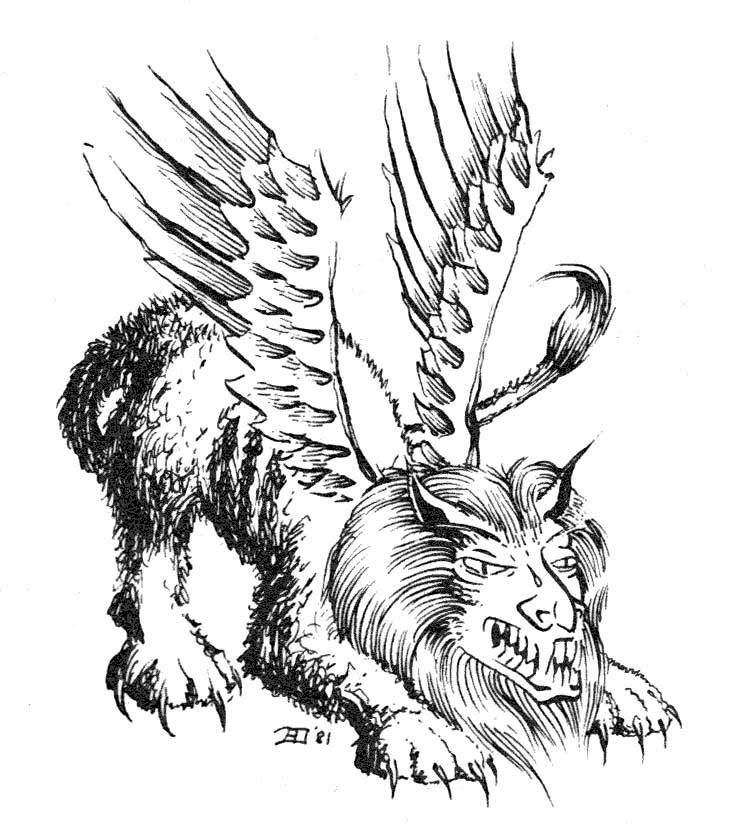
The only oriental dragon with wings, these have a lion's body and a dragon's head with human features. They live underground and can swim, though they cannot breathe water. Unusually for dragons, they have no breath weapon.


Lung Wang (Sea Dragon)

Lung Wang (large turtle-like oriental dragon): Init +16; Atk claw +17 melee (1d8) or bite +17 melee (1d12); AC 30; HD 16d12; MV 20’ or swim 60’; Act attacks 3d20; SP see below; SV Fort +16, Ref +16, Will +16; Al N.

Breath Weapon: Type (Steam); Save (Fort 26 for half); Damage (current hit points); Shape (Cone, 100’ long with 50’ base)

Martial Power 1: Hypnotic stare. The dragon can hypnotize targets with its gaze. The dragon can gaze into the eyes of one target per round by using one Action Die. A creature that meets the dragon’s gaze must make a Will save (DC 26) or stand stupefied as long as the dragon holds its gaze.

Martial Power 2: Capsize. The dragon can lift any ship it comes under or ram as the largest warship. Smaller ships sink instantly, whereas the largest ships can take hours to finally disappear fully beneath the waves.

Unique Power 1: Scaly command.

Unique Power 2: Amphibious.


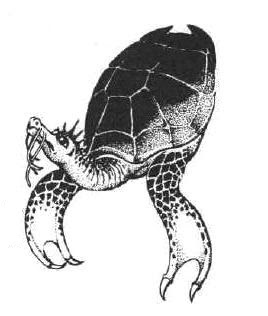
These solitary brutes have a turtle's body, crested neck, and head like a shen lung (see below). They rule large bodies of water and can breathe either water or air.

As rulers of the seas, lung wang demand tribute from every passing ship. Regular travelers may work out an arrangement – for example, so much treasure dumped overboard at a given spot – and such arrangements will be well known to sailors in an area this creature inhabits.


Pan Lung (Coiled Dragon)

Pan Lung (small salamander-like oriental dragon): Init +5; Atk claw +6 melee (1d8) or bite +6 melee (1d12 plus grasp) or tail slap +6 melee (1d20); AC 15; HD 5d12; MV 40’ or fly 40’ or swim 40’; Act attacks 4d20, spells 1d20; SP see below; SV Fort +5, Ref +5, Will +5; Al C.

Spells (as wizard, +5 bonus to spell check): Charm person.

Martial Power 1: Hypnotic stare. The dragon can hypnotize targets with its gaze. The dragon can gaze into the eyes of one target per round by using one action die. A creature that meets the dragon’s gaze must make a Will save (DC 15) or stand stupefied as long as the dragon holds its gaze.

Martial Power 2: Grasp. When the dragon successfully bites a target, it holds on, doing an automatic 1d10 damage each round unless the target succeeds in a Reflex save (DC 15). The grasp can be broken by a successful Mighty Deed or an opposed Strength check vs. +5.

Unique Power 1: Amphibious.

Unique Power 2: Scaly command.

Unique Power 3: Water fire.


A smaller, thinner and longer variety of the shen lung (see below), but without their larger relative’s tail spike, pan lung live in marshes and swamps. They can breathe air or water at will, and have an inextractable magical organ in their brains which gives them the power of flight.


Shen Lung (Spirit Dragon)

Shen Lung (large salamander-like oriental dragon): Init +15; Atk claw +16 melee (1d8) or bite +16 melee (1d12) or spiked tail +16 melee (1d20 + impale); AC 25; HD 15d12; MV 60’ or fly 60’ or swim 60’; Act attacks 4d20, 1d16 spells ; SP see below; SV Fort +15, Ref +15, Will +15; Al C.

Spells (as cleric, +8 spell check bonus): Blessing, curse, weather control.

Martial Power 1: Impale. A target hit by the dragon’s spiked tail must succeed on a DC 20 Reflex save or be impaled for an additional 1d8 damage.

Martial Power 2: Immunities. The dragon is immune to poison and electrical attacks.

Martial Power 1: Ice storm (3/day). 60’ cone with 30’ base, 6d6 (Fort DC 20 for half).

Martial Power 4: Fire vulnerability. The dragon takes twice normal damage from magical or mundane fire-based attacks.

Unique Power 1:  Amphibious.

Unique Power 2: Change shape (1/day). The dragon can transform into a human form (equal chances man or woman), assuming all physical traits of that creature.

Unique Power 3: Neutralize poison (1/day). The dragon can cancel the effects of any one poison by touching the affected creature.

Unique Power 4: Scaly command.

Unique Power 5: Water fire.

Unique Power 6: Vermin ward. No insect, arachnid or arthropod can approach within 60’ of the dragon.


The most common oriental dragon, shen lung are wingless, long and four-footed, with a spiked back and tail, whiskers and two horns on the head. Inside the brain is an inextractable magical organ which gives shen lung the ability to fly.  These oriental dragons live in rivers and lakes and can breathe air and water.


T’ien Lung (Celestial Dragon)

T’ien Lung (godlike salamander-like oriental dragon): Init +21; Atk claw +22 melee (1d8) or bite +22 melee (1d12) or tail slap +22 melee (1d20); AC 31; HD 21d12; MV 80’ or fly 160’; Act attacks 5d20, spells 1d30; SP see below; SV Fort +21, Ref +21, Will +21; Al L.

Breath Weapon: Type (fire); Save (Reflex 31); Damage (Current hit points, half with save); Shape (Cone, 90’ long with a 30’ base)

Spells (as cleric, +12 bonus to spell check): Blessing, food of the gods, holy sanctuary, word of command, restore vitality, remove curse, weather control, invisible companion.

Martial Power 1: Magic resistance. All spells cast against dragon subject to 50% chance of failure before saves are rolled.

Martial Power 2: Hypnotic stare. The dragon can hypnotize targets with its gaze. The dragon can gaze into the eyes of one target per round by using one action die. A creature that meets the dragon’s gaze must make a Will save (DC 31) or stand stupefied as long as the dragon holds its gaze.

Unique Power 1: Luck giver (1/day). The dragon can grant a permanent bonus of +1 Luck to one creature every 24 hours. The same creature cannot receive this bonus more than once per month.

Unique Power 2: Change shape (1/day). The dragon can transform into a human form (equal chances man or woman), assuming all physical traits of that creature.

Unique Power 3: Gust of wind (1/day). The dragon can generate powerful hurricane-strength wind, blowing in a single direction originating from the dragon in cone shape up to 100’ wide at termination. Creatures must make Strength check (DC 31) or be blown backward 210’, taking 21d4 damage.


The yellow-hued t'ien lung live on high mountain peaks and in cloud castles; they are rulers of the air. Though wingless, they fly by using the same organ in the brain as  possessed by pan lung and shen lung. T'ien lung are very fond of eating opals and pearls and look favorably on any mortal giving them such delicacies.


Yu Lung (Carp Dragon)

Yu Lung (small fish-like oriental dragon): Init +5; Atk claw +6 melee (1d8) or bite +6 melee (1d12); AC 15; HD 5d12; MV 10’ or swim 40’; Act attacks 3d20; SP see below; SV Fort +5, Ref +5, Will +5; Al N.

Yu lung are shy creatures living in fresh water. They have a dragon's head and fore-claws, and the body and tail of a giant carp. Although they breathe only water, they can emerge awkwardly onto land for up to one hour. When a yu lung reaches 101 years of age, they are metamorphosed into another kind of oriental dragon. To determine type, roll 1d16: (1-3) li lung, (4-6) lung wang, (7-9) pan lung, (10-15) shen lung, or (16) t’ien lung.

Saturday, 30 July 2022

Let’s Convert the Fiend Folio: Disenchanter and Doombat

In Dungeons & Dragons and Advanced Dungeons & Dragons, magic items were pretty common. That trend has not abated with Wizards of the Coast acquiring the brand. The Disenchanter was a direct response to this – it could remove some of those magic items from a group that lit up like a Christmas tree whenever detect magic was cast.

It was also, let’s face it, the ultimate “Fuck You” monster that Dungeon Masters could throw at their players. All that stuff you amassed over the last several months or years of game play? Now it’s gone. Using this monster could get you lynched. Most Dungeon Crawl Classics characters have fewer magic bits and pieces as a general rule, and are even less likely to be enamored of a judge using this creature. On the other hand, “easy come, easy go” is a real thing in DCC, and DCC is not balanced (usually) on the basis of equipment. Monsters break the rules, and perhaps a Disenchanter is what your adventure needs! Also, my first published adventure for this game included a monster that could pull out your skeleton, leaving you alive but boneless. Compared to losing a scroll, potion, or sword, the Disenchanter seems tame.

So, those are the pros and cons of using the Disenchanter. I’ve tried to make a conversion that works with DCC.

The Doombat should be quite a bit easier to slot into an adventure. On the other hand, it may offer your players significantly less shock and dismay.


Disenchanter

Disenchanter: Init +4; Atk Snout (special); AC 15; HD 5d8+5; MV 30’; Act 1d20; SP Disenchant, detect magic, magic immunity, immortality; SV Fort +3, Ref +4, Will +5; AL N.

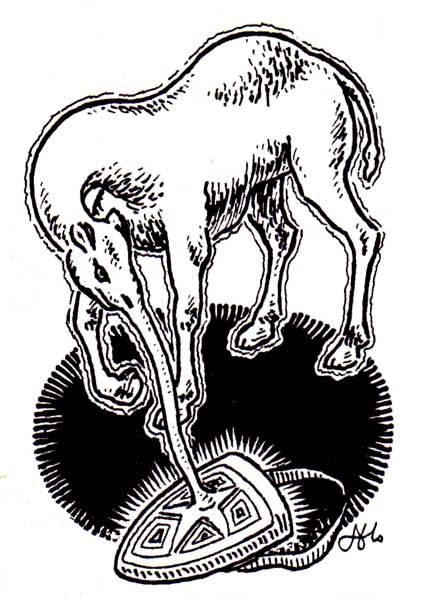
The disenchanter – and some sages speculate there is only one such creature in existence, despite claims by some to have encountered two at the same time – appears like a pale, slightly translucent dromedary, spindly in build and electric blue in hue, with a long, flexible snout. It can extend this muscular protuberance as far as 5 feet, seeking to bring it into contact with magic items of all types. Any magic item the snout touches instantly and permanently loses its magical dweomers – this is how the creature feeds.

The disenchanter can sense a confluence of magic from a great distance; the limits of this ability have never been tested. It can consume ongoing spell effects as well as magic held by items, requiring no attack roll for large and immobile effects. Otherwise, the potential victim is allowed a Reflex save to avoid the snout. The DC depends upon the object being sought by the disenchanter – a potion in a belt pouch requires only a DC 2 save, a ring DC 3, a medallion or sheathed weapon DC 5, a weapon in hand DC 10, a suit of armor or shield DC 20. The judge must extrapolate other DCs from these examples. Likewise, the disenchanter is immune to all spells and other magics; a magic weapon striking a disenchanter is treated as though it were ordinary in all respects. If the disenchanter is reduced to 0 hp, it merely fades away, to reappear in some other part of the multiverse. The creature is thus effectively immortal.

It must be noted that magic weapons or items which strike a disenchanter do not lose their magical powers; only the snout has this ability. Damage to the snout could conceivably drive the creature away, but if a Mighty Deed targeting the snout succeeds with a magic weapon, the wielder must succeed in a Luck check or the weapon is disenchanted.


Doombat

Doombat: Init +4; Atk tail +6 melee (1d4) or claw +4 melee (1d4 plus grasp) or bite +2 melee (1d6) or shriek; AC 16; HD 6d8+6; MV 20’ or fly 50’; Act 1d20; SP Echolocation 200’, tail reach, grasp, shriek, light vulnerability; SV Fort +2, Ref +7, Will +0; AL C.

Doombats have a 25-foot wingspan, and are able to carry objects or creatures weighing as much as 300 lbs – either as riders or as prey. They live in dismal underground caverns, flying at night to the outer world to hunt. They have the ability to echolocate, giving them near-perfect understanding of their surroundings to a 200 foot range.

Doombat tails are lined with cruel barbs, and can stretch to strike targets as far as 12 feet away. Their claw attack grasps an opponent who fails a DC 10 Reflex save. A grasped opponent can be carried aloft, there to be taken back to the doombats’ lair…or dropped from a great height should it prove quarrelsome. A grasped opponent may free themselves with an opposed Strength check vs. +2, but once the victim leaves the ground this may be as deadly as remaining grasped.

Finally, doombats can set up a terrifyingly loud shriek, lasting 1d4+1 rounds. Any creature which can hear this within 100’ is disoriented, unable to make spell checks, and fights with a -1d penalty on the dice chain to both attack rolls and damage. The effect of several doombats shrieking at the same time is not cumulative, but they can co-ordinate these effects so that when one shriek ends another begins. There is no save against this effect.

Doombats fear, and will flee from, bright lights, but they are undeterred by torch- or lantern-light.

Friday, 29 July 2022

Let’s Convert the Fiend Folio: Devil Dog and Dire Corby

Imagine that you are living in a time before Making Monsters Mysterious was a thing. When you wanted to emulate something you had read, or seen, about (say) wolves, but you had to create a whole new monster to do it. I am guessing that this is the origin of the Devil Dog.

Dungeons & Dragons has always had more than its fair share of humanoids, but some of the ones in the Fiend Folio are near and dear to my heart. I once created an adventure (for the old Golden City Comics crew using 3rd Edition rules) utilizing Dire Corbies. The group encounters a subterranean lake with nebulous bridges crossing it, made of petrified vines. The lake, of course, contains some giant fish, and the nexuses where the vines meet are small islands where Dire Corbies nest. Crossing the lake required tactics and planning, as the PCs could only go single-file, and their opponents met them head on. Needless to say, the PCs slaughtered the Dire Corbies, and went so far as to smash their eggs.

On the far side of the lake, they discovered cyclopean ruins, fought some floating brain creatures with tentacles and octopus-like beaks (which we shall be converting later), and at last encountered the civilized Dire Corby monks. These creatures guarded and maintained the hidden prison of the captured Chaos godling, Baloraz. They replenished their ranks from the eggs of their wild brethren. Which…Oops.

Just a matter of time before Baloraz gets free now. And the PCs were given a chance to feel the power of an imprisoned and nearly paralyzed Baloraz in his tesseract prison. Good times!


Devil Dog

Devil Dog: Init +5; Atk bite +6 melee (1d6+2 plus tear throat); AC 14; HD 4d6; MV 40’; Act 1d20; SP Tear throat (Ref DC 10 or 1d6 damage), burst of speed, half damage from cold; camouflage +6; SV Fort +4, Ref +4, Will +3; AL C.

Stark-white hounds with blue eyes, devil dogs live in cold regions, where they gain a bonus to hiding against the snow and frost. They always jump for the throat, and on a successful hit do an additional 1d6 damage unless the target succeeds in a DC 10 Reflex save. A victim who fails this save cannot speak for the next 1d3 rounds.

Devil dogs can double their movement rate for up to three rounds, but each round they do so decreases their attack bonus by 1 until three rounds has passed, and they cannot achieve another burst of speed for a full turn.

Although Chaotic, devil dogs are intelligent, and hunt in loose packs of 4d6 individuals.


Dire Corby

Dire Corby: Init +0; Atk claw +0 melee (1d4); AC 14; HD 2d6; MV 30’; Act 1d20; SP Infravision 60’, immune to fear and morale checks; SV Fort +2, Ref +3, Will -2; AL C.

These cavern-dwelling bipedal birds are distantly related to the crows and ravens of the surface world. Their wings have lost the power of flight, becoming arms ending in clawed hands. Dire corbies always attack, crying “Doom! Doom!” in their own language, and fight to the death.