Saturday, 12 November 2022

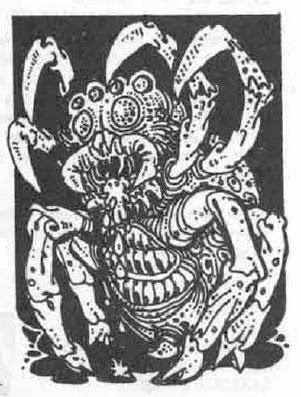
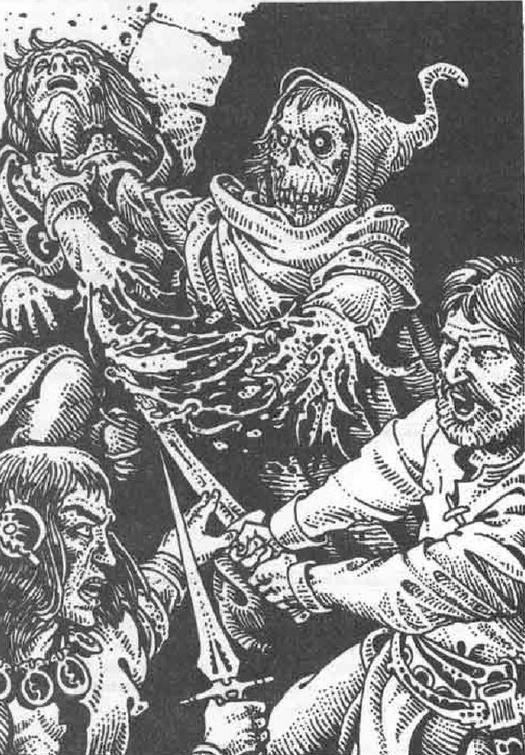
Let’s Convert the Fiend Folio: Grey Slaad and Red Slaad

This post sees the final mainline Slaadi converted to Dungeon Crawl Classics, which will aid in the conversion of most adventures using these creatures. The Slaadi Masters will each get their own post, giving them a partial patron write-up as well as statistics for their avatars. The Slaadi available to you now can be summoned by the PCs, or sent on nefarious missions by NPC wizards and elves. If you do decide to use them, as always, I would love to hear about your experiences!

The astute reader will again notice that I toned down the Slaadi somewhat, while trying to maintain the essential elements of the creatures from the Fiend Folio. The Red Slaadi pellets didn’t describe how they killed, and I had a bit of fun with that. I again attempted to determine what magical powers were essential, and allow each type of Slaadi to have some unique attribute, hopefully with some degree of success.

If you are enjoying this series of posts, and want to tip, please consider supporting my Patreon. If you are looking for even more monsters, encounters, or adventures, this month the material I am working on explores the fey.


Slaadi

The slaadi are a group of extra-planar frog-like monstrosities whose natural form resembles large batrachians humanoids. Their heads are huge, their claws extremely sharp and long, and their voices form a croaking language which is all they deign to speak. Although beings of chaos and woe, which dwell where the winds of Limbo roar, slaadi are extremely hierarchical by type, from the lowest red slaad to their dreaded masters. All slaadi have names, and those who learn them may attempt to summon and compel them using demon summoning.

Slaadi are ranked as follows: red slaad, blue slaad, green slaad, grey slaad, death slaad, slaad master. Slaadi believe that, by following the orders of their superior types, they can reincarnate upon death as a higher slaad rank, while those who fail to live up to their caste duties are reborn as red slaadi.

The relationship between the slaadi, the slaad lords, and Bobugbubilz is a matter for some debate among those learned in the Toadfiend’s lore, but is unlikely to be unraveled by mortal folk any time soon. Certainly, there were many foul beings spawned in the primordial pools where Bobugbubilz first emerged, and few if any of them considered their spawn-mates to be anything more than rivals and potential meals.

All slaadi have the following common abilities:

Communication: Speech in their own language, understanding all languages, and telepathic communication to a range of 100’.

Magic Resistance: All slaadi have a chance of ignoring a spell (or other magical effect) as though it did not exist. This is rolled as a percentile chance before any applicable save is made.

Spellcasting:  All slaadi have a number of spells they can cast, using their Hit Dice as a bonus to the spell check. Slaadi do not suffer corruptions, disapproval, or patron taint, but lose access to any spell for 24 hours if they roll a spell check of 10 or less on that spell. Slaadi spells are psionic in nature, requiring no words, motions, or material components.

Slaadi Symbols: All slaadi have a magical symbol of rank in the form of a jewel encased in the creature's skull beneath the skin of the forehead. These are artificial devices which encase the slaad's life-force; they may be removed when a salad is held immobile by any spell. On threat of destruction of the gem, an intelligent being may force the monster to fulfill three tasks, if they are within the creature’s capacity. However, when released and the gem replaced, a salad that is not very well rewarded (usually by human slaves to take back to its own plane of existence) turns on its would-be controller with lethal intent. The same occurs immediately upon a fourth task being requested, and a controller who is slow to destroy the stone usually does not survive to learn from their mistake. These jewels are typically valued at 10 gp per Hit Die of the linked salad, but any slaad seeing a symbol held by a non-slaad attack with berserk fury. Each symbol is unique and readily identifiable by any other slaad.


Grey Slaad

Grey Slaad: Init +0; Atk By weapon +5 melee (by weapon +2) or Claw +5 melee (1d7+3) or bite +3 melee (2d8); AC 19; HD 8d12; MV 30’ or swim 40’; Act 2d20; SP Slaadi traits (55% magic resistance), half damage from non-magical weapons, shift to human form, immune to cold, cause blindness, gate, planar travel, enchant items; SV Fort +6, Ref +6, Will +6; AL C.

These creatures, also known as the Executioners, are most often found in the Lands We Know carrying out not the injunctions of mortal wizards, but the will of the slaadi masters, and this makes them the most feared by those versed in slaadi lore. They are the height of a normal human, and are able to shift into human form or back using an action. Most often, they are encountered in human form, which affects only their available attacks in game terms.

Grey slaadi can be summoned as Type VI demons. They have access to the following spells: darkness, fireball (ball lightning manifestation), flaming hands, invisibility, and scare. Once per day they can blind an opponent within 100’ with a single word (Will DC 15 negates). Also once per day, they may attempt to open a gate allowing 1d3 additional grey slaadi to enter the Lands We Know; there is a 60% chance of success when this is attempted.

Unless otherwise bound, grey slaadi may travel the planes at will. Given the time and the equipment, they can enchant an item as though they had access to whatever spells are necessary to do so. Because of this, when travelling in human form, grey slaadi will usually have 1d3+1 choice magic items; most often this includes an enchanted weapon of some sort.


Red Slaad

Red Slaad: Init +4; Atk Claw +2 melee (1d4 plus implantation) or bite +0 melee (1d5+1); AC 14; HD 3d12; MV 20’ or swim 30’ hop 30’; Act 2d20; SP Slaadi traits (35% magic resistance), hop, implantation, regeneration 3 hp/round; SV Fort +8, Ref +5, Will +10; AL C.

The lowest rank of slaadi, these 8’ tall creatures are the commonest of the slaadi, both in the Lands We Know and their home plane, and are regularly sent to our world in search of human slaves. There intelligence is dull, and they are easily fooled, but they are nonetheless powerful foes. Red slaadi regenerate 3 hp every round until they reach 0 hp; they do not regenerate past death. A red slaad can also use an action die to hop 30’ in any direction; combined with an attack, this should be treated as a charge (+2 to hit, but -2 to AC until the slaad’s next action).

Red slaadi have a gland near their claws which implants a small pellet with each successful claw attack unless the victim succeeds in a Luck check. Once a pellet is implanted, the victim must succeed in a DC 20 Fort save or die within 3d12 hours, when a new red slaadi explodes outward from the site of the wound. Anything which neutralizes poison or disease can also neutralize the pellet, which then becomes inert. The pellet worms itself into the flesh, so digging it out causes 1d6 damage per round that it has been implanted, but this does not neutralize the pellet, so that it may be used as a power component, adding a +4 bonus to any spell check against a spell specifically being used to target slaadi. The pellet is destroyed in this process. When a red slaad is slain, any pellets remaining in its claw gland are instantly neutralized. If captured and made helpless, 1d4+1 pellets can be recovered from a red slaad with a DC 10 Handle Poison check.

Red slaadi may be summoned as Type I demons. The only spell they can use is unique: with a spell check of 12+, they stun all non-slaadi targets within 30’ for 1d4 rounds (Will save equal to spell check result negates). This power is used both the capture potential slaves and to escape from danger.

Friday, 11 November 2022

Let’s Convert the Fiend Folio: Blue Slaad, Death Slaad, and Green Slaad

I imagine that there were at least a couple of people waiting for this post, eager to throw a few Slaadi into their Dungeon Crawl Classics campaign! Well, the wait is at least partially over, because it is going to take more than one post to get through all the types of Slaadi, as well as their Masters.

The astute reader will immediately notice that I toned down the Slaadi somewhat, while trying to maintain the essential elements of the creatures. I made a few other changes. The original creatures in the Fiend Folio didn’t have a listed swim speed. This seemed absurd to me, so I gave them one. I attempted to determine what magical powers were essential, and allow each type of Slaadi to have some unique attribute.

Make no mistake: Slaadi are fun to use in a game. But, because they are essentially a listing of different powers/power levels stuck onto the same chassis, they are not as much fun to convert as some other monsters in this project. There is not much of a requirement for creativity, unless one were to create a whole secondary hierarchy of Slaadi running parallel to that of the Fiend Folio. Which I am strongly tempted to do.


Slaadi

The slaadi are a group of extra-planar frog-like monstrosities whose natural form resembles large batrachians humanoids. Their heads are huge, their claws extremely sharp and long, and their voices form a croaking language which is all they deign to speak. Although beings of chaos and woe, which dwell where the winds of Limbo roar, slaadi are extremely hierarchical by type, from the lowest red slaad to their dreaded masters. All slaadi have names, and those who learn them may attempt to summon and compel them using demon summoning.

Slaadi are ranked as follows: red slaad, blue slaad, green slaad, grey slaad, death slaad, slaad master. Slaadi believe that, by following the orders of their superior types, they can reincarnate upon death as a higher slaad rank, while those who fail to live up to their caste duties are reborn as red slaadi.

The relationship between the slaadi, the slaad lords, and Bobugbubilz is a matter for some debate among those learned in the Toadfiend’s lore, but is unlikely to be unraveled by mortal folk any time soon. Certainly, there were many foul beings spawned in the primordial pools where Bobugbubilz first emerged, and few if any of them considered their spawn-mates to be anything more than rivals and potential meals.

All slaadi have the following common abilities:

  • Communication: Speech in their own language, understanding all languages, and telepathic communication to a range of 100’.
  • Magic Resistance: All slaadi have a chance of ignoring a spell (or other magical effect) as though it did not exist. This is rolled as a percentile chance before any applicable save is made.
  • Spellcasting:  All slaadi have a number of spells they can cast, using their Hit Dice as a bonus to the spell check. Slaadi do not suffer corruptions, disapproval, or patron taint, but lose access to any spell for 24 hours if they roll a spell check of 10 or less on that spell. Slaadi spells are psionic in nature, requiring no words, motions, or material components.
  • Slaadi Symbols: All slaadi have a magical symbol of rank in the form of a jewel encased in the creature's skull beneath the skin of the forehead. These are artificial devices which encase the slaad's life-force; they may be removed when a salad is held immobile by any spell. On threat of destruction of the gem, an intelligent being may force the monster to fulfill three tasks, if they are within the creature’s capacity. However, when released and the gem replaced, a salad that is not very well rewarded (usually by human slaves to take back to its own plane of existence) turns on its would-be controller with lethal intent. The same occurs immediately upon a fourth task being requested, and a controller who is slow to destroy the stone usually does not survive to learn from their mistake. These jewels are typically valued at 10 gp per Hit Die of the linked salad, but any slaad seeing a symbol held by a non-slaad attack with berserk fury. Each symbol is unique and readily identifiable by any other slaad.


Blue Slaad

Blue Slaad: Init +0; Atk Claw +3 melee (2d6) or bite +1 melee (2d8); AC 15; HD 5d12; MV 20’ or swim 30’; Act 3d20; SP Slaadi traits (40% magic resistance); SV Fort +3, Ref +3, Will +3; AL C.

The second rank of slaadi, the blue variety is more often encountered running errands or missions for the slaadi masters than for anything else, although they can be summoned as Type II Demons. They are 10’ tall, with a light electric blue hue broken by streaks of grey, and two scimitar-like blades growing from the end of each limb. Their rivalry with the red slaadi (whose caste they believe was their own in their last lives) is legendary; neither type will help the other except in direst emergency.

Blue slaadi have access to the following spells: Paralysis. With a successful spell check, they can also move an item weighing up to 100 lbs by telekinesis (up to 10’), or pass up to 10’ through a solid wall.


Death Slaad

Death Slaad: Init +4; Atk By weapon +8 melee (by weapon +4) or claw +8 melee (3d6) or bite +6 melee (2d10 plus XP drain); AC 24; HD 12d12; MV 30’ or swim 40’; Act 2d20; SP Slaadi traits (75% magic resistance), half damage from non-magical weapons, shift into human form, XP drain, planar travel, death throes; SV Fort +8, Ref +5, Will +10; AL C.

There are said to be only four of these beings, also known as the Lesser Masters by the slaadi, to exist. They are no larger than a tall human, and are able to shift into human form or back as an action. This does not affect their statistics, except that a human-form slaad cannot use claw or bite attacks, and a slaadi-form slaad cannot use weapons. Death slaadi taking human form are often equipped with magical weapons of fearsome aspect. In slaadi form, the bite of a death slaad also permanently drains 2d10 XP. This will not lower a target’s level, but must be regained before the victim can advance once more.

Death slaadi may be summoned as Type VI demons. They have access to the following spells: Choking cloud, detect invisible, detect magic, ESP, flaming hands, invisibility, locate object, and phantasm. Death slaadi may travel to and from Limbo using an action, unless otherwise bound. Upon death, these slaadi explode in a fireball, causing 8d6 damage to all within 30’ (Reflex DC 18 for half).


Green Slaad

Green Slaad: Init +2; Atk Claw +6 melee (1d6+2) or bite +4 melee (2d8); AC 17; HD 8d12; MV 20’ or swim 30’; Act 1d20; SP Slaadi traits (50% magic resistance), shift into human form, half damage from non-magical weapons, gate; SV Fort +5, Ref +3, Will +7; AL C.

Green slaadi are pale in hue, with streaks of gray on their light green skin. This creature is pale green in colour with streaks of grey. Although a green slaad can shift into human or slaadi form using an action, the creature always resumes its native aspect when in combat.

Green slaadi may be summoned as Type V demons. They have access to the following spells: darkness, detect invisible, detect magic, ESP, locate object, scare, and flaming hands. Once per hour a green slaad may attempt to gate in another slaad. Roll 1d10 to determine success: (1-5) failure, (6-7) red slaad, (8-9) blue slaad, or (10) green slaad.

Sunday, 30 October 2022

The Cup of Saint Nazrat

This great golden cup is worked with images of Saint Nazrat, along with his faithful monkey companion Amikin, and an antelope he was no doubt intent on eating raw. Saint Nazrat was a wild man, raised by savage ape-men after his parents were marooned, and subsequently died, on a wild jungle coast. Overlooking all are the six eyes of Hexorbius, one of the Brotherhood of Ten Wizards.

(One sage of dubious character has declared the cup to be related to Belshar of the Five Eyes. When it was point out to this, apparently mathematically challenged, sage that there were, in fact, six eyes, the sage attempted to blame Cyclos of the One Eye for “horn[ing] in on Belshar’s action”. Such sages are not to be trusted.)

The Cup of Saint Nazrat is worth 100 gp for gold value alone, but its true value lies in its connection to both the magic of the Green Man (Saint Nazrat’s primal deity) and Hexorbius of the Six Eyes.

A cleric with access to this cup can fill it with 1 gallon of fresh water. However great the multitude who drink from the cup within the next half hour, there is always just enough water to quench their thirst. Further, the cleric can pour wine into the cup, drink from it, and then allow an injured, diseased, or poisoned creature to drink from it. This transfers all damage, disease, and poison from the second drinker to the cleric, and reduces the Disapproval range of a lawful or neutral cleric by 1d3 if the transfer is significant (as per judge).

A wizard or elf with access to this cup can drip their own blood into it (equal to 1d4 points of spellburn) in order to cast animal summoning using 1d24 for the spell check. The wizard can fill it with clear water, adding in some part of their own blood (as spellburn), and use the cup to scry any location they know. The scrying lasts up to 1 minute per point of spellburn added to the water. Finally, a wizard or elf can drink the still-warm life’s blood of some creature with at least 1 Hit Die from the cup to regain full access to a spell that was lost for the day. Every time a wizard or elf does this, however, they grow an extra eye (to a maximum of six).

A warrior or dwarf who drinks any fluid from this cup instantly and permanently understands the languages of all apes and monkeys.

A thief or halfling with access to this cup can attempt to sell it for its gold piece value.

Saturday, 29 October 2022

Let’s Convert the Fiend Folio: Shocker, Skeleton Warrior, and Skulk

I am glad to have gotten these three in before Halloween, with a plan to start on the Slaads in November.

The Shocker is almost a trap monster – once it has discharged its shock, it is done. These creatures would be right at home in Umerica, where they are found along ancient subway tracks. They are only a little less suited for Mutant Crawl Classics, Bronx Beasts, or similar games, and even the strange West of Weird Frontiers has enough electrical potential to make the critters work.

Skeleton Warriors are a fantastic monster, and the circlets that control them are an excellent example of a magic item that requires the players to seriously weigh benefits versus risks. There is certainly some outstanding horror elements in encountering an un-dead creature that wants to kill you specifically, and once the players understand why, the tension ratchets upward as answers are not as straightforward as one might like. Trying to control something that wants to kill you is fantastic material to work with!

Archade’s Tower offers another conversion of the Skeletal Warrior here.

Finally, the Skulk could have been created as another monster, a race-class, or even a benison (ala DCC Lankhmar) and still been cool. I went with the base monster, because that is of greater value when converting adventures.


Shocker

Shocker: Init +0; Atk Shocking touch +2 melee (2d10); AC 15; HD 1d8+2; MV 20’; Act 2d20; SP Shocking touch (2d10, Fort DC 10 for half), metal armor bonus, shock via attacks against it, single shock, death throes, immunities (electricity, poison, paralysis, and mind-affecting); SV Fort +3, Ref +1, Will +0; AL C.

There are those who speculate that these strange creatures are actually projection of a different being on another plane, and in truth little is known about them. Shockers appear to be humanoids with an aura of faint, light blue sparks. They crackle with electricity, and anyone with good hearing can hear a very faint crackling which increases in intensity as the shocker approaches. Shockers only successfully attack once before they are destroyed, which lends credence to the idea that they are merely organs of a much greater interdimensional being.

The shocker attacks by discharging 2d10 hp of electrical damage (Fort DC 10 for half). It actually has an easier time hitting opponents in metal armor – not only does metal armor offer no protection, but the normal armor value it a bonus to the shocker’s attack rolls. Thus, a shocker gains a +5 bonus to hit an opponent in chainmail and, if the opponent gains no other bonuses, treats the opponent as AC 10.

If a shocker and if it is struck by a metal weapon in melee combat, the attacker suffers a shock for 2d10 damage (Fort DC 10 for half), just as if the shocker has successfully attacked the weapon’s wielder.

When a shocker has delivered its charge – through a successful attack, or through an attack against it – it collapses into a fine inert dust. If it is otherwise destroyed, it simply disappears in a flash of light and static. The dust remaining from a shocker can be used to power electricity-based spells, adding a +1d4 bonus to a single spell (but being consumed in the process).


Skeleton Warrior

Skeleton Warrior: Init +4; Atk By weapon +1d6 melee (by weapon +1d6); AC 18; HD 5d12; MV 20’; Act 1d20; SP Un-dead, infravision 60’, half damage from non-magical weapons, 1d6 Deed Die, crit 19-20, +10 bonus to saves vs. magic, cannot be turned, soul circlet; SV Fort +2, Ref +2, Will +1; AL N.

These un-dead creatures were formerly powerful warriors in life. They have a Deed Die that adds to their attack rolls and damage, and can perform Mighty Deeds as they did in life. They are hard to damage, being wreathed in supernatural protections against normal weapons and magic (including spells). Clad in the rich, but faded and rotting trappings they wore in life, their sole reason for remaining in an un-dead state is to seek out an regain the circlet which contains its soul (see below).

When a soul circlet is discovered, the PCs may not recognize its significance. The linked skeleton warrior immediately begins moving toward the possessor. Establishing control over the linked warrior requires that the owner puts the circlet on their head, can see the skeleton warrior, and concentrates on establishment control over it. If the owner fails to do this, the skeleton warrior will attack them in an attempt to destroy them and gain possession of the circlet.

Soul Circlet

How skeleton warriors were trapped in their un-dead state is open to debate. Some say that they were tricked by a powerful and evil demigod. Others say they were promised eternal life by the lich Amorti. The truth may never be known, but each skeleton warrior has its soul trapped within a perfect golden circlet.

A skeleton warrior can track its own circlet flawlessly, but only when it is in the physical possession of another creature. Anyone possessing one of these circlets may control the skeleton warrior whose soul is stored therein, so long as they are within a 240’ range. The controller can see through the skeleton warrior's eye sockets when controlling a warrior in this way, but the controller may not themselves move, attack, cast spells, etc., and is not even fully aware of their own surroundings. When not making the skeleton warrior act, this restriction does not apply, but the creature is inert and the controller cannot see through it.

Control is lost if the creature possessing the circlet is ever more than 240’ from the skeleton warrior, or if it is removed from the controller's head. If the circlet ever leaves a controller’s possession, and the skeleton warrior is not controlled by another, the warrior immediately stops whatever it is doing, seeking instead to attack and destroy its former master.

Finally, if the circlet falls into the possession of the skeleton warrior, the creature vanishes, never to reappear, and the circlet turns to fine, valueless dust.

The circlet cannot be worn with any other headgear to be effective; the wearing of a helm, for instance, will nullify its powers, though the skeleton warrior will still be aware of it, and able to track the creature possessing it.


Skulk

Skulk: Init +2; Atk By weapon +1 melee (by weapon); AC 13; HD 2d6; MV 30’; Act 1d20; SP Camouflage +10, backstab, cowardly; SV Fort +0, Ref +2, Will +0; AL C.

Skulks are an offshoot of humanity whose extreme cowardice gave rise to a chameleon-like ability to blend into any background. They live by theft and murder on the edges of civilization, keeping to small bands, moving often, and camping in deep dark forests or underground lairs. Their usual tactics of attacking unsuspecting victims from behind or murdering entire sleeping families make them universally despised, and if a skulk is captured it is usually the recipient of an unpleasant death at the hands of the community.

Skulks moves quickly and quietly, freezing into immobility and near-invisibility at the first hint of danger. They can backstab as thieves, gaining a +4 bonus to their attack rolls and doing automatic critical should they succeed.  They never openly attack a powerful-looking party, though they may set an ambush in an attempt to pick off a straggler or sentry, or (even better) attack when the party members are sleeping.

Their offshoot of humanity is still extremely cowardly, automatically fleeing at the slightest wounding or setback, taking whatever treasure they can.

Sunday, 23 October 2022

Let’s Convert the Fiend Folio: Sheet Ghoul and Sheet Phantom

The Sheet Ghoul and Sheet Phantom are interlinked monsters, who, if not inspired by the great M.R. James, should have been. They are another perfect Halloween monster which belongs in your Fiend Folio haunted house. Unfortunately, I don’t have a lot to say about them. If you do use them, be sure to play up the horror of your own friend and comrade-in-arms now squirting acid from their nose as they try to kill you. Instead of “the creature” or “the monster”, say “Your blow strikes into Jus’ side, cutting deeply, but Jus just sneers at you, his features contorted by bloodlust as acid squirts from his nostrils.”


Sheet Ghoul

Sheet Ghoul: Init +0; Atk Claw +4 melee (1d3) or bite +2 melee (1d6) or acid squirt +5 ranged (1d6+1); AC 15; HD 3d6; MV 20’; Act 2d20; SP Un-dead, infravision 60’, acid squirt, Turned as though 7 HD; SV Fort +3, Ref +1, Will +0; AL C.

Sheet ghouls are created when a sheet phantom (see below) kills and merges with a victim. Any attempt to Turn the Unholy treats it as though it were a 7 Hit Die creature.

Sheet ghouls can squirt a fine jet of corrosive acid from their noses to a 20’ range. Those hit by this attack must succeed in a Luck check, or a piece of their equipment is also damaged. For instance, armor may lose 1d3 points of its protective value, or a mundane weapon may be ruined. Magical items are not affected.


Sheet Phantom

Sheet Phantom: Init +3; Atk Wrap +4 melee (wrap and suffocation); AC 14; HD 3d12; MV 20’ or climb 20’ or fly 20’; Act 1d20; SP Un-dead, infravision 60’, wrap, suffocation (1d4 temporary Stamina, Fort DC 12 for half), merge with victim, turn as 5 HD creature; SV Fort +2, Ref +2, Will +2; AL C.

Sheet phantoms are un-dead creatures which appear as near-transparent rectangles 1d6+10’ broad by 1d6+6’ long and a fraction of an inch thick. They move along walls, ceiling, floors, or through the air with equal facility, and may pretend to be sheets, curtains, tapestries, or similar items.

A sheet phantom attacks by wrapping around its target, and can only wrap around one victim. Any attacks damaging the sheet phantom do the same damage to any enveloped victim. The wrapped victim is unable to move or take any action apart from speaking. From the second round onward, wrapped victims are suffocated, taking 1d4 temporary Stamina damage each round (Fort DC 12 for half). If the victim reaches 0 Stamina or 0 hit points, the sheet phantom merges with it over the course of 1d3 rounds, arising thereafter as a sheet ghoul (see above). No magical healing, and no attempt to recover the body, may help the victim once such a merger is complete. If a victim is rescued in time, all temporary Stamina damage is restored after 10 minutes of unrestricted breathing.

Attempts to Turn the Unholy treat sheet phantoms as 5 Hit Die creatures.


Saturday, 22 October 2022

Let’s Convert the Fiend Folio: Screaming Devilkin and Shadow Demon

This entry is also appropriate for Halloween. The Screaming Devilkin is a pretty straight-forward conversion, but the Shadow Demon took a little more work, as demons in Dungeon Crawl Classics are a bit different than those of the Fiend Folio’s time.

My converted Shadow Demon lacks the magic jar ability of the original, but is otherwise altogether nastier. It is likely to surprise, cast darkness, and then gain the advantage of its beefed-up statistics. There is no light spell to act on this creature as though it were a fireball, although a high-enough spell check result on detect evil will take away some of its advantage.

Some of the effort in converting this monster was reduced by using basic demon statistics rolled up through the Purple Sorcerer application, and then modifying from there. Purple Sorcerer has put out an amazingly useful suite of tools, and I highly recommend donating to their annual Free Tools Pledge Drive. I cannot adequately express how much Jon Marr at Purple Sorcerer has given to this community, or the sheer value of the tools he has freely provided.

Next time, we will be looking at the Sheet Ghoul and Sheet Phantom. The letter “S” has some entries that are not particularly seasonal, but it is certainly front-loaded for Halloween! After the Sheet Duo, we will look at the Shocker, Skeleton Warrior, and Skulk. And then we will begin on the Slaads, which I know some of you have been looking forward to.  


 Screaming Devilkin

Screaming Devilkin: Init +0; Atk Barbed tail +1 melee (1d6); AC 18; HD 3d6; MV 5’ or fly 30’; Act 1d20; SP Scream, immune to fear and morale checks; SV Fort +1, Ref +3, Will +2; AL C.

These horrid creatures resemble classical images of devils or imps, although they are native to the Lands We Know, and not demons at all. They are about the size of a halfling, bright red, with bat-like wings and a muscular barbed tail. Its legs and arms are disproportionately small and relatively useless

As soon as a screaming devilkin sights victims, it begins a continuous, painful howling scream. Conversation – even shouting – is inaudible through it, so that characters cannot coordinate their actions save by gesture (a limitation the judge should strictly enforce). Within 60’ of the creature, any whose ears are not well plugged must succeed in a DC 10 Fort save each round or be unable to take any action, or maintain concentration on spells. Only one saving throw is required each round, no matter how many screaming devilkins are within range.


Shadow Demon

Shadow Demon (Type IV Demon): Init Variable; Atk Variable; AC Variable; HD 7d12; MV 40'; Act 2d20; SP Demon traits, stealth +12, light variability; SV Variable, AL C.

Appearing as a demonic shadow with vestigial wings, this foul entity is hard to detect, since it appears as a vague shape in the guttering light conditions of a dungeon. Shadow demons are more powerful in darkness, and more vulnerable in light, as indicated below.

Shadow demons can communicate by both speech and telepathy. As demons, they have 60’ infravision, the ability to cast darkness with a +16 to the spell check, and have a crit range of 17-20.  Shadow demons can teleport back to their native hell, or to any point on same plane, as long as they are not bound or otherwise summoned, and they can project themselves both astrally and ethereally. They are immune to fire, cold, electricity, and gas, and take only half damage from acid. Their weapon immunities are based on the amount of light.

Light Conditions are…

Shadow Demon variable stats

…full daylight

Init +0; Atk Claw +5 melee (1d3) or bite +0 melee (1d5); AC 12; SV Fort +1, Ref +6, Will +3.

…partial daylight, overcast, or normal indoor daytime lighting

Init +4; Atk Claw +9 melee (1d5) or bite +5 melee (1d7); AC 17; SV Fort +5, Ref +5, Will +7.

…twilight or dawn

Init +6; Atk Claw +12 melee (1d6) or bite +10 melee (1d8); AC 19; SV Fort +9, Ref +10, Will +12.

…torchlight, candlelight, or lantern light

Init +7; Atk Claw +14 melee (1d6) or bite +12 melee (1d8); AC 21; SV Fort +9, Ref +10, Will +12.

…darkness

Init +7; Atk Claw +14 melee (1d6) or bite +12 melee (1d8); AC 23; SV Fort +11, Ref +12, Will +14.

…total darkness

Init +9; Atk Claw +14 melee (1d7) or bite +12 melee (1d10); AC 25; SV Fort +13, Ref +15, Will +16.

…magical darkness

Init +9; Atk Claw +16 melee (1d10) or bite +14 melee (1d14); AC 27; SV Fort +13, Ref +15, Will +20.


Friday, 21 October 2022

Let’s Convert the Fiend Folio: Sandman and Scarecrow

As October draws ever closer to that one shining night – Halloween – we look at two Fiend Folio monsters which might be seasonally appropriate. Well, at least one of them is.

To understand the Sandman, you have to have at least an inkling about old school play. You explored the dungeon in turns of 10 minutes each, and had to rest for 1 turn after 5 turns of action. Torches and lanterns were tracked, and there was a very real chance of being lost, alone, in the dark. Well, I say alone, but there was a chance (usually 1 in 6 every 6 turns) that a wandering monster would be encountered. The passage of time was important.

Enter the Sandman. The monster is almost benign. At the most, it wants to put you to sleep and evict you from its immediate lair. Suddenly, time becomes important again, because while you are sleeping a wandering encounter might occur. Goblins might truss you up and take you prisoner. Other monsters might just be hungry. If you were lucky, you just woke up later, perhaps requiring a new torch. I have increased the sleep-inducing powers of the Sandman in my conversion. If you want to imprison a bunch of PCs without killing them, this is the way. Just let them keep their victory should they somehow attain it!

Evil animated Scarecrows need no explanation.

It strikes me as odd having a post with a Sandman and an animated Scarecrow and not mentioning Neil Gaiman’s Sandman series, especially following a successful first season. So, here it is, the obligatory mention! I found it to be definitely worth watching and hope that the series continues.


Sandman

Sandman: Init +0; Atk Touch +2 melee (sleep); AC 17; HD 4d8; MV 20’; Act 2d20; SP Sleep (Will DC 15 negates), magic resistance (Will DC 19 + spell level), immunity to normal missiles; SV Fort +5, Ref +5, Will +5; AL N.

Appearing as a humanoid form made entirely of sand, anyone who comes within 20 feet of this strange being must succeed in a DC 15 Will save or fall into a deep magical slumber. The sandman’s touch has the same power, so that any who are touched by – or themselves touch – a sandman must also save or fall asleep. This enchanted slumber lasts no less than 1d5 turns; thereafter, there is a non-cumulative 10% chance that a round of vigorous shaking will wake the sleeper. If no outside agency seeks to wake the sleeper, the slumber lasts an additional 1d7 hours. Dispel magic or a reversed casting of sleep can also break the enchantment.

Whatever form of magical cohesion holds sandmen together is not affected by mundane missiles, which pass through these creatures harmlessly. They resist magic, and if they can make a Will save (DC 19 + spell level) they can simply ignore any spell as though it had never been cast. This does not protect them from the secondary results of a spell – a sandman who resists a fireball may still take damage if it causes the ceiling to collapse upon him.

Some sages postulate that sandmen feed upon mortal dreams, and others the spark of mortal wakefulness, taken when a victim succumbs to the sandman’s power. Whatever the truth may be, sandmen are quick to attack mortals, and then pay no more discernable attention to the creatures they have rendered unconscious. That they do not originate in the Lands We Know seems clear, but whether these beings are denizens of Elfland, a plane of living dreams, or some other strange Otherworld none can say.

The danger posed by sandmen is not from the creatures themselves, but from what may discover unprotected sleepers while they slumber.


Scarecrow

Scarecrow: Init +0; Atk Scratching blow +3 melee (1d4 plus charm) or charm; AC 14; HD 5d10; MV 20’; Act 1d20; SP Construct (immune to poisons, many critical effects, mind-affecting, paralysis, and sleep), charm (Will DC 13 negates); SV Fort +7, Ref +0, Will +0; AL C.

Animated scarecrows may be made from a variety of materials, and so vary in appearance. Wooden bodies and limbs, with carved turnips, pumpkins, or squash for heads are common. No matter what their appearance, they appear malign, for the spirits which animate them are uniformly evil. Scarecrows obey their creator’s simple instructions, but the sinister animus which moves them lacks the creativity needed to extrapolate from those orders, or even to interpret them other than literally.

A scarecrow can charm intelligent creatures meeting its gaze (30’ range) or who are successfully struck by it in melee (Will DC 13 negates). Charmed creatures stand and gape for 2d5 rounds, rooted to the spot, allowing the scarecrow to strike at them repeatedly. Victims recover immediately if the scarecrow is slain, goes more than 60’ away, or passes out of sight. Successfully saving from this effect does not provide lasting immunity; a character may save one round and succumb the next.

Thursday, 20 October 2022

Let’s Convert the Fiend Folio: Retriever, Revenant, and Rothé

As with the letter “Q”, there are only three creatures for the letter “R”. Let’s just jump into it, shall we?


Retriever

Retriever (Type III Demon of Demogorgon): Init +4; Atk Cleaver +10 melee (3d6) or eye ray +20 ranged (special); AC 17; HD 8d12; MV 50’; Act 2d20; SP Demon traits, eye rays, fear aura; SV Fort +11, Ref +9, Will +7; AL C.

These twelve-foot tall demons are spider-like, with their front four limbs ending in huge cleavers. Despite their size, they are unnervingly fast and nimble. Each has six eyes, two for vision and four which project rays (see below). Once a particular ray is used, it cannot be used again for 1d10 rounds. A retriever either attacks with its cleavers or eye rays; it cannot do both in the same round.

The four eye have a 60’ range, and must successfully strike a target to be effective. They are: Fire, cold, lightning, and transmutation. The first three do damage equal to the demon’s current hit point, and each allows a DC 20 save for half damage – a Reflex save for the fire and lightning ray, and a Fortitude save for the cold ray. If the save for the fire ray fails by 5 or more, the target catches fire, taking an automatic 1d6 damage each round until the fire is put out (Reflex DC 10). The transmutation ray requires a DC 20 Will save, or the target is transformed (roll 1d4): (1) mud, (2) stone, (3) gold, or (4) lead. A gold human weighs about 4,000 lbs, a gold dwarf or elf 3,500 lbs., and a gold halfing about 2,000 lbs.

Retrievers radiate fear, so that creatures with 5 Hit Dice/levels or fewer must succeed on a DC 20 Will save when the demon comes within 30’ or flee in panic for 2d6 turns, dropping any held items when doing so.

A retriever’s basic demon traits include communication through speech and telepathy, infravision 60’, the ability to cast darkness with a +12 bonus on the spell check, the ability to teleport back to its native plane or any point on same plane (as long as not bound or otherwise summoned), a crit range of 18-20, and immunity to weapons of less than +2 enchantment or natural attacks from creatures of 5 Hit Dice or less. Retrievers take half damage from fire, acid, cold, electricity, and gas.

These beings are seldom encountered in the Lands We Know, although they are rarely sent to retrieve some misfortunate who has offended Demogorgon or one of the more powerful denizens of the Abyss. The condition of the prey seldom matters to either the retriever or the demon lord it is serving. Sometimes smaller demons mount howdahs on the back of a retriever and ride on the creature to the hunt.


Revenant

Revenant: Init -2; Atk Choke +3 melee (2d8) or paralysis; AC 13; HD 5d12; MV 20’; Act 1d20; SP Un-dead, Turn resistance, immunities, regenerate 3/round, track victim, strangle, paralysis (2d4 rounds, Will DC 15 negates), living skills; SV Fort +5, Ref +2, Will +12; AL N.

Under exceptional circumstances, those who have died a violent death may return from beyond the grave to wreak vengeance on their killer – as a revenant. Usually, only extraordinary individuals may do so, as determined by the judge.  There are few who can make this journey, and judges are cautioned to be selective.

Although un-dead, revenants are motivated by sheer will and a need for revenge. They are treated as 10 Hit Dice creatures when a cleric attempts to Turn the Unholy or banish them. Revenants are further immune to holy water, weapons (normal and magical alike), acid, gas, and mind-affecting spells. They regenerate 3 hp each round, even after reduced to 0 hp, unless the body is burned to ash. Even if a revenant is dismembered, its limbs continue to function independently, as though guided by the same mind; dismemberment has no effect on the creature’s statistics. Its limbs are capable of slithering together, re-uniting into a single body.

The sole purpose of the revenant’s existence is to wreak vengeance on its killer(s). It never attacks anyone else, except in self-defense, and it will stop at nothing to achieve its purpose. Linked by the threads of hatred, revenge, and fate, a revenant always knows where its primary killer is. Secondary killers, and those who aided the primary target, are only sought if they remain in the company of the primary target. Usually. The judge may determine otherwise in particularly egregious cases.

If a revenant hits a target, it locks its claw-like hands around its victim’s throat, doing automatic damage each round, A revenant will not release its grip until the victim or the revenant is dead, or a Mighty Deed of 6+ succeeds. A revenant can also stare into its killer’s eyes, paralyzing its target for 2d4 rounds unless the target succeeds in a DC 15 Will save. It can only use this power against its killer.

Although they never use weapons, revenants retain all the powers they had in life, so that revenants may have the ability to cast spells, use Deed Dice, use thief’s skills and so on. The stiffness of its vocal chords deters revenants from using speech except under extreme circumstances, such as to cast a spell on its killer.

Revenants are animated corpses, with all that implied – cold flesh, pallid skin, sunken cheekbones – but they are still recognizable as their living selves, especially by their chosen target. Their sunken eyes seem dull and heavy-lidded, but blaze up with unnatural intensity near their intended victims. An unnatural but unmistakable aura of tragic anger, sadness and determination hangs around a revenant, which makes natural animals shy away from it.

If the revenant died a particularly violent death, it may arise from any available, freshly-dead corpse. Even if the new body is of a different gender or species, its killer(s) always see it as though it were arisen in its original body. Any not involved in the killing see the body as it truly is.

After 1d4+2 months, if a revenant has not succeeded in wreaking its vengeance, the corpse decomposes rapidly and the spirit of the revenant is forced into a personal hell of unsatisfied anger and despair. If a revenant has completes its mission by killing all its intended victims, it immediately disintegrates, and will never return again. Its spirit rests in peace.


Rothé

Rothé: Init +2; Atk Gore +3 melee (2d3) or bite +0 melee (1d8); AC 13; HD 2d8+2; MV 20’; Act 1d20; SP infravision 60’; SV Fort +4, Ref +1, Will +0; AL N.

Rothé are small creatures, similar to musk oxen, with long, coarse black hair and a surprisingly powerful bite. They are shy creatures, with an aversion to bright light, which generally make their lairs underground, near a lake or river where there is a good supply of lichen and moss to eat. In some places, rothé are herded by goblins or hill-dwelling fey, where they are kept underground during the day and let out at night to feed. In nearby places, such creatures may be known as faerie cattle or goblin oxen. The average rothé is 4 feet tall at the shoulder.

Variations in Rothé

There is a 1 in 6 chance that any given herd of rothé has a special quality. If this is the case, roll 1d7 and consult the table below.


1d7

These Rothé

1

…glow with soft light, like foxfire. To determine the color, roll 1d3: (1) light green, (2) light orange, or (3) coruscating electric blue.

2

…are only 3’ at the shoulder. They have only 1d8+1 for Hit Dice.

3

…are 5’ at the shoulder. They have 3d8+3 for Hit Dice.

4

…are trained for the saddle, and are ridden by (roll 1d5): (1) goblins, (2) kobolds, (3) halflings, (4) fey, or (5) spirits of the dead.

5

…have softer hair, which can be sheared and sold for 2d30 sp per animal.

6

…have a 20’ climb speed and can climb walls like a spider.

7

…are so flatulent that it takes a DC 10 Will save to approach within 60’, and any open flame brought within 30’ causes a localized fireball (10’ radius, 2d6 damage, Reflex DC 15 for half) unless the bearer makes a successful Luck check each round.