http://www.rpgnow.com/index.php?cPath=5687_9042
Get 'em while they're hot!
Monday, 13 May 2013

Footprints and Offstage Material

In my argument with Alexis, I pointed out
that gaming material is not meant to simply be hung on the wall; it has no
value until used. In an earlier
discussion, I had pointed out that material has meaning even if it is not
brought directly into play. These might
seem to be contradictory positions. I
would like to explain why I think that they are not.
Let us imagine that a perspective judge is
going to convert Keep on the Borderlands, Tomb of Horrors, and White
Plume Mountain to include as part of a DCC RPG campaign. The judge imagines that the game will start
in the vicinity of the Keep, and that the Tomb and the Mountain will be
locations within the campaign milieu, the first hidden and the second
not-so-hidden.
All of these areas are in play immediately, in
the sense that the 0-level PCs could decide to tackle, say, White Plume
Mountain as their inaugural adventure. The implication of a larger world is useless unless that larger world is actually there, and can be explored. The judge can (and should) offer clues as to the relative risks of various campaign areas, but in the end, it is the players, not the judge, who decide whether or not to venture where angels fear to tread.
More importantly, they are in play in the sense that they have a “footprint”
on the surrounding area. The wise judge
knows how to use this footprint to give areas meaning, so that when they are
brought “into play” in the second sense (actually encountered at the table),
they already have acquired depth, meaning, and history.
The evil priests in the Caves of Chaos have
a spy in the Keep. This spy never need
appear “on stage” for his presence to be felt.
If the characters have loose lips around the Keep, the spy will learn
whatever they say. That means that the
priests in the Caves will learn it also, after some delay, and will be able to
prepare for it. The group should be able
to deduce the existence of the spy even without ever encountering or
identifying him.
So, on the one hand, none of this material
is meant to be a work of art, hanging inviolate on your wall. You are meant to make use of it, directly or
indirectly. The elements of the campaign
world that are not directly encountered can and should impact on those which
are. This is an important factor in
allowing the game milieu to gain “a life of its own”.
On the other hand, being used does not always mean being brought directly into play. The
spy in the Keep is important even if never encountered directly. Knowing that the Tomb of Horrors is out there
gives players options even if they never choose to explore them.
Fiction-First
.gif)
An interesting post on Hack & Slash really drives home the differences between our gaming philosophies.
It is clear reading –C’s article that –C believes
that the game stops when one considers the fiction in order to resolve
things without rolling dice. There are
others, of course, who view the fiction as the point of the game, and
believe that the fiction is impeded by rolling dice unnecessarily. For those of us who view the game in this
manner, dice are only rolled when the outcome is in doubt, or when the action
cannot either be modelled at the table or sufficiently described as to remove
doubt as to the outcome.
If rolling dice is the game for you, -C’s
position here will surely resonate. I
have never read clearer advocacy for roll-playing over role-playing.
-C attempts to use the attack roll as an
example “of selecting a move without deciding the fiction first”….but here, “deciding
the fiction first” is conflated with “deciding the outcome”, which are not
the same thing. Where the outcome is in
doubt, dice are rolled, but the fictive purpose of the die roll (“I attack the
minotaur with my axe!”) is decided beforehand.
The die roll arises from the fictional
context, and the result of the roll is tied into the fictional context
immediately, allowing others to continue to make decisions from the context of
that fiction.
Weirdly enough, -C makes a claim in that
article that dissociated mechanics are a problem caused by considering the
fiction first, which is ass-backwards (as following the link and reading the
linked article will readily show).
An associated mechanic is one which has a
connection to the game world. A dissociated
mechanic is one which is disconnected from the game world.
The easiest way to
perceive the difference is to look at the player’s decision-making process when
using the mechanic: If the player’s decision can be directly equated to a
decision made by the character, then the mechanic is associated. If it cannot
be directly equated, then it is dissociated.
In other words, and more explicitly as the
article goes on, a dissociated mechanic is one which does not consider the fiction
first.
Finally, -C correctly notes that some
people like non-fiction-based games.
Some people even consider games where you are rolling dialogue like
combat to be role-playing games. But it
is incorrect to imagine that Pathfinder is not “fiction first” in
its aspirations, and it is plainly bizarre to both use Dungeons & Dragons as
an example to counter “fiction first” games when trying to discuss the relative
sales values of games, while listing it as an example of where the “problem” of
fiction-first is encoded in the rules.
In an honest discussion, it should also be
noted that the Alexandrian article on dissociative mechanics discusses how the
4th
Edition of Dungeons & Dragons specifically and explicitly stepped
away from “fiction first” in several of its mechanics…and no one following the
industry or the D&D Next materials released by Wizards of the Coast will
rationally conclude that the company found this to be a solid financial
decision.
A game where the players control elements
of the fiction that their characters could not – such as one where the outcome
of combat is determined as whatever best meets the “story” or where the players
can determine who the NPCs are – steps away from being a role-playing game by
virtue of making the players make decisions outside of their roles. This is why dice (or other mechanics) are
used in role-playing games to determine outcomes.
Conversely, a game where die rolls make
decisions for characters is not a role-playing game either, simply because the
dice, not the player, are making decisions for the character. Where the results of these decisions – or the
nature of the decisions themselves – do not map to the fiction, the result is
dissociative mechanics as described by Jason Alexander.
Sunday, 12 May 2013

Mathoms

This is what I've come up with.
Please note that the cut-off date for posting is now July 1st in order to determine the number of participants, but August 3rd in order to determine if you get something. This is just to give me adequate time to prep materials.
Note also that, unless someone volunteers to help with maps and art, you are stuck with what I can do myself. Which isn't complete suckage, but isn't completely great either.
Under 10 participants: Patron: Hizzzgrad, the Daemonic Lord of Crawling Things (This is our current level)
10 - 25 participants: Add patron: Yallafial, Queen of the Birds
26 - 50 participants: Add adventure: The August Sun
51+ participants: Add adventure: Under the Moons of Zados

Saturday, 11 May 2013
DCC World Tour Query
If you live in the Toronto area, and are interested in playing in one or two World Tour adventures I ran....what time is best for you on (say) a Saturday? Should I be targeting an earlier start time or a later?
Also, right now I am looking at Duelling Grounds and Hairy T North as possible venues. Any others I should know about? I sent an email to the good folks at OSR Con, but I haven't heard anything back.
Also, right now I am looking at Duelling Grounds and Hairy T North as possible venues. Any others I should know about? I sent an email to the good folks at OSR Con, but I haven't heard anything back.
Friday, 10 May 2013
Wisdom From Doctor Who

I found this floating around Facebook.
I always liked Tom Baker's version of the Doctor.
Ray Harryhausen for Dungeon Crawl Classics

Last blogpost included images of some of the wonderful creations of the late Mr.
Harryhausen. But what if you wanted to
include creatures like them in your DCC game?
If you wish, you can use the statistics below.
Remember
that, in DCC, there are no “right” or “wrong” creature stats, so feel free to
modify these (or change them utterly!) to meet your own conception of Mr. Harryhausen’s
iconic creature work.
Calibos: Init +3; Atk Whip +6 melee (1d3) or trident
prosthesis +4 melee (1d4) or bite +0 melee (1d3); AC 12; HD 5d10+5, HP 30; MV 25’;
Act 2d20; SP mighty deed (can perform Mighty Deeds, primary to disarm or knock
prone, with whip only), son of Hera (can cast invoke patron to call on Hera 1/day), magical knowledge (Calibos knows how to use the blood of medusa to create giant scorpions, can summon
giant vultures, and may have other magical abilities given to him by Hera, as
the judge deems fit); SV Fort +8, Ref +3, Will +0; AL C.
Harryhausen Medusa (2): Init +2; Atk Short bow +5 ranged (1d6 plus
poison); AC 14; HD 2d8+4, HP 12; MV 40’; Act 2d20; SP petrification by gaze 1
target/round (Ref DC 12 to avoid) and any creature attempting to attack must
make this save, poisoned arrows (Fort DC 10 or die), poisonous blood (1d6
damage by splash, Fort save DC 10 or die with greater contact); SV Fort +4, Ref
+6, Will +8; AL C.
Harryhausen Cyclops: Init +0; Atk Claw +10 melee (2d6+8) or bite
+6 melee (2d8+8) or by weapon +6 melee or ranged (by weapon +8); AC 15; HD 12d8+24,
HP 72; MV 40’; Act 2d20; SP grab (with claw attack, opposed Str check vs. +8
bonus to escape); SV Fort +14, Ref –2, Will +2; AL C.
Giagantic crab: Init +2; Atk Claw +4 melee (2d8+4); AC 20;
HD 6d8, HP 24; MV 40’; Act 1d20; SP grab (with claw attack, opposed Str check
vs. +4 bonus to escape); SV Fort +6, Ref +2, Will +0; AL N.
Gwangi: Init +2; Atk Bite +6 melee (2d10); AC 15;
HD 12d8+24, HP 80; MV 40’; Act 1d20; SV Fort +8, Ref +2, Will +4; AL N.
Giant walrus: Init –2; Atk Bite +6 melee (2d12+4) or flipper
+4 melee (2d8+4); AC 17; HD 15d8+15, HP 75; MV 30’ or swim 50’; Act 2d20; SP crush
5d12 damage to all in 10’ x 10’ area (Ref DC 8 avoids), immune to cold; SV Fort
+16, Ref –4, Will +6; AL N.
Allosaur: Init +3; Atk Bite +4 melee (2d6); AC 13; HD
8d8+16, HP 48; MV 40’; Act 1d20; SV Fort +6, Ref +4, Will +2; AL N.
Ray Harryhausen created many other wonderful and memorable creatures over his career. Any of them would fit well into the Appendix N feel of the Dungeon Crawl Classics game.

Thursday, 9 May 2013
On the Passing of a Genius
Ray Harryhausen passed away recently at the age of 92.
There are a lot of things I could say about his work. In many ways, the films of Ray Harryhausen are as influential in my personal conception of the game as any of the Appendix N authors. Whether it was work in the Sinbad movies, the various films based off Greek mythology, Jules Verne's novels put to film, or a host of others, Ray Harryhausen's work had a sense of depth and character that all-too-often computer animation - although spectacular - fails to capture.
Like the early Hammer Horror films, Ray Harryhausen's work had a far-reaching impact on generations that is difficult to overestimate. Certainly, it had influence on fantasy works like David Drake's Lord of the Isles series. Even more certainly, it had a strong influence on the creation of Dungeons & Dragons and the early role-playing game scene.
I don't have the words or the skill to properly memorialise the man. But I do know that, directly or indirectly, his pioneering vision will influence generations to come.
Rest in peace, Ray.

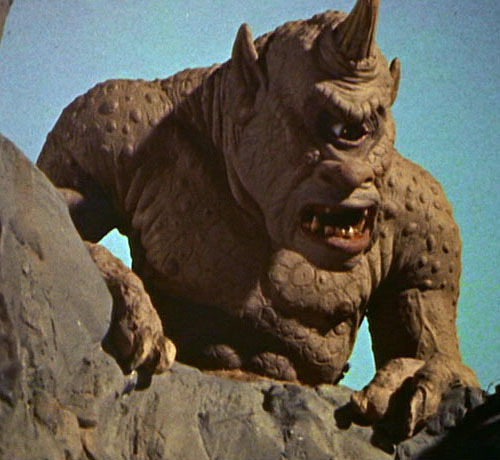


There are a lot of things I could say about his work. In many ways, the films of Ray Harryhausen are as influential in my personal conception of the game as any of the Appendix N authors. Whether it was work in the Sinbad movies, the various films based off Greek mythology, Jules Verne's novels put to film, or a host of others, Ray Harryhausen's work had a sense of depth and character that all-too-often computer animation - although spectacular - fails to capture.
Like the early Hammer Horror films, Ray Harryhausen's work had a far-reaching impact on generations that is difficult to overestimate. Certainly, it had influence on fantasy works like David Drake's Lord of the Isles series. Even more certainly, it had a strong influence on the creation of Dungeons & Dragons and the early role-playing game scene.
I don't have the words or the skill to properly memorialise the man. But I do know that, directly or indirectly, his pioneering vision will influence generations to come.
Rest in peace, Ray.


Subscribe to:
Posts (Atom)