I've done a few DCC creatures for people, and now I am again interested in what you would like me to address in the next few posts. Creatures? Spells? Reviews? Adventure design? Daleks with DCC statblocks?
Let me know in the comments.
Monday, 7 September 2015
Friday, 4 September 2015
Badgers for DCC
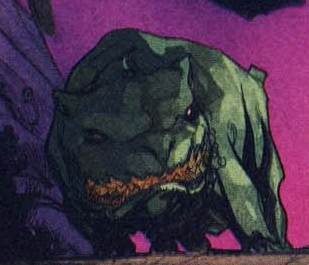
Badger: Init +2; Atk bite +0 melee (1d3); AC 9; HD 1d5+3; MV
20’ or burrow 5'; Act 1d20; SP rage, low-light vision, excellent sense of smell;
SV Fort +3, Ref +0, Will +1; AL N.
Dire Badger: Init +3; Atk bite +2 melee (1d5) or claw +3 melee (1d3); AC 12; HD 3d5+9; MV 30’ or burrow 10'; Act 1d20; SP rage, low-light vision, excellent sense of smell; SV Fort +5, Ref +1, Will +3; AL N.
Giant Badger: Init +4; Atk bite +4 melee (1d7+1) or claw +5 melee (1d4+1); AC 15; HD 7d5+21; MV 40’ or burrow 15'; Act 2d20; SP rage, low-light vision, excellent sense of smell, chance of sentience and spellcasting; SV Fort +7, Ref +3, Will +5; AL N.
Badgers are stout burrowing mammals, about 22 to 35 inches in length, with fierce dispositions. They are either encountered as solitary males (called “boars”) or family groups (called “cetes”). Dire badgers are up to twice the size of their normal kin, and giant badgers up to four times the size.
When a badger is injured, it flies into
a rage, gaining a +2 bonus to Initiative rolls (and re-rolling Initiative order), and a bonus to attacks and
damage based upon its type: for
normal badgers, it is +4, for dire badgers, it is +6, and for giant badgers it
is +8.
Badgers can see well in limited light, and they can burrow through soil or loose rock (but not through solid stone).
Although badgers are not evil, they do not typically love humans. Some men have been known to capture them for sport, making them fight bears or dogs in large pits. They will, therefore, sometimes work with Chaotic faeries to bring about the downfall of those who wander too close to their dwellings.
Monday, 17 August 2015
Sudden & Dramatic Reversals
He turned toward the arch — with appalling suddenness the
seemingly solid flags splintered and gave way under his feet. Even as he fell
he spread wide his arms and caught the edges of the aperture that gaped beneath
him. The edges crumbled off under his clutching fingers. Down into utter
blackness he shot, into black icy water that gripped him and whirled him away
with breathless speed.
-
Robert E. Howard, Jewels
of Gwahlur
Think about the best gaming
sessions you’ve had. What are the things that remain strongest in your memory,
the gaming stories that you tell repeatedly, or laugh about years after the
events? The chances are that these stories revolve around dramatic reversals –
the times where you thought you were on top just before the shit hit the
fan….or you thought you were facing certain doom just before the dice tipped in
your favour.
Grab just about any book on novel
writing, and it will tell you the same thing – a chapter that begins with
things look up should end with things taking a turn for the worse, and vice
versa. Why? Because the sudden reversal is a common human experience, and
dealing it speaks to the heart of our existential dilemma. No matter how good
our lives may seem, there is always a reversal at the end.
Role-playing games can
incorporate these dramatic reversals in several ways. Among them are:
(1) Intentional Shifts.
When some
precondition is achieved, the reversal occurs. For example, in 4th Edition, when a monster
became “bloodied” its new condition might change its combat statistics. In Dungeon
Crawl Classics, the Death Throes of a creature might create a new
creature altogether – which might even be more dangerous than the creature it
originated from! One example of this occurs in my own AL 1: Bone Hoard of the Dancing
Horror, where defeating the Dancing Horror triggers the creation of the
Hoardling.
Consider also adventures,
such as Joseph Goodman’s The
People of the Pit or Michael
Curtis’ Frozen in Time, where
achieving the win condition of the scenario triggers a reversal that the PCs
may not survive. This is nothing new. First
edition module A4, In the Dungeons of the Slave Lords,
ends with the eruption of a volcano that could spell the end of tardy
adventurers. I feel certain that many of my readers can easily call other
examples to mind.
Other “fortunes shift”
triggered events occur within the context of the adventure itself. There is an
excellent example of this in the first instalment of the Savage Tide adventure
path. Another great example of a sudden dramatic shift in fortunes (almost
certainly) occurs in Death Frost Doom.
(2) Potential Shifts.
In a non-linear
scenario, the layout of an adventure can include elements which can provide
great weal or woe, but which only become active on the basis of the players’
choices. A trap, a monster, or a hidden
treasure may all make the difference between success and failure. A series of the same can create a series of
dramatic shifts, tracking the PC’s fortunes both fair and foul.
You will occasionally hear
some wag claim that the original Basic and Advanced Dungeons & Dragons
modules were intended to allow every possible XP to be gained. In other words,
every monster was to be fought, and every treasure was to be gained. This is
regardless of what the authors themselves said:
[I]t is quite conceivable that they could totally miss seeing
a treasure which is hidden or concealed. In fact, any good dungeon will have
undiscovered treasures in areas that have been explored by the players, simply
because it is impossible to expect that they will find every one of them.
-
Mike Carr, In Search of
the Unknown
These same wags will often express
perplexity at the deviousness with which certain items of treasure are hidden:
How is it even possible for the PCs to find them?
The answer, of course, is
that the PC’s weren’t meant to find
them, and they weren’t not meant to
find them. The game – and the dramatic reversals in the game – require that the
PCs either find them or do not based upon
the game’s actual events. These games were not intended to be a linear “adventure
path”! To set up this sort of sudden dramatic reversal, the Game Master merely
need to seed his adventures with all sorts of potential boons and mayhem. Then
sit back and see which the players trigger.
Panic had momentarily touched his soul at the shock of that
unexpected reverberation, and the red rage of the primitive that is wakened by
threat of peril, always lurked close to the surface of the Cimmerian.
-
Robert E. Howard, Jewels
of Gwahlur
(3) The Devil’s Bargain.
The PCs gain an item
that seems harmful, and then discover a way to gain great good from it. Or the
PCs gain an item that seems useful, but discover that it comes at horrific cost.
There are a few items like this in D&D, and quite a few in various Goodman Games or third party DCC
modules.
Note that this doesn’t always
have to be an item. Dungeon Crawl Classics also does this with class abilities –
you can call upon your god/patron, but then your god/patron gets to call upon
you. Michael Curtis’ adventure, The
Chained Coffin, includes a literal Devil’s bargain
(4) Random Results.
You want to know why
players pay attention to critical hits and fumbles? Because the results matter. And, unlike all of the other
forms of dramatic reversals described above, this isn’t the GM playing you. This
really is just pure, unadulterated luck, good or bad. Regardless of the
consequences, there is a lot riding on those dice.
Through the use of dice,
random tables, and similar means, a game can bring real sudden change into
play. Fortunes can be made and lost. That it is not the GM, but the impersonal
dice, doing this to you is a good thing.
There is a scene in Raiders
of the Lost Ark, where Indiana
Jones faces yet another thug. This thug has a sword, and it looks like
another tough fight is about to begin. Then Indy draws and shoots him down.
Sudden dramatic reversal right there, and one of the most memorable scenes in
the movie.
The thing is, it wasn’t
scripted that way. There was supposed to be a big fight. The story goes, Harrison Ford was tired from filming
all day, so he drew and fired as a joke. The other actor went along with the
joke. The director thought that it was brilliant, and, rather than try to
enforce the lavish fight he had imagined, went with it.
Consider this in game terms. In
effect, Indiana Jones gets a critical hit that ends a “tough” encounter
immediately. Imagine what would happen, though, it Steven Spielberg decided to “fudge”
that result, and demanded that the complex fight scene he had imagined would
take place regardless. That might have been a fantastic fight scene. Maybe. Maybe
not. Either way, we would have lost one of the scenes we remember most from the
movie.
And that is the point.
Spielberg himself experienced a dramatic reversal from his own expectations,
and he was wise enough to realize that this was a good thing.
May we all be so wise!
Thursday, 6 August 2015
Mathom Correction
If you received this year's Mathom, please ignore the last paragraph on Page 1. It snuck in from last year's offering!
Monday, 3 August 2015
Mathom Preview
Midnight tonight is the last chance to obtain this sparkling, no-art beauty. Here is a sample:
Calot
In response to her call I obtained my first sight of a new Martian wonder. It waddled in on its ten short legs, and squatted down before the girl like an obedient puppy. The thing was about the size of a Shetland pony, but its head bore a slight resemblance to that of a frog, except that the jaws were equipped with three rows of long, sharp tusks.
- Edgar Rice Burroughs, A Princess of Mars
Calot: Init +4; Atk bite +2 melee (1d6); AC 12; HD 1d8; MV 80’; Act 1d20; SP ferocious bite, loyalty; SV Fort +1, Ref +10, Will +8; AL L.
Calots are fierce, intelligent animals that are the fastest living things on Barsoom. Despite the fact that they are noted for their loyalty, and used as “watchdogs” by Barsoomians, to be called a calot is a deadly insult, and wild calots can pose a serious threat to travellers.
A calot can clamp down on a successful bite attack, doing 1d5 damage each round until it is shaken free (opposed Strength vs. a +3 bonus; one free attempt per round). This hampers the bitten victim so that it takes a –1d penalty on the dice chain to Initiative and attack rolls, but if the opponent is larger than the calot, it can automatically inflict 1 point of damage each round by spending an Action Die to do so.
Because of their fierce loyalty, a calot gains a +2 bonus to attack rolls, and a +3 bonus to damage, when defending a creature it has bonded with.
Like the preview? Find out how to get the Mathom here!
Twenty entries for Barsoomian creatures, a discussion of bringing your PCs to Barsoom, nine lunar creatures, and three entries for campaign worlds alien or mundane.
Like the blog? I could use your help here!
CalotIn response to her call I obtained my first sight of a new Martian wonder. It waddled in on its ten short legs, and squatted down before the girl like an obedient puppy. The thing was about the size of a Shetland pony, but its head bore a slight resemblance to that of a frog, except that the jaws were equipped with three rows of long, sharp tusks.
- Edgar Rice Burroughs, A Princess of Mars
Calot: Init +4; Atk bite +2 melee (1d6); AC 12; HD 1d8; MV 80’; Act 1d20; SP ferocious bite, loyalty; SV Fort +1, Ref +10, Will +8; AL L.
Calots are fierce, intelligent animals that are the fastest living things on Barsoom. Despite the fact that they are noted for their loyalty, and used as “watchdogs” by Barsoomians, to be called a calot is a deadly insult, and wild calots can pose a serious threat to travellers.
A calot can clamp down on a successful bite attack, doing 1d5 damage each round until it is shaken free (opposed Strength vs. a +3 bonus; one free attempt per round). This hampers the bitten victim so that it takes a –1d penalty on the dice chain to Initiative and attack rolls, but if the opponent is larger than the calot, it can automatically inflict 1 point of damage each round by spending an Action Die to do so.
Because of their fierce loyalty, a calot gains a +2 bonus to attack rolls, and a +3 bonus to damage, when defending a creature it has bonded with.
Like the preview? Find out how to get the Mathom here!
Twenty entries for Barsoomian creatures, a discussion of bringing your PCs to Barsoom, nine lunar creatures, and three entries for campaign worlds alien or mundane.
Like the blog? I could use your help here!
Saturday, 1 August 2015
Mathoms II: Barsoom Stats & More!
![]() |
| "Mediocre!" |
The Mathom is done. It contains a bunch of stats for Barsoomian creatures, as well as the lunar creatures from The Revelation of Mulmo, and an extra monster or two (which are OGC).
Shiny, Chrome, and Ready for Valhalla!
Tuesday, 28 July 2015
Mathom Time
Well, it is nearly that time of year again, when I send out a "Birthday Mathom" pdf. Next Tuesday, as a matter of fact.
While I am not yet sure what is going to go into this Mathom, I will be sending it out to anyone who does the following:
(1) Posts in the Comments section with their Top Three DCC adventures to date - any author! - with at least three words for each to say why.
(2) Sends me their email address at ravencrowking at hotmail dot com so that I can send them their Mathom.
DEADLINE: Monday, 3 August 2015 at midnight EST.
As in years past, the Mathom is likely to be some combination of preview material and other stuff that I couldn't publish normally due to copyright reasons (such as stats for Appendix N creatures). But I don't know. I haven't assembled it yet.
On Another Note
The last couple of years have been challenging for me. Specifically, my creative output has suffered as my energies have been channeled elsewhere. I was hoping that 2015 would have seen output similar to 2013, but Life doesn't always play fair.
Most of the things that have vexed me in the last two years are simply domestic. Everyone has to deal with domestic issues, and hopefully with time and effort, they will be sorted. This is something you could help with, though, if you were so inclined.
Regardless of my own reduced output, there has been a LOT of GREAT material published for this game in 2015, both by Goodman Games and others. I would like to point out especially The Vertical Halls, Patrons Extraordinary: The Unpretty Preview, Crawling Under a Broken Moon #5, and Steel and Fury as some things you may have missed and probably should not have. Did I mention Drongo: Ruins of the Witch Kingdoms, Wrath of the Frost Queen (now available in print), or the most excellent Black Powder, Black Magic?
I am sure that I haven't even mentioned some of the best of 2015 so far. Blame Old(er) Man Memory, which is not nearly so good as Young(er) Man Memory. Also, I assume that you are all aware of boxed sets like Peril on the Purple Planet and The Chained Coffin. If not, why not?
UPDATE
The Mathom is done. It contains a bunch of stats for Barsoomian creatures, as well as the lunar creatures from The Revelation of Mulmo, and an extra monster or two (which are OGC). Hope you enjoy it!
While I am not yet sure what is going to go into this Mathom, I will be sending it out to anyone who does the following:
(1) Posts in the Comments section with their Top Three DCC adventures to date - any author! - with at least three words for each to say why.
(2) Sends me their email address at ravencrowking at hotmail dot com so that I can send them their Mathom.
DEADLINE: Monday, 3 August 2015 at midnight EST.
As in years past, the Mathom is likely to be some combination of preview material and other stuff that I couldn't publish normally due to copyright reasons (such as stats for Appendix N creatures). But I don't know. I haven't assembled it yet.
On Another Note
The last couple of years have been challenging for me. Specifically, my creative output has suffered as my energies have been channeled elsewhere. I was hoping that 2015 would have seen output similar to 2013, but Life doesn't always play fair.
Most of the things that have vexed me in the last two years are simply domestic. Everyone has to deal with domestic issues, and hopefully with time and effort, they will be sorted. This is something you could help with, though, if you were so inclined.
Regardless of my own reduced output, there has been a LOT of GREAT material published for this game in 2015, both by Goodman Games and others. I would like to point out especially The Vertical Halls, Patrons Extraordinary: The Unpretty Preview, Crawling Under a Broken Moon #5, and Steel and Fury as some things you may have missed and probably should not have. Did I mention Drongo: Ruins of the Witch Kingdoms, Wrath of the Frost Queen (now available in print), or the most excellent Black Powder, Black Magic?
I am sure that I haven't even mentioned some of the best of 2015 so far. Blame Old(er) Man Memory, which is not nearly so good as Young(er) Man Memory. Also, I assume that you are all aware of boxed sets like Peril on the Purple Planet and The Chained Coffin. If not, why not?
UPDATE
The Mathom is done. It contains a bunch of stats for Barsoomian creatures, as well as the lunar creatures from The Revelation of Mulmo, and an extra monster or two (which are OGC). Hope you enjoy it!
Sunday, 26 July 2015
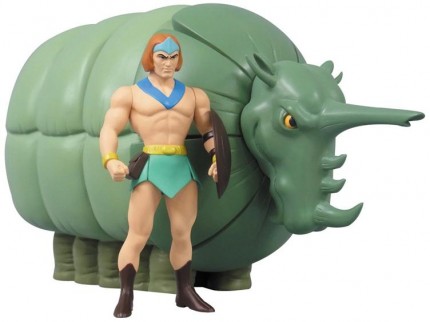
Rhino-Triceratops from the Herculoids
Rhino-Triceratops: Init +2; Atk gore +5 melee (1d12+6) or charge +3 melee (3d12+6) or
energy rock +4 ranged (3d6); AC 20; HD 10d8+20; MV 30’ or burrow 10’; Act 1d20;
SP fast movement, extendable legs, energy rocks; SV Fort +10, Ref +4, Will +6;
AL N.
These strange, alien creates appear to be a cross between a rhinoceros
and a triceratops, with ten short, stubby legs. These legs are extremely
powerful, allowing the creature to move at twice its normal speed, in addition
to its regular move, by expending an Action Die. The legs can also extend upwards to a height
of 50’, enabling the rhino-triceratops to reach sustenance that might be out of
reach, but the creature can only move at half speed, and cannot spend its
Action Dice for additional moves when doing so.
A rhino-triceratops has four horns on its head, one medium-length
horn rising from the tip of the snout, two smaller ones further up, and one
hollow horn in the middle of its forehead. This horn is where the
rhino-triceratops stores its supply of energy rocks (see below). These horns
also assist in burrowing as the rhino-triceratops rotates its head rapidly,
moving through the earth and even solid rock.
Through some unknown method, a rhino-triceratops can generate and
store up to 12 “rocks” made of solidified energy, which they can fire as a
ranged attack (up to 120’) from their hollow horn. They explode on impact, and
a rhino-triceratops can shoot two of these rocks using a single Action Die.
Generally benign herbivores, rhino-triceratops are usually solitary.
They become hostile when threatened in some way, often attacking until their foes
are slain or driven off. They stay together long enough to mate and then they
part, with the female raising the young only until they can fend for
themselves.
Rhino-triceratops communicate amongst themselves with gravelly
growls, snarls, and roars, and appear to have a rudimentary form of
intelligence. They sometimes form close attachments with other creatures,
although this is very rare. Rhino-triceratops are brown, green, or any shade in
between.
Source: The Herculoids (Hanna
Barbera Productions). Modified from original write-up by Rendclaw, via Turgenev’sPDF collection.
Thursday, 23 July 2015
I just signed the petition "Supreme Court of Wisconsin: Grant justice in the appeal of Walter Wessel IV" and wanted to see if you could help by adding your name.
Our goal is to reach 100 signatures and we need more support. You can read more and sign the petition here.
More gaming stuff anon.
Thanks!
Daniel
Our goal is to reach 100 signatures and we need more support. You can read more and sign the petition here.
More gaming stuff anon.
Thanks!
Daniel
Subscribe to:
Posts (Atom)